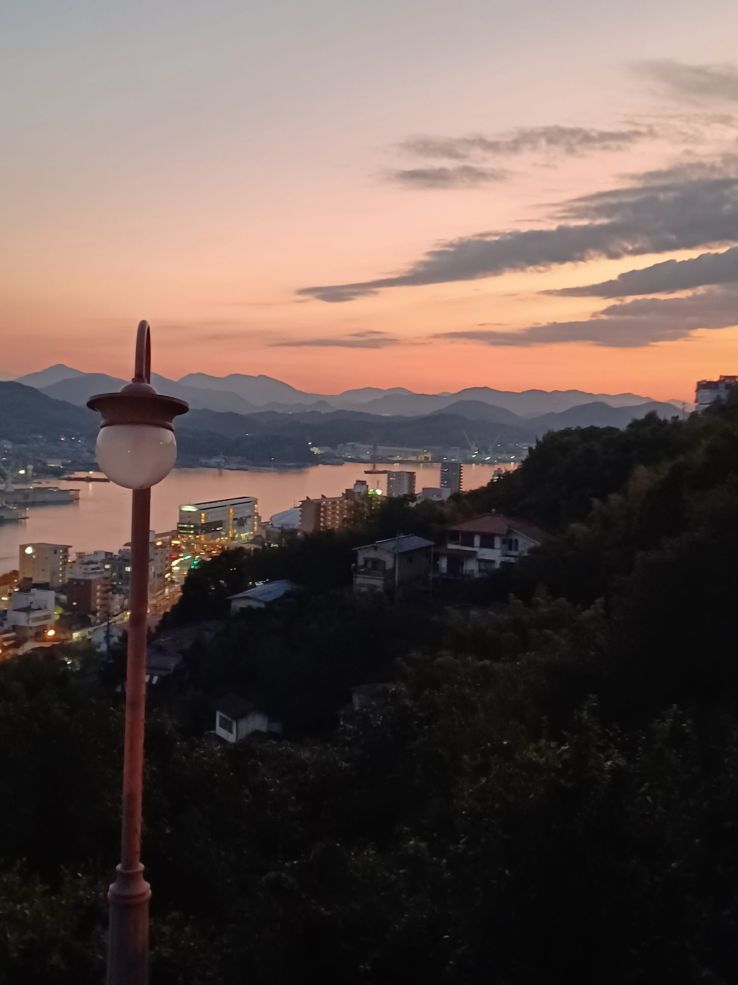
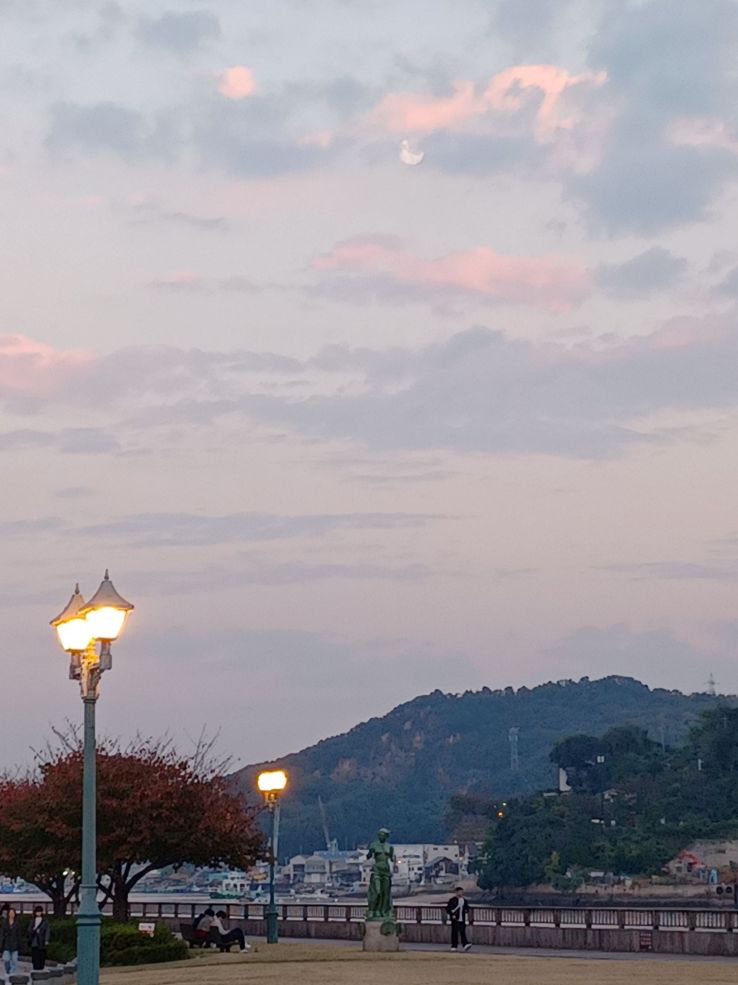
I just like this one, in the evening, over Onomichi.
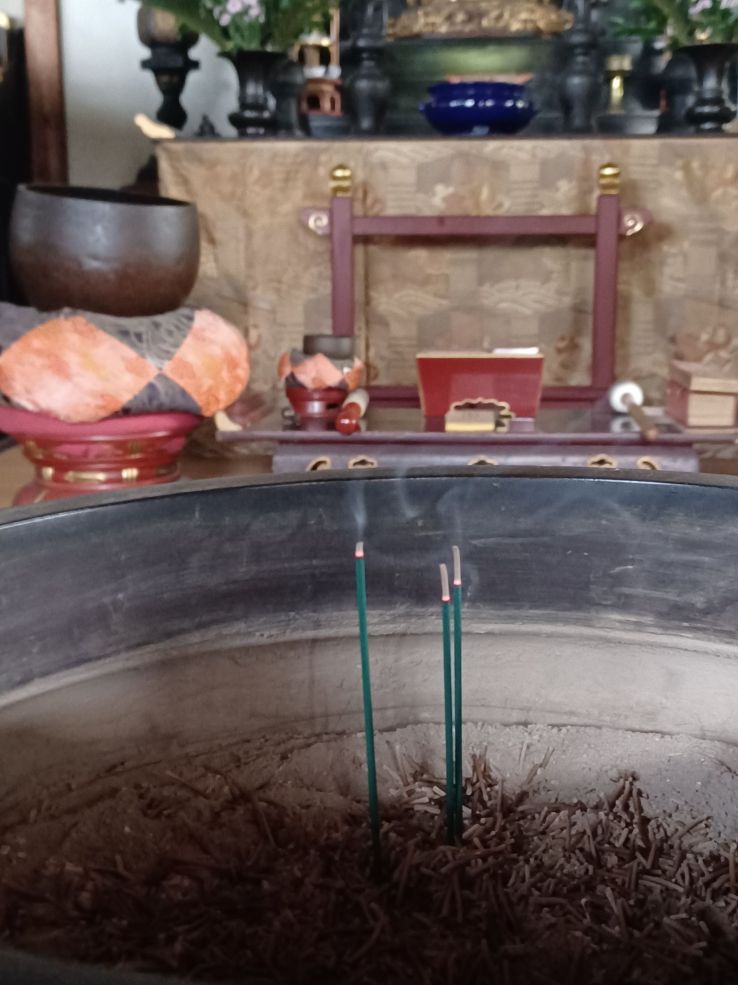
The one on the left I lit in Carol’s memory, as I burn incense in my own home every evening, thinking of her.
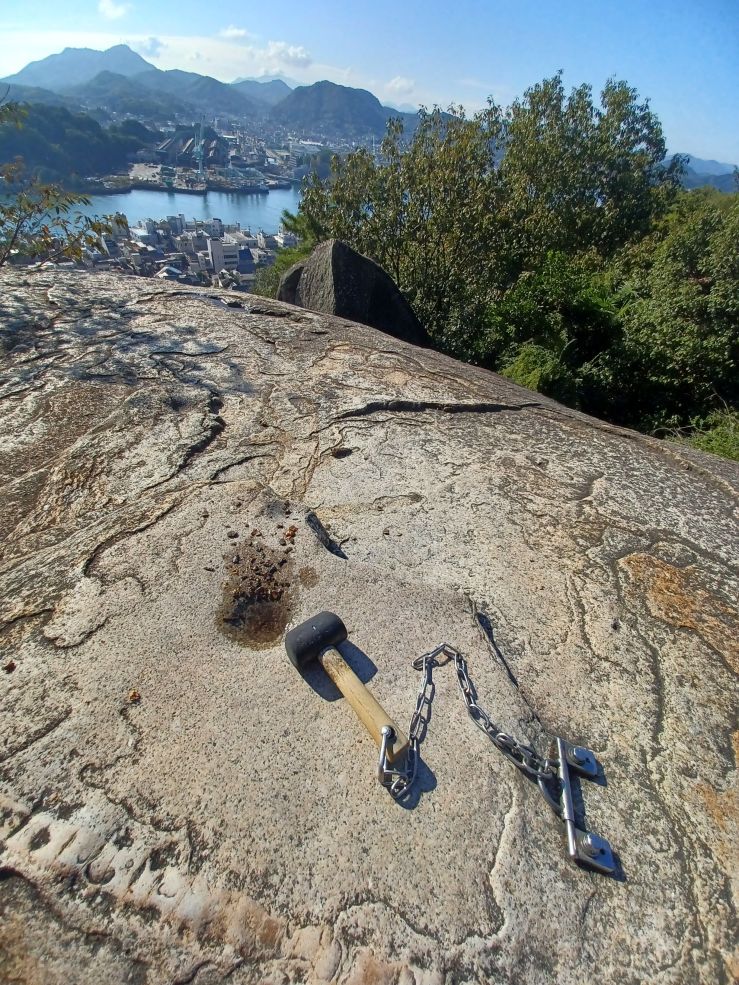
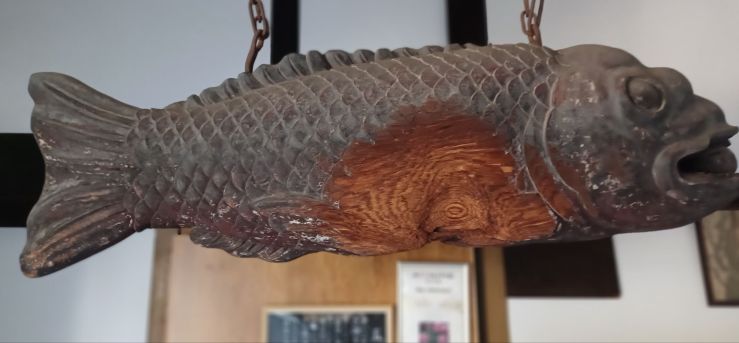
Too often, I suppose, I’ve mentioned mokugyo’s and han’s, objects that are struck by mallets during zen worship services. I think this might be the ancient origin of them all. It was on a massive rock near Senkoji monastery, above Onomichi. I struck the rock several times for my sangha friends, reminding them and myself to, “Wake up! Wake up! Don’t waste this precious life.”
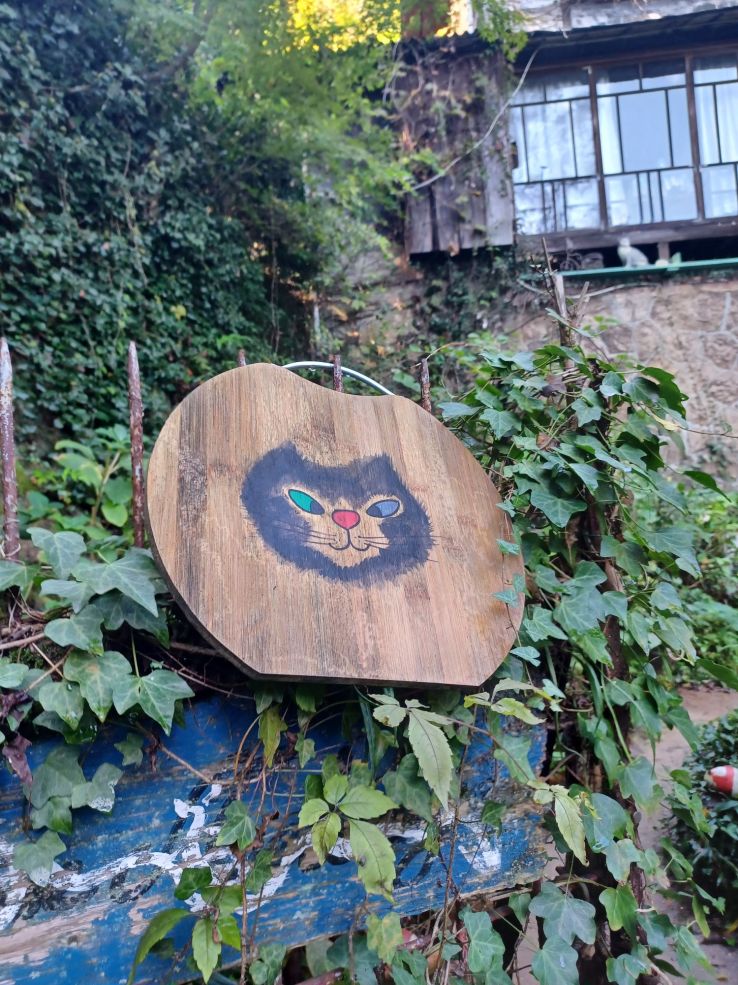
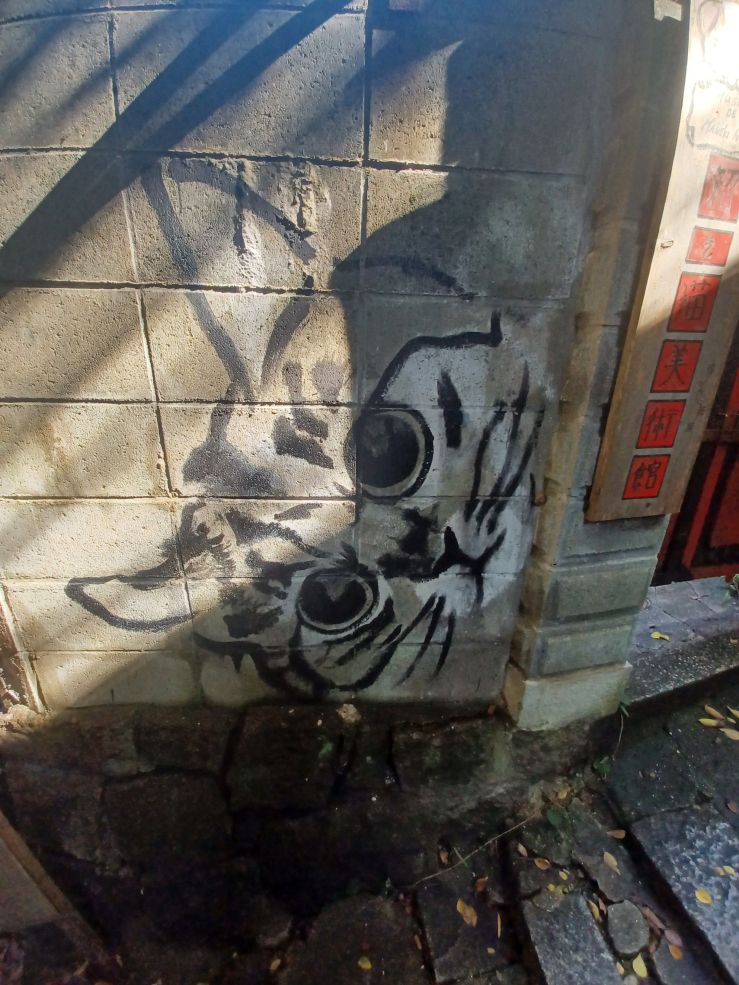
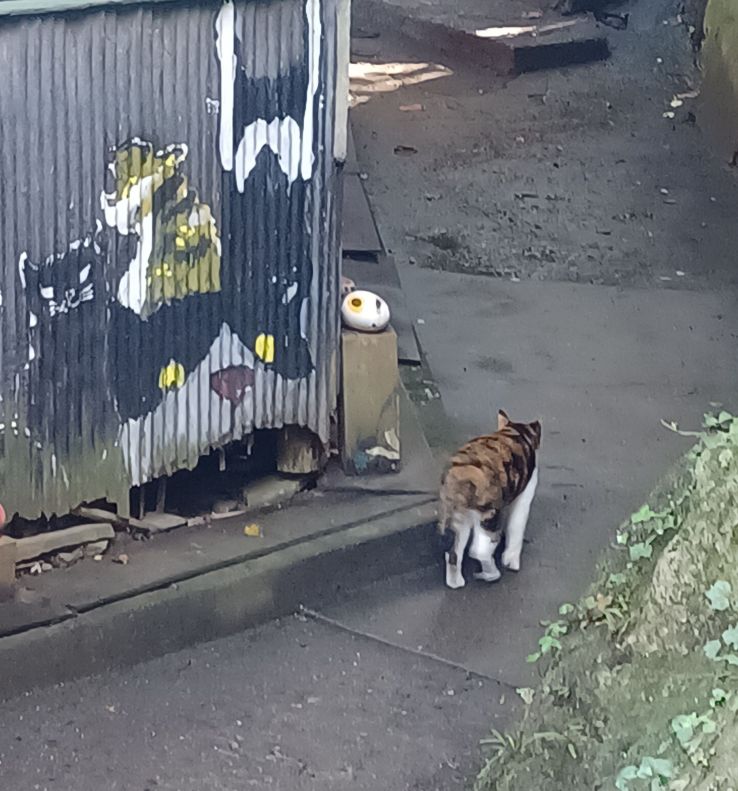
I am most decidedly NOT a cat person. But, in honor of Onomichi’s love and determined devotion to feral cats, I post these images, taken on “Cat alley.” I saw this one cat acting as inscouscient as cats can be.
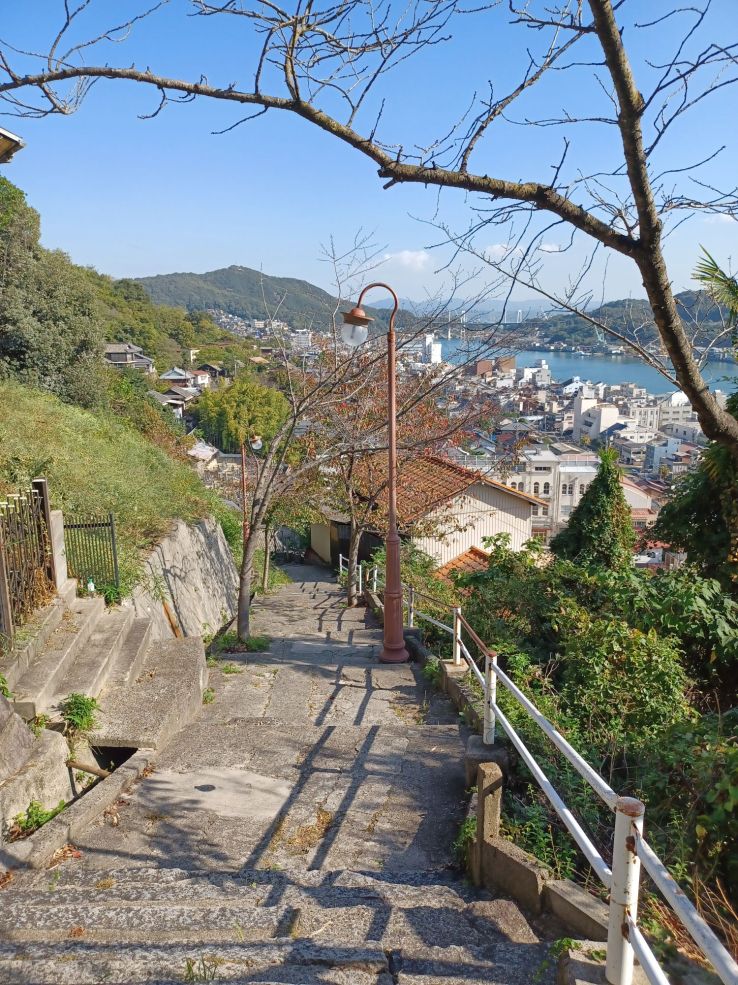
While the town along the waterfront is nicely level, to see Onomichi it is necessary to walk a lot of steps – regular, irregular, different heights, zigzagging in every direction. It’s a maze out there, but a delightful one.
The “temple route” is the common pedestrian path. On my map, I counted twenty-five Buddhist temples situated close to each other. So close that it can be difficult to tell one from another, especially when they often sit side by side or one seemingly on top of another in this vertical town. It is an up and down zigzag labyrinth. I don’t even make the attempt to see all the temples. After a time, they can begin to look alike to my untrained eye.
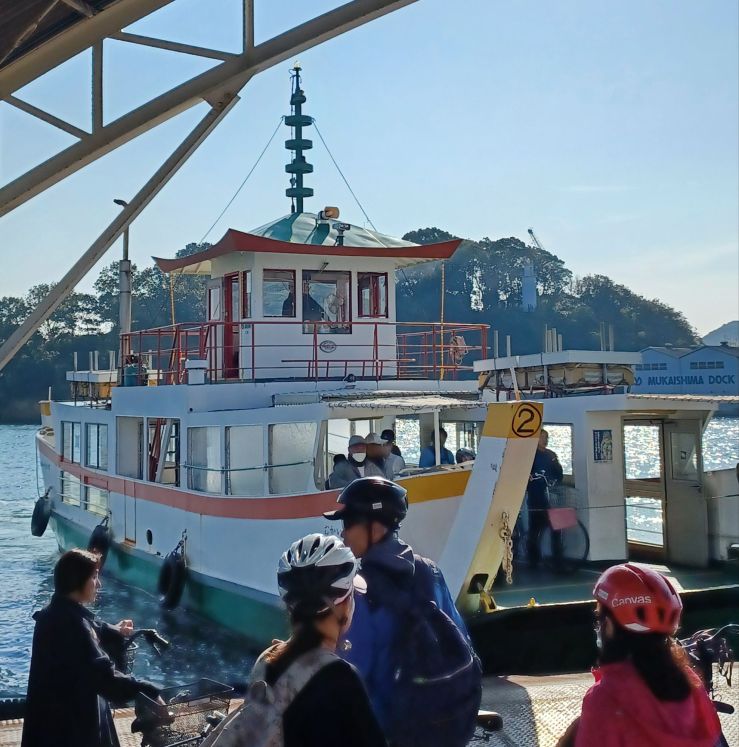
Onomichi is a working port town, along with Mukaishima, across the very narrow straight. What surprises me is there is no “local” bridge between Onomichi and Mukaishima. Bikers, cars, and pedestrians take the small ferries across the water. I like the ones with the “pagoda” top.
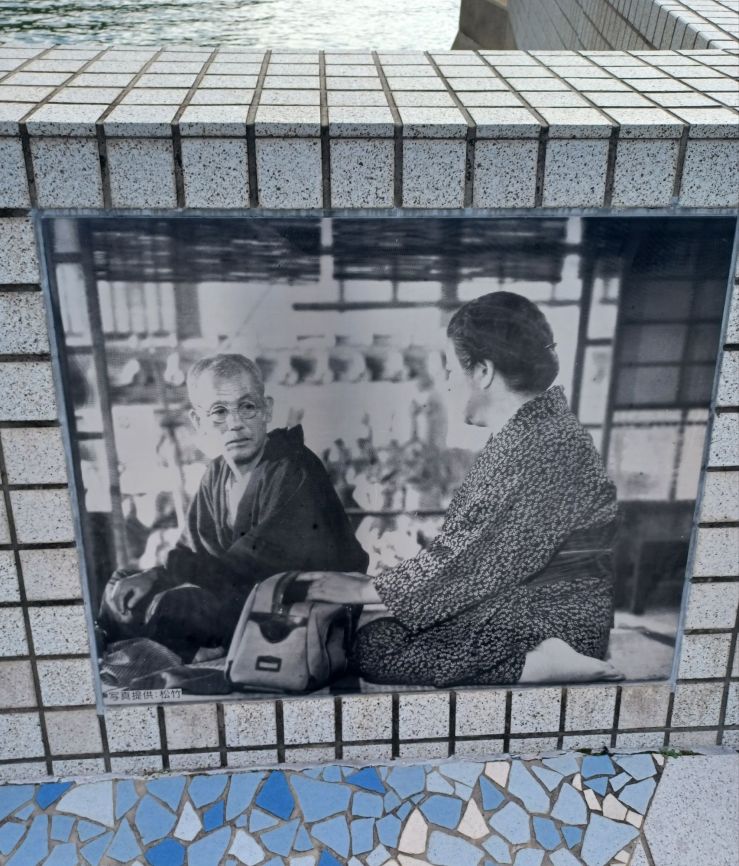
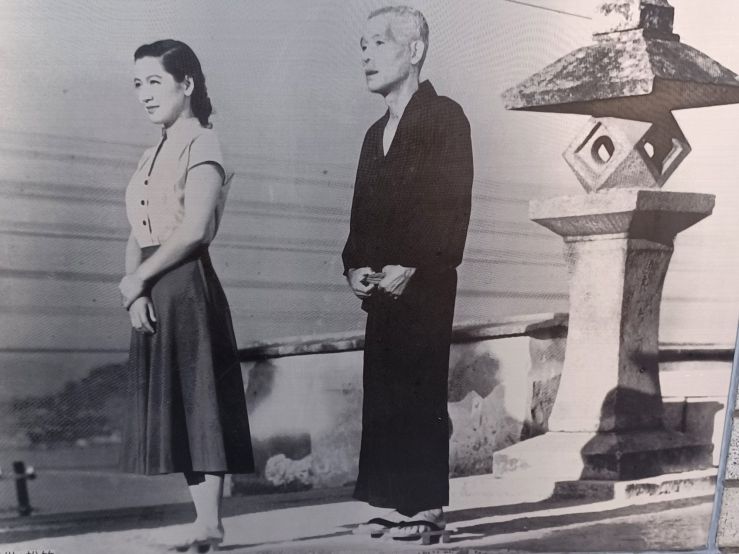
The Shimanami Kaido was my principal reason for coming here, but not the only one. The other was a movie in which Onomichi played a part, called “Tokyo Story,” the 1953 masterpiece of Yasujirō Ozu. The movie has been credited, by those who know, as one of the finest films ever made. I’ve seen it twice and not for the last time. I’m no expert but here is a review from one who was: https://www.rogerebert.com/reviews/great-movie-tokyo-story-1953
Onomichians are justly proud of their place in the pantheon of great movies. They honored the stars of the movie with tributes on the boardwalk.
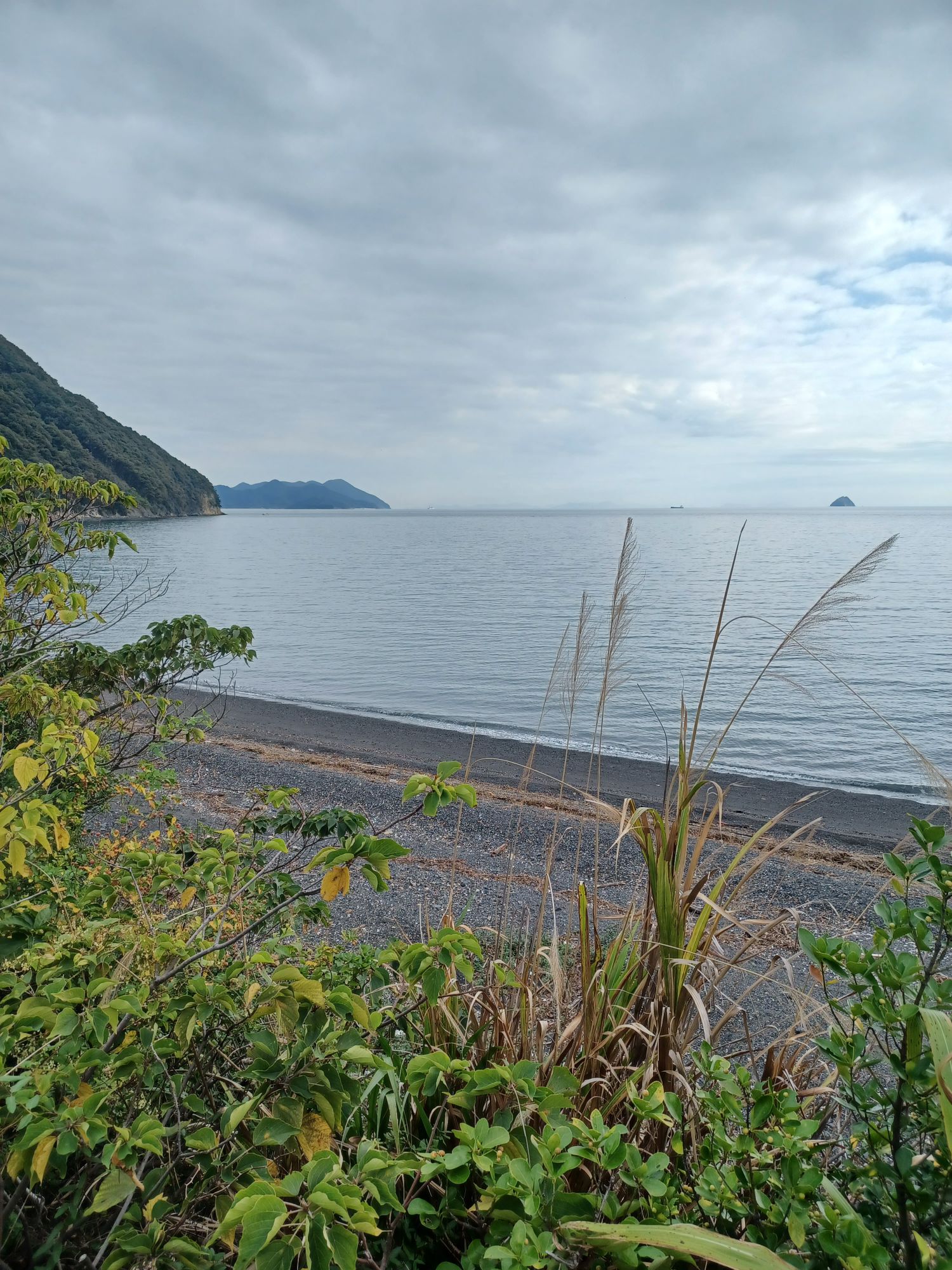
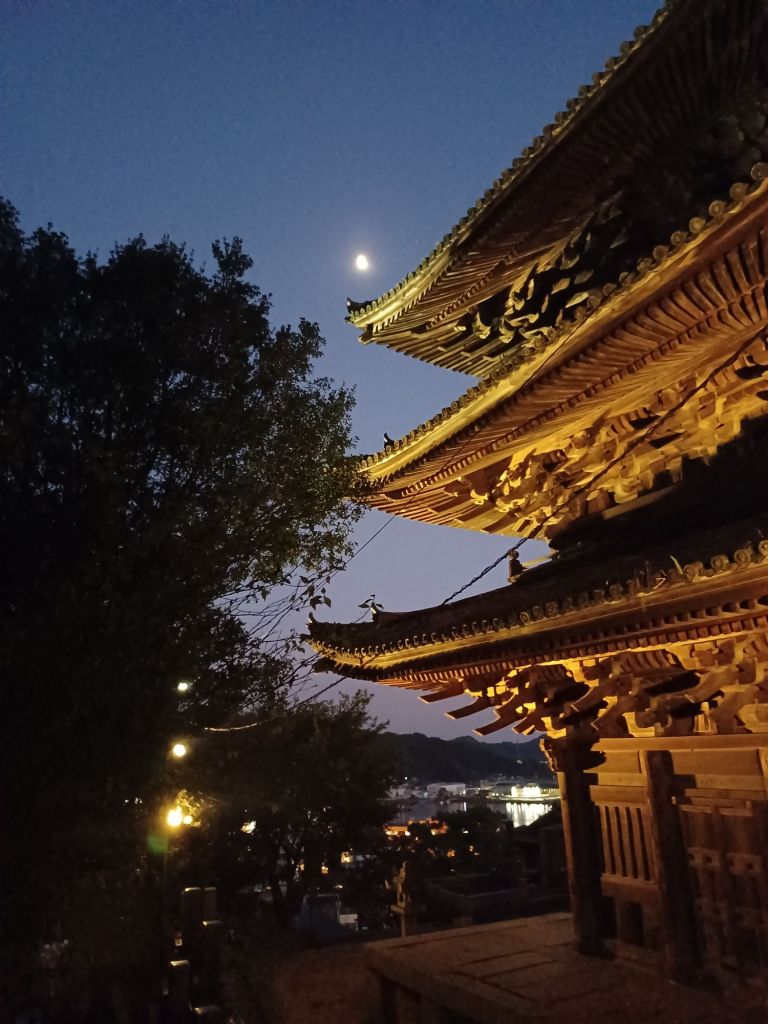
On my last night in Onomichi, I “caught” the very-close-to-being-full-moon over the straight, marking the end of my time on the beautiful Seto Inland Sea.
One of the reasons I chose to come to Onomichi was to ride at least part of the Shimanami Kaido. It is a bike route that crosses several bridges and six islands in the Seto sea, Onomichi being the starting point on the northern end.
I accomplished my goal, to ride a section of the route. I would have made three of the beautiful bridges and four of the islands instead of two and three, respectively, had I any sense at all! But, lacking a healthy common sense, I managed to miss the “recommended route” and pedaled my way furiously around the whole of one of the islands rather than bisecting it as other sensible riders do. I finally came to my senses when I got back to a place I had been much earlier in the ride. I then resorted to my default action these days, which is to laugh at myself and then figure out what to do next. I am trying to give up the very unhealthy habit of getting upset with myself just for being who I am.
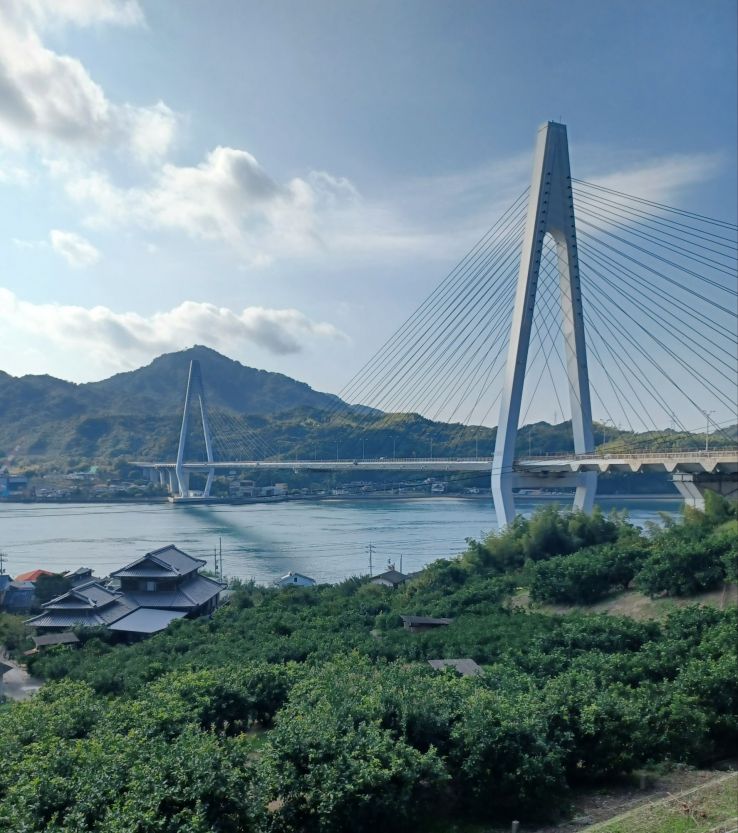
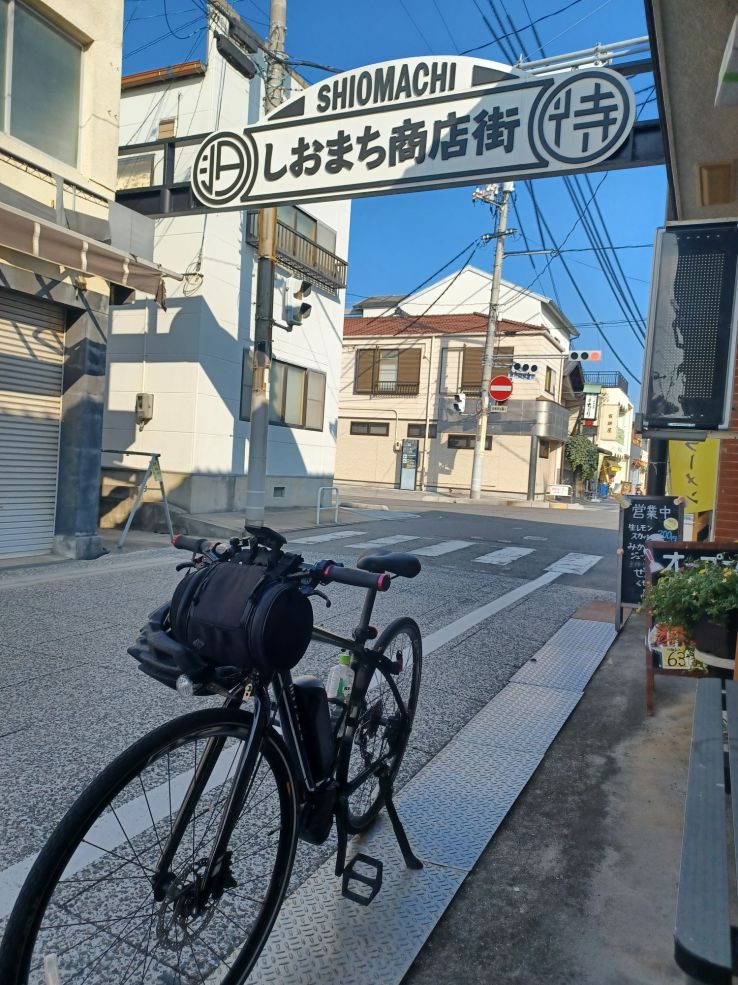
I did manage to ride across this lovely bridge, on my way to try to find the ferry that would take me back to Onomichi. The ferry terminal was in what seemed a rather unpromising town. I tried finding a place to sit and rest but it took some time. Still, I found what I thought to be the main street. It turned out to be what small towns in Japan are, as I’ve been learning. They are unpretentious, simple, sometimes cluttered in their way, and full of people going about their affairs as if no bothersome bike-riding tourists were pestering them with questions in English.
But, with my best smile, thanks, and bows, these locals are friendly and laugh easily with me. I sat on a bench outside of a little restaurant and enjoyed the street scene.
I have thoughts of trying “the Kaido” again but I got pretty exhausted today. I may not be up for another attempt, at least not this time around.
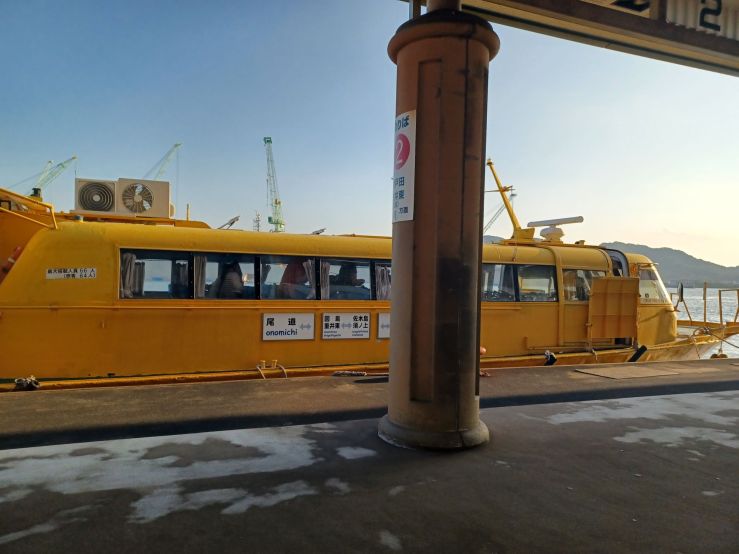
This is the small and ancient ferry that got us back to Onomichi, most of us with bikes and wondering how they would fit us all in. Very quaint and cozy, but it did the job.
Three story pagoda of Tennei-ji and the waxing moon
Tennei-ji is another of those Soto zen temples without any evidence, at least today, of activity, other than a few cats lounging about. The temple is, after all, in the vicinity of Onomichi’s infamous “cat alley.” Cats are to Onomichi, as lions are to the Serengeti.
I had looked to see if there was a Soto temple in Onomichi, but nothing turned up. Only when I arrived at this temple complex did the signage indicate that this temple is of the Soto tradition, having relieved the Rinzai sect of it hundreds of years ago. Perhaps the Rinzai monks were allergic to cats, but the Soto monks were more tolerant. One can only hazard a guess.
Apparently, there is spiritual activity here as the signage indicated that common folks could join the monks for zazen a couple of times a week, again a bit too early for me.
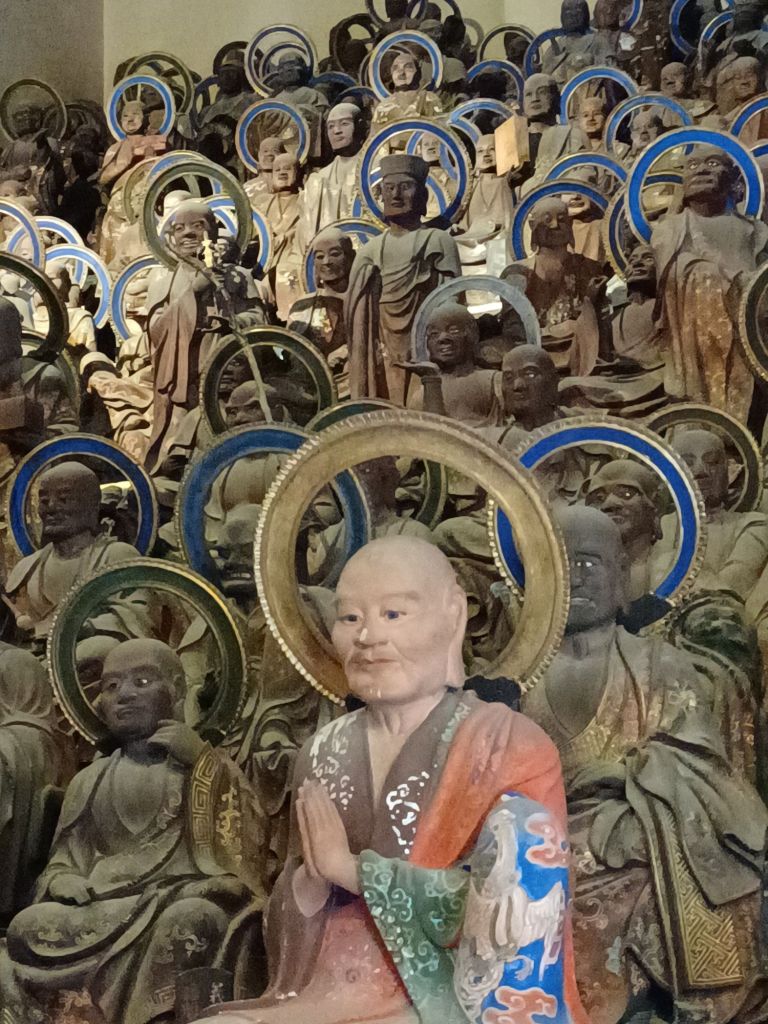
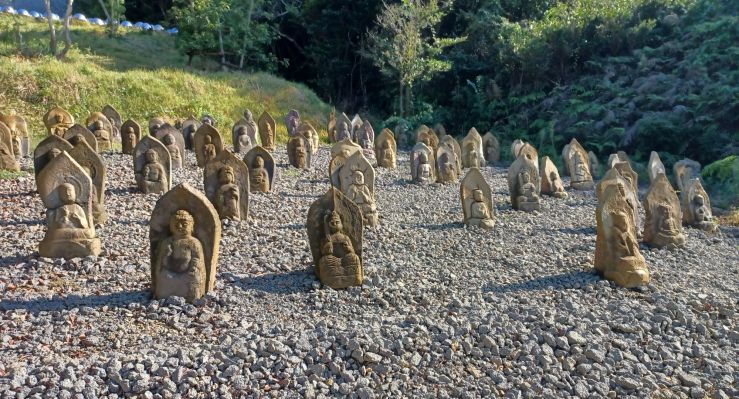
As at the very first Soto monastery I visited, in Morioka, this monastery also has the requisite five hundred arhats in attendance. Apparently, the number five hundred corresponds to the number of disciples Shakumuni Buddha had. I suspect this is one of those mythological numbers, such as the number of angels that can fit on the head of a pin. The argument continues to rage.
Tennei-ji Arhats
The room was too dark to capture all five hundred in a photo, and they were a dusty lot in any case. I do like the nice gold and blue halos. As at the Morioka temple, this bunch seems mostly to be having a good time. Having a good time is not a foreign concept in the zen traditions. I have evidence to prove it.
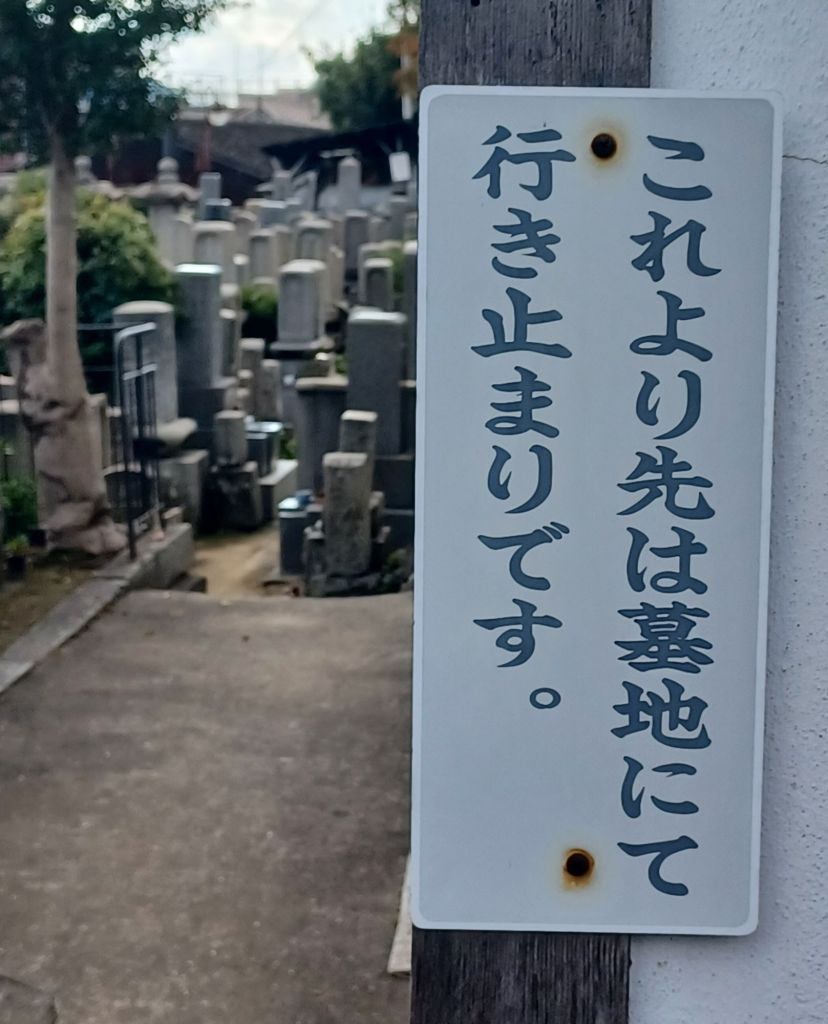
The sign says: “From here on, it’s a dead end at the cemetery.” Who says we don’t have a sense of humor?
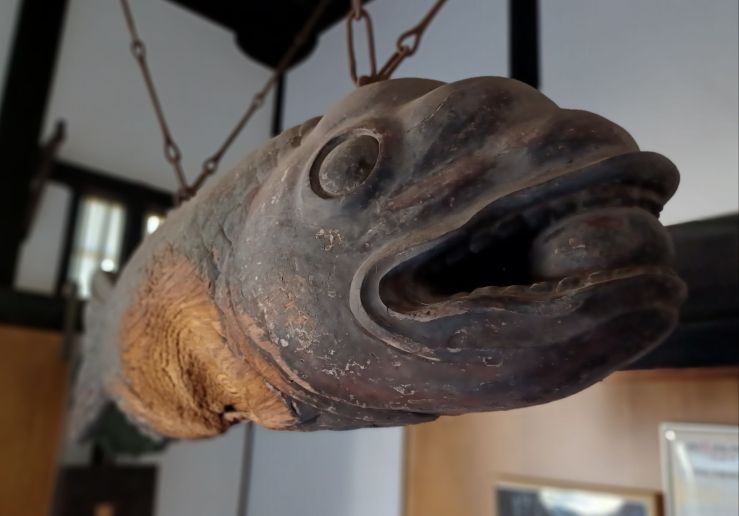
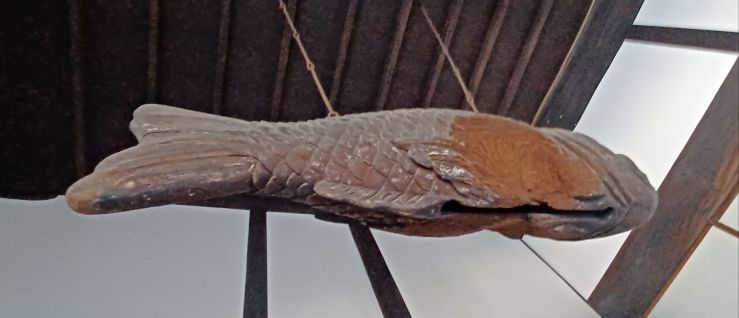
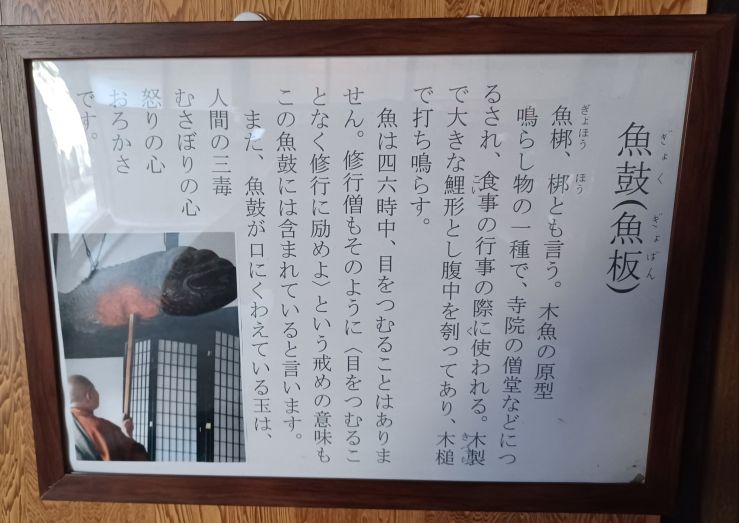
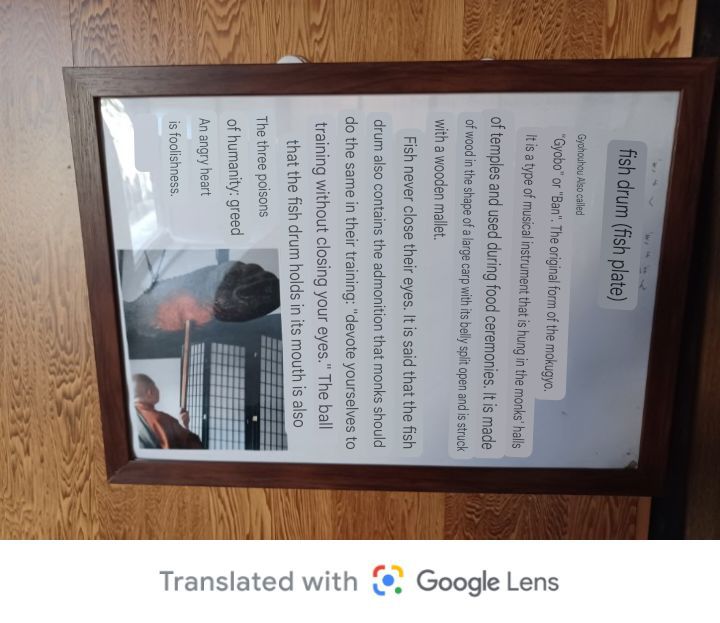
Then, there is the mokugyo or “fish drum”- the “original form.”
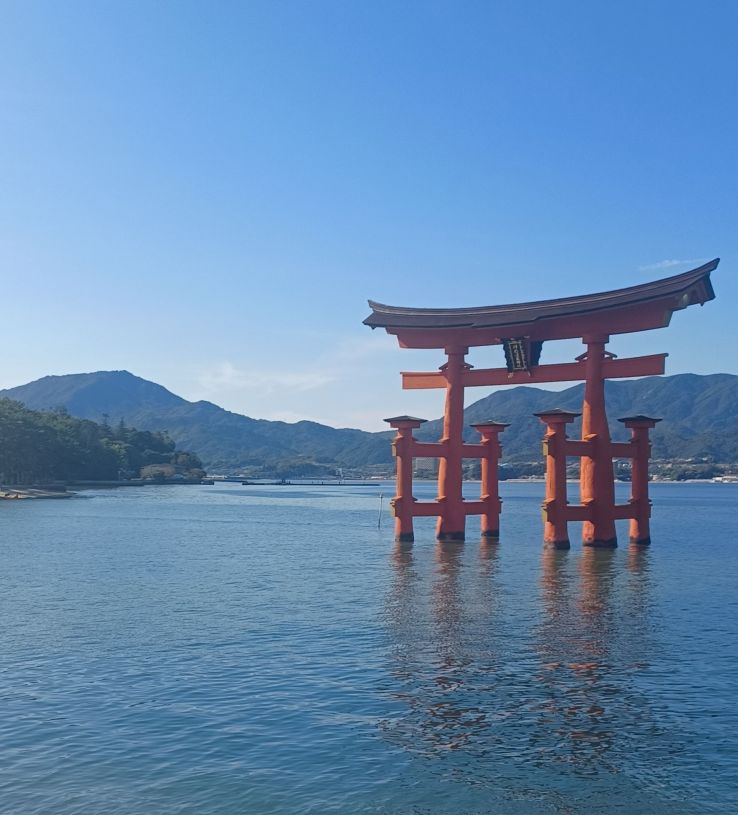
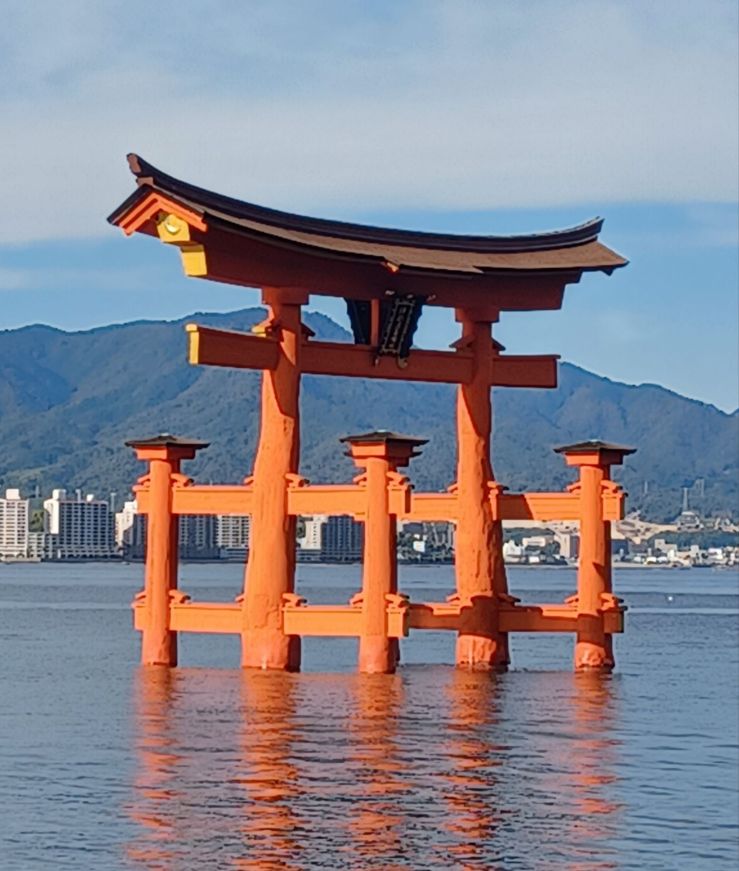
This torii gate is perhaps the most iconic of all such gates. It is part of the Itsukushima Shinto Shrine on the island of Miyajima, which is a short train and shorter ferry ride from Hiroshima. At low tide, one can walk under it. At high tide, it appears to be floating on the water.
I have seen this gate in old woodblock reprints, such as one on a calendar I keep. It always seemed so beautiful! It’s vermillion color blazing like a sunset. And, in fact, it is beautiful!
Seeing it in person is, however, not so evocative as suggested in those old prints. I found it difficult to take a picture of it that did not also include the buildings on the opposite shore. Those old painters didn’t include those buildings or the many ferry boats moving relentlessly across the water.
Also, my image of a serene shrine nestled away on a secluded island did not include all of the restaurants, souvenir stores, ice cream shops, and the like. I can’t complain. My imagination has often failed the test of reality.
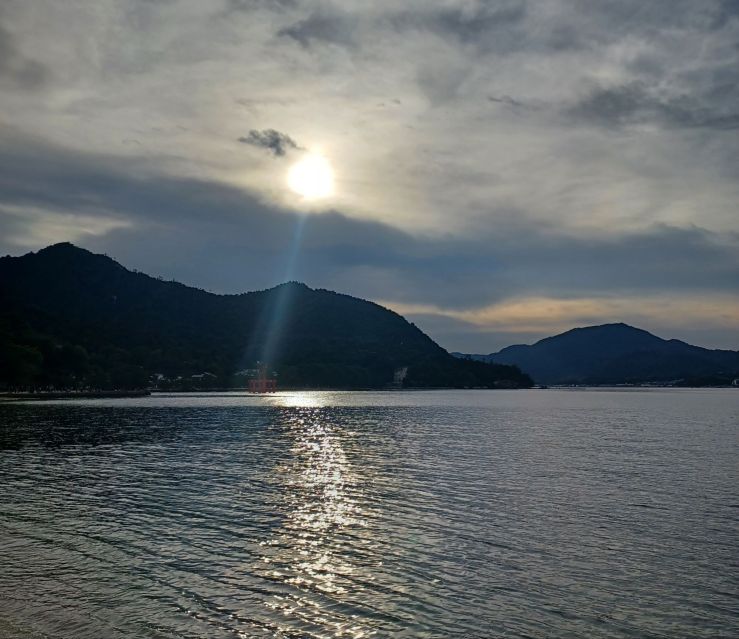
Finally, while you can only see the very tiniest vermillion gate under the rays of the setting sun, I want to believe that the old painters of Japan would approve.
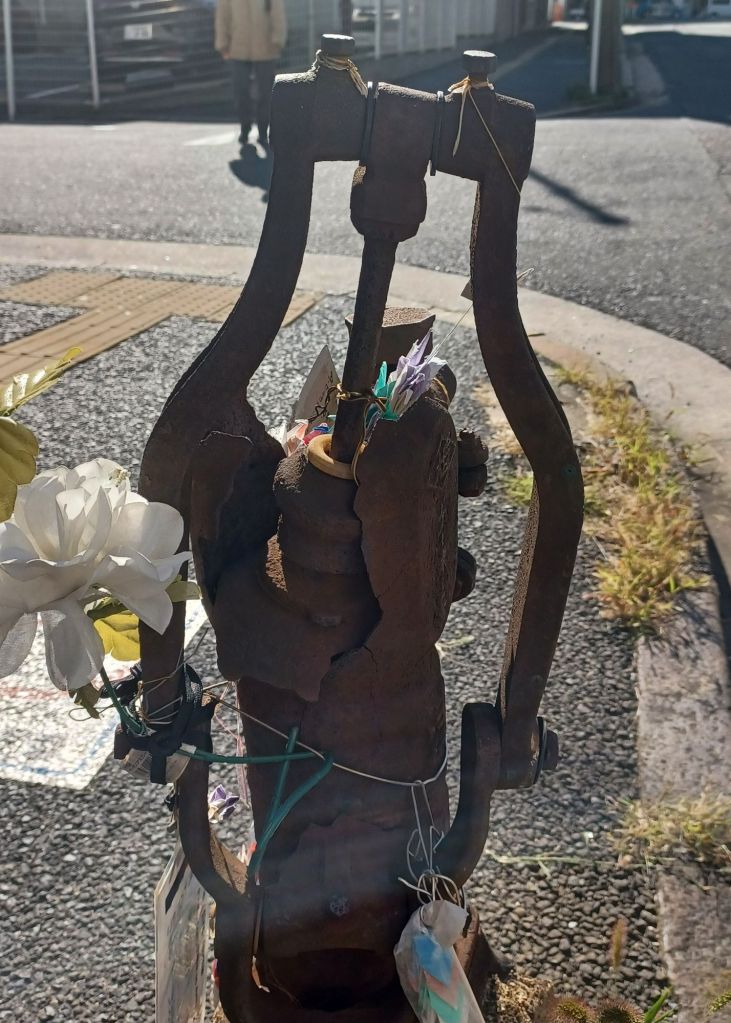
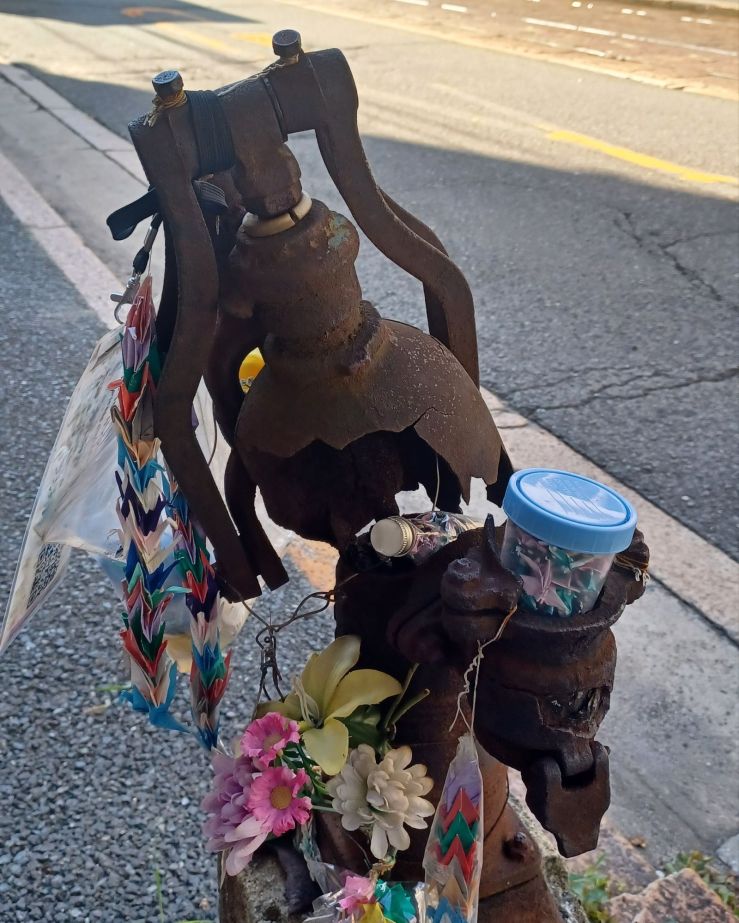
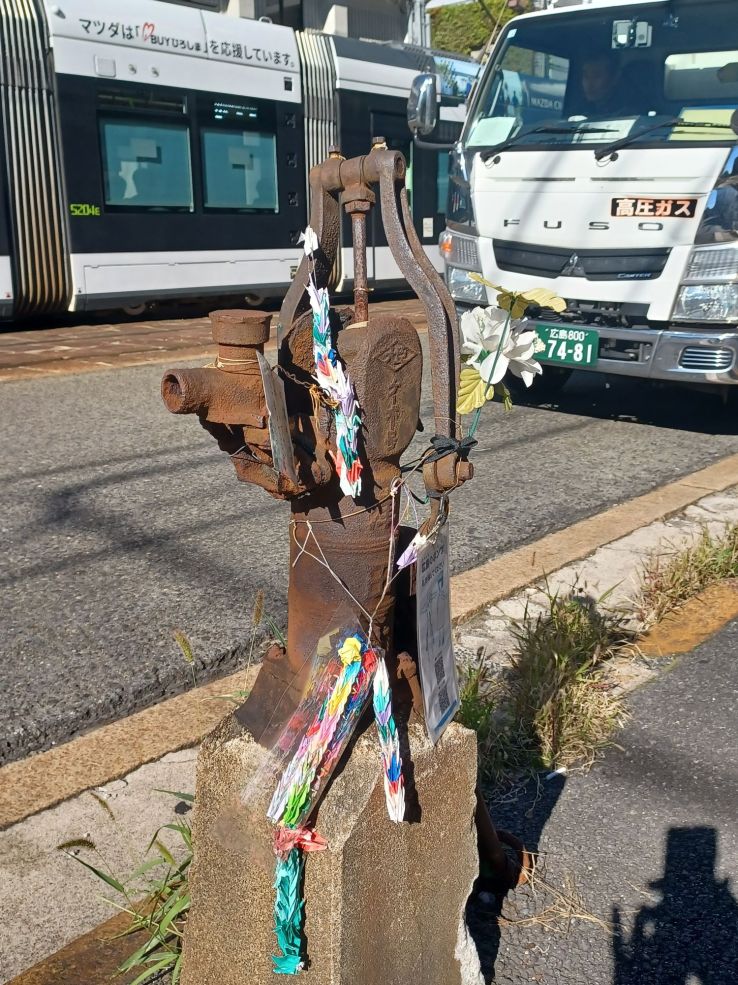
While walking to the Hiroshima train station this morning, I noticed these old contorted and rusted objects. I thought they might have been old fire hydrants, maybe struck by vehicles. But, they were also clearly venerated objects, as evidenced by the assorted objects placed on and around them. This sort of veneration or devotional attention I would normally see at grave sites or around statues or shrines that I encounter regularly in this land.
I looked more closely at a sign. It said they were water pumps. A QR code was stamped but the link did not work.
It was very clear to me that these water pumps were victims of the atomic bomb blast. The two that I saw were both bent in the same direction, exactly away from the direction from which the blast wave would have come. These were east of the epicenter. I’d have also liked to see some on the west side. I couldn’t find anything online about them.
There are people in Hiroshima who treat these water pumps as sacred objects. They moved me as much as anything else here, if only because these pumps were probably the water source for the daily lives of the people living here.
I can imagine the stories of those who treat these old water pumps with devotion. Perhaps their parents or grandparents once lived near here and used these pumps. It is not so far-fetched to think so.
Let us honor those who went before us in the manner that is fitting to their memory and our need.
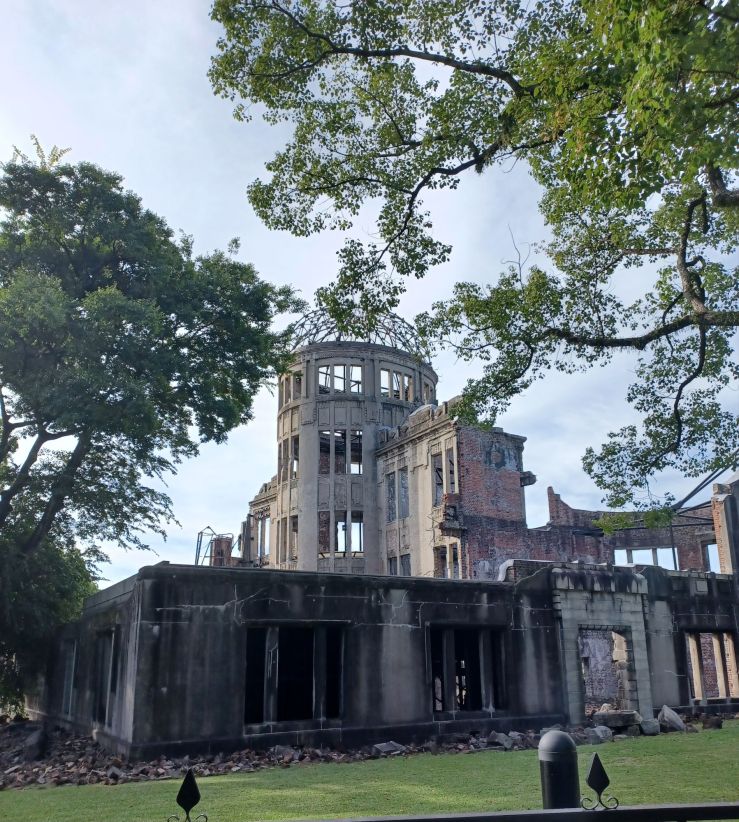
We have all seen the photos of the “bomb-dome,” usually the black and white version with the city in rubble all around it. In the picture, there remains to be seen, all around and inside the dome building, the remains of rubble from that day. At least I assume it is from that day.
I walked all around the building and I went to the museum that told in graphic images and words what happened that day. I can certainly add nothing to that.
In a high school English class (I think it was Mrs. Evan’s class) we read John Hersey’s “Hiroshima.” It is a powerful work telling the stories of six survivors of the blast. Fifty-three years later I can see the rebuilt city rising up all around the “dome.” It is certainly an energetic city, full of restaurants, tourists, bicyclists young and old. Today it was a city that was feeling an autumn chill in the air.
A few images struck me above others.
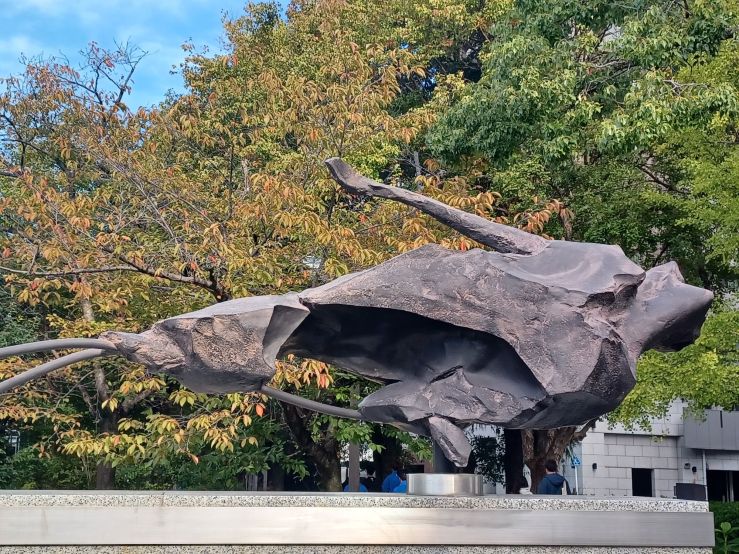
This is a bronze sculpture on the grounds of the Peace Park. It is too easy to imagine what it represents.
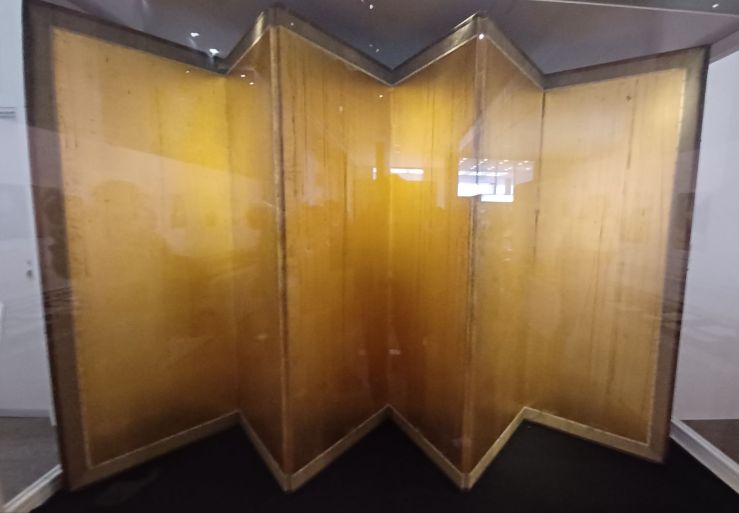
This is a beautiful folding screen that was in a home that was destroyed all around it. Not knowing the story, it appears that a painter of abstract modern art carefully painted black streaks down all of the panels in a random fashion. Hardly. The black streaks are from the “black rain” that fell that day, radioactive black rain. I had forgotten about the black rain.
I have long enjoyed the sound of the koto, an instrument with a very long history in both Chinese and Japanese cultures. I think I first heard the koto played when I purchased the vinyl album, “Music for Zen Meditation,” in 1983. Tony Scott, an American jazz clarinetist, teamed up with koto player, Shinichi Yuize, and shakuhachi flute player, Hozan Uamamoto. This improvisational work has been with me ever since, first on vinyl, then on cassette tape, then on CD, and now on Spotify. I listen to it regularly.
I think Tony Scott was part of that pack of searchers in the ’50s and early ’60s who were drawn to Zen Buddhism. Think of Alan Watts, Gary Snyder, Alan Ginsberg, and others.
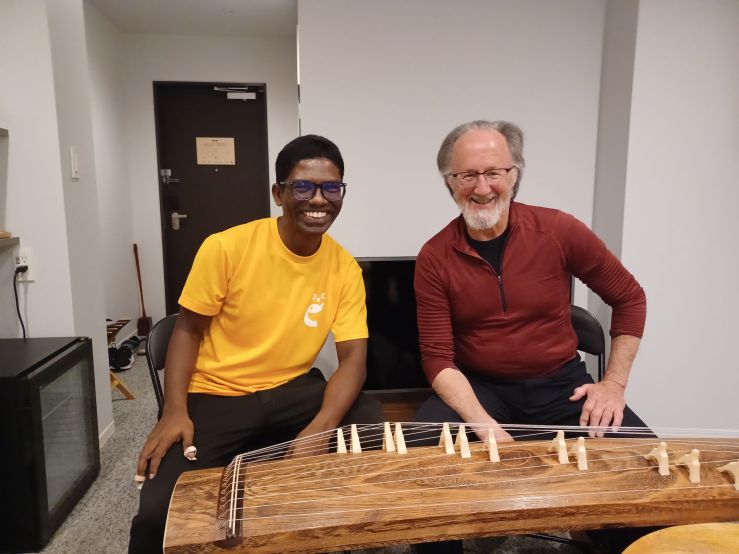
When I found out that I could get a lesson on a koto, I jumped at the chance, especially since it was given at my accomodation in Hiroshima. It was only an hour lesson but at the end, the teacher let me play “Sakura, Sakura” on his full sized koto.
Sakura is the cherry blossom, the flower of Japan. I had already known the simple melody, and that helped a bit. Needless to say, I need many more lessons, as you will hear.
The koto has thirteen strings. The strings of the smaller version I practiced on had been numbered so I could quickly tell between the five string and the seven, for example. When I played the full sized version for the finale, there was no numbering. It is this that I blame for my less than steller rendition of the beloved, Sakura, Sakura.
I particularly liked the strumming at the end!
A practice duet.
I very much enjoyed getting the chance to play a koto, even if only for a short time.
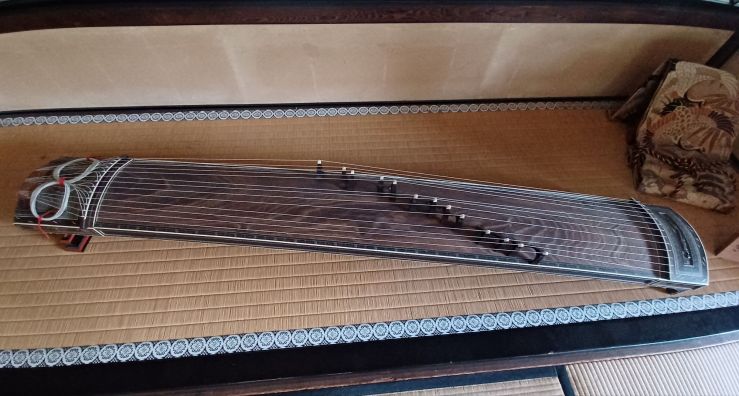
Beautiful Koto, in Takamatsu’s Ritsurin Garden. I hadn’t realized that these instruments are so large, something around six feet in length. I am getting a Koto lesson tonight, in Hiroshima!
Edit: My koto teacher said that, traditionally, the koto represented a dragon. The left side of the koto, in the above picture, is the head, while the right side is the tail.
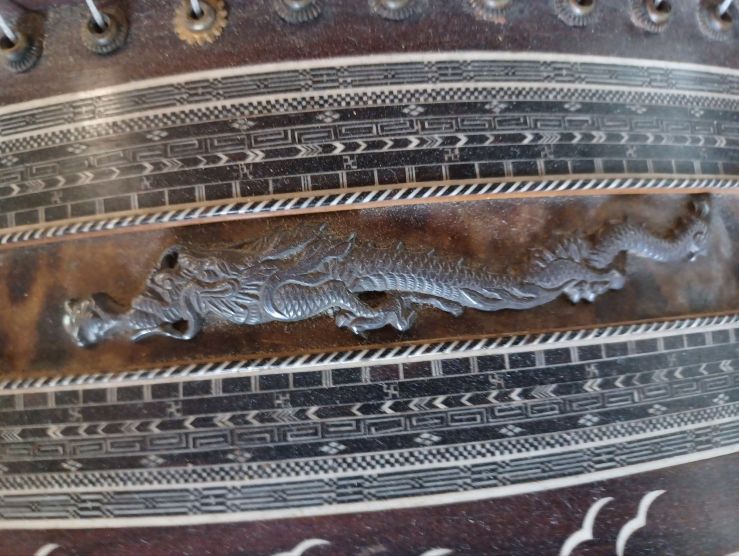
Dragon detail on the Koto, above, on the right side. Also, note the thousands of pieces of inlaid wood.
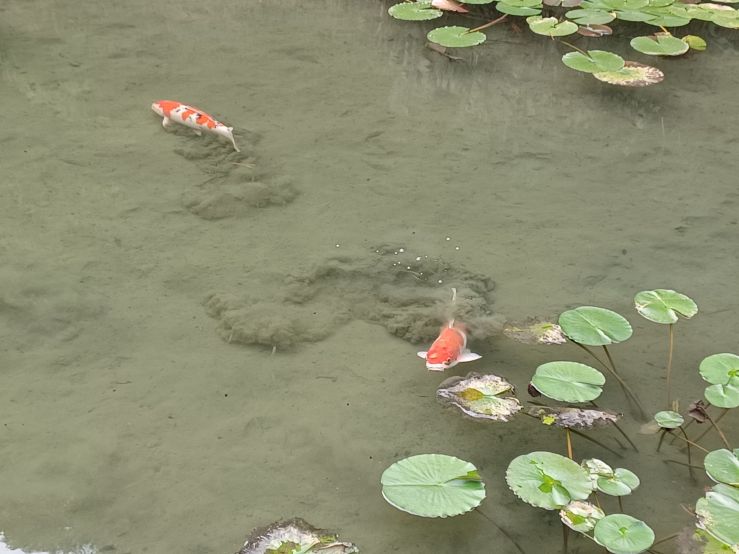
Carp in the Ritsurin Garden. These are two of thousands!
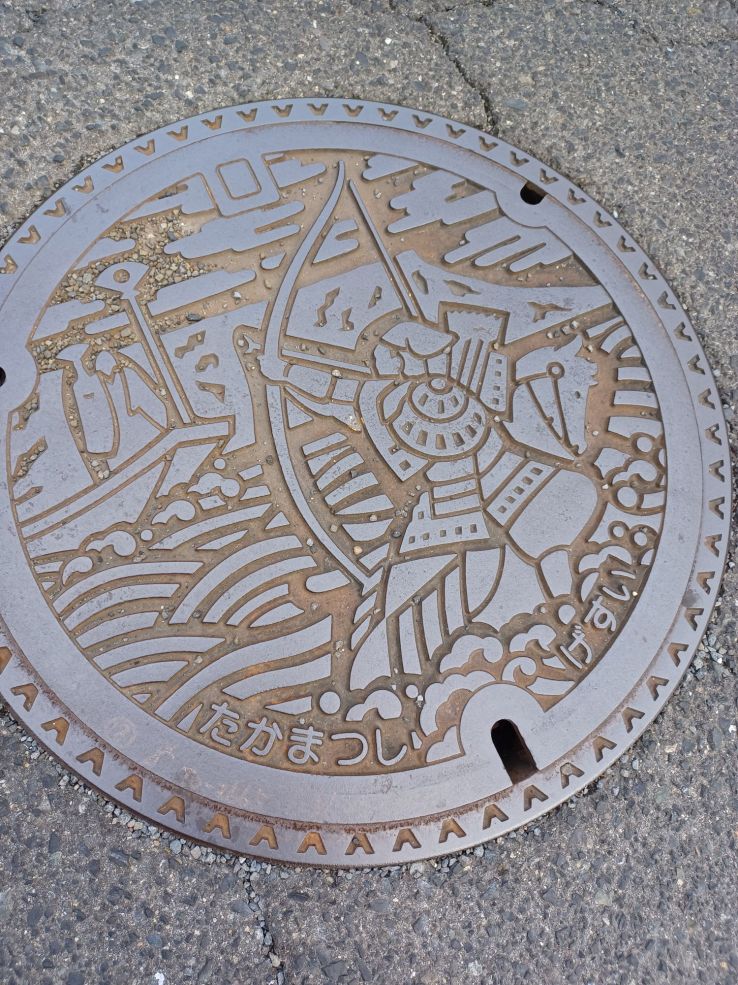
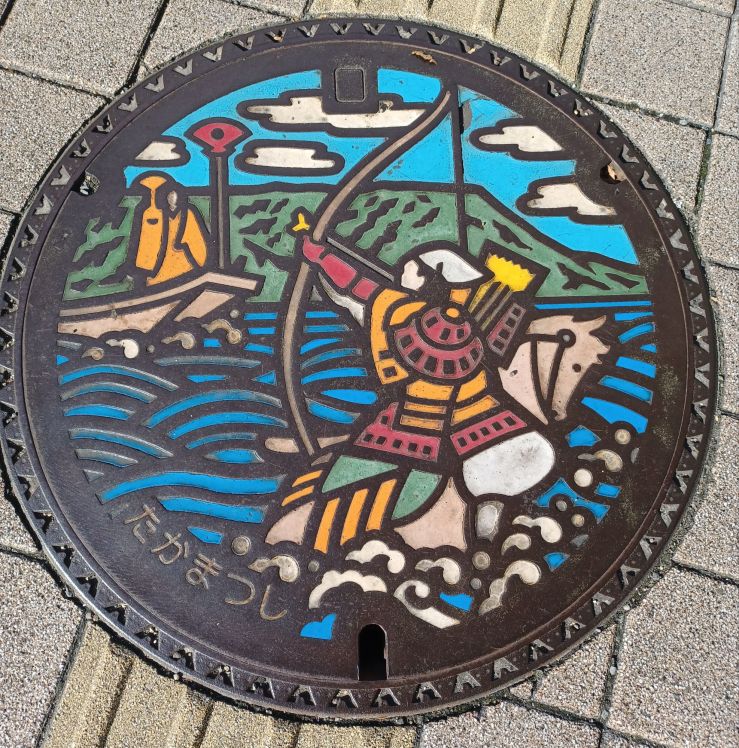
Finally, my favorite. The covers are designed to depict something about the town, city, or history where they are placed. This one, in Takamatsu, is both archery evocative and with an interesting story. A famous battle in Japan’s history (1,100’s) ended with the defeat of the enemy. As they retreated by boat they raised their banner as a sign of defiance in spite of defeat. An archer rode into the water and, with one arrow, struck the banner which fell into the sea, thus further humiliating the vanquished foe. This history/legend/myth is said to have taken place in the sea near Takamatsu. In the cover you can see the archer, his horse, the poised arrow, the banner of the fleeing vessel, and the waves of the sea. Here it is, in color.
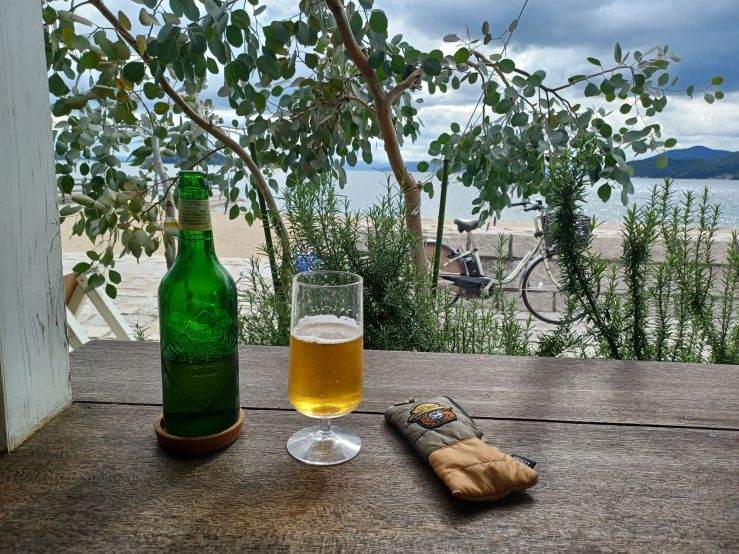
There are a couple of things in this opening picture that are important and, no, I don’t mean the beer!
First, there is Smokey the Bear who has been my travelling companion these many days. Remember, only you can prevent forest fires!
Second, is the electric bike I rented. Basically, it got me where I wanted to go but the squeaky brakes and half-hearted power boost needed to get up Shodoshima’s hills didn’t serve quite as effectively as I had wished.
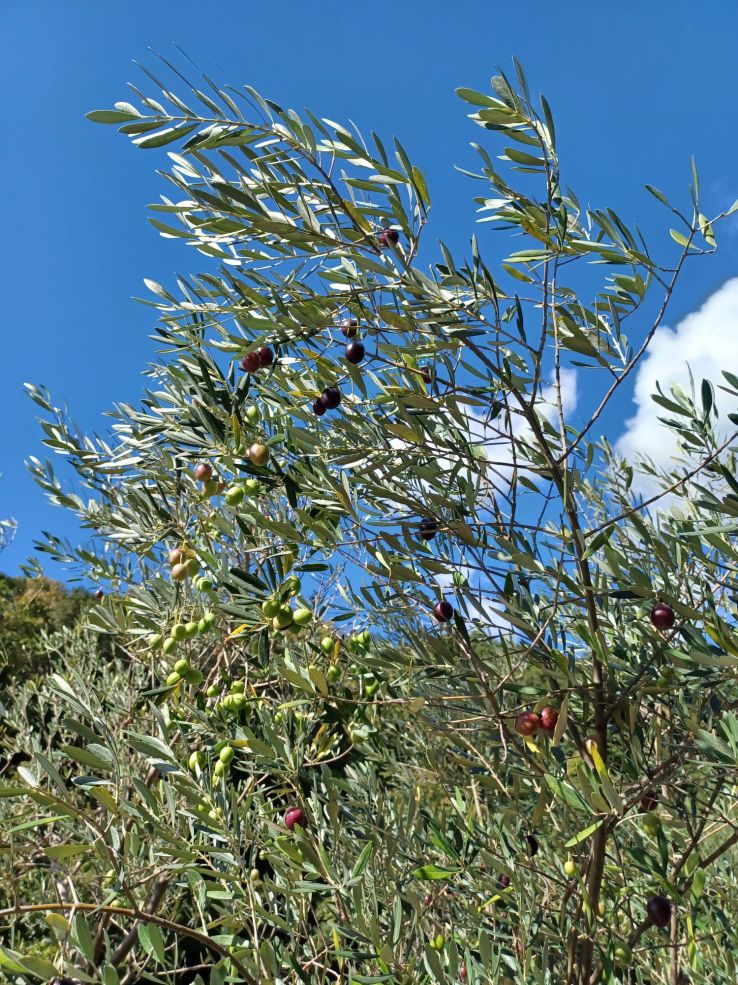
Third, and most important, there is the small olive tree and rosemary in the foreground. These are representative of the quasi-Mediterranean feel of the island, in spite of the threatening sky and the coolness of the day. Perhaps Autumn is beginning to come to Japan!
This was a day when I didn’t know quite what to do. Since I had enjoyed the ferry ride two days ago I thought I might as well do it again.
Shodoshima is not the draw of a couple of the other islands in the neighborhood, but I was sure there was a bike rental place and a nice island atmosphere. Both proved to be true.
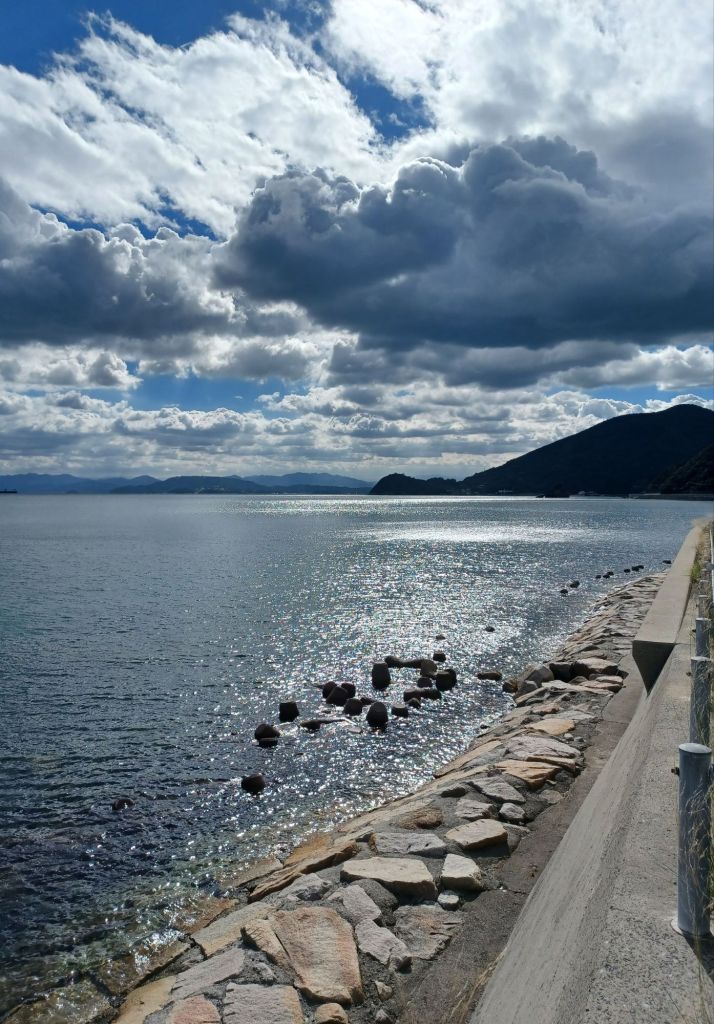
My maps, both paper and Google, were not up to the task, so I rode off in a direction that seemed promising. I saw no museums, galleries, castles, or any other of the usual suspects. I did, however, see the sunlight through the cloud cover playing on the surface of the sea. That sight never tires. But, since my maps failed me, and not knowing quite where I was, as usual, I began trying to figure out when to turn back in order to return the bike and make it to the ferry terminal in time for my return sea voyage.
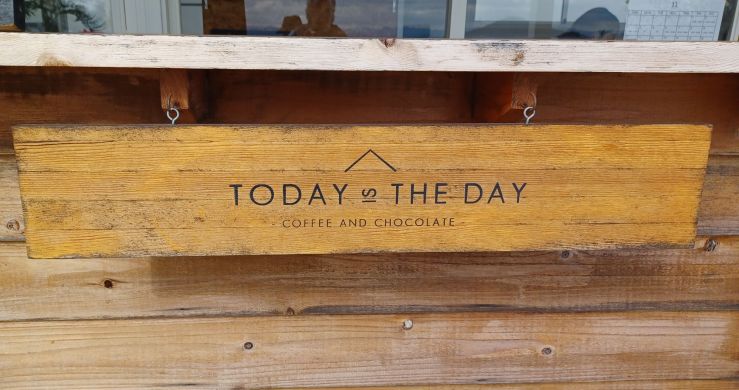
Finally, signage pointed down a lane towards the shore so I chanced it. There I found a great little place across from the beach, nicely named, “Today is the Day.”
Sitting there, I thought how good it is when chance leads to a peaceful respite from the difficulties of the journey. It does not always happen so, but when it does it makes the effort worth the while and I forget what I might have done or what I missed along the way. For a time, I felt myself and my moment coalesce into some sublimity.
 Autumn In Japan