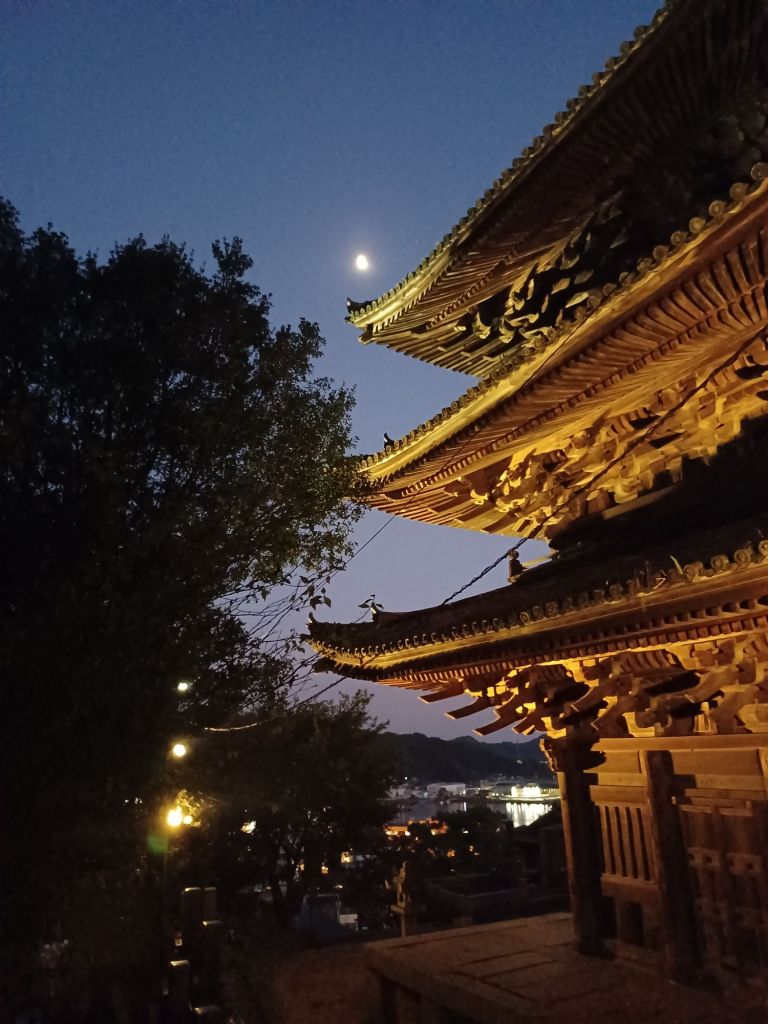
Tennei-ji is another of those Soto zen temples without any evidence, at least today, of activity, other than a few cats lounging about. The temple is, after all, in the vicinity of Onomichi’s infamous “cat alley.” Cats are to Onomichi, as lions are to the Serengeti.
I had looked to see if there was a Soto temple in Onomichi, but nothing turned up. Only when I arrived at this temple complex did the signage indicate that this temple is of the Soto tradition, having relieved the Rinzai sect of it hundreds of years ago. Perhaps the Rinzai monks were allergic to cats, but the Soto monks were more tolerant. One can only hazard a guess.
Apparently, there is spiritual activity here as the signage indicated that common folks could join the monks for zazen a couple of times a week, again a bit too early for me.
As at the very first Soto monastery I visited, in Morioka, this monastery also has the requisite five hundred arhats in attendance. Apparently, the number five hundred corresponds to the number of disciples Shakumuni Buddha had. I suspect this is one of those mythological numbers, such as the number of angels that can fit on the head of a pin. The argument continues to rage.
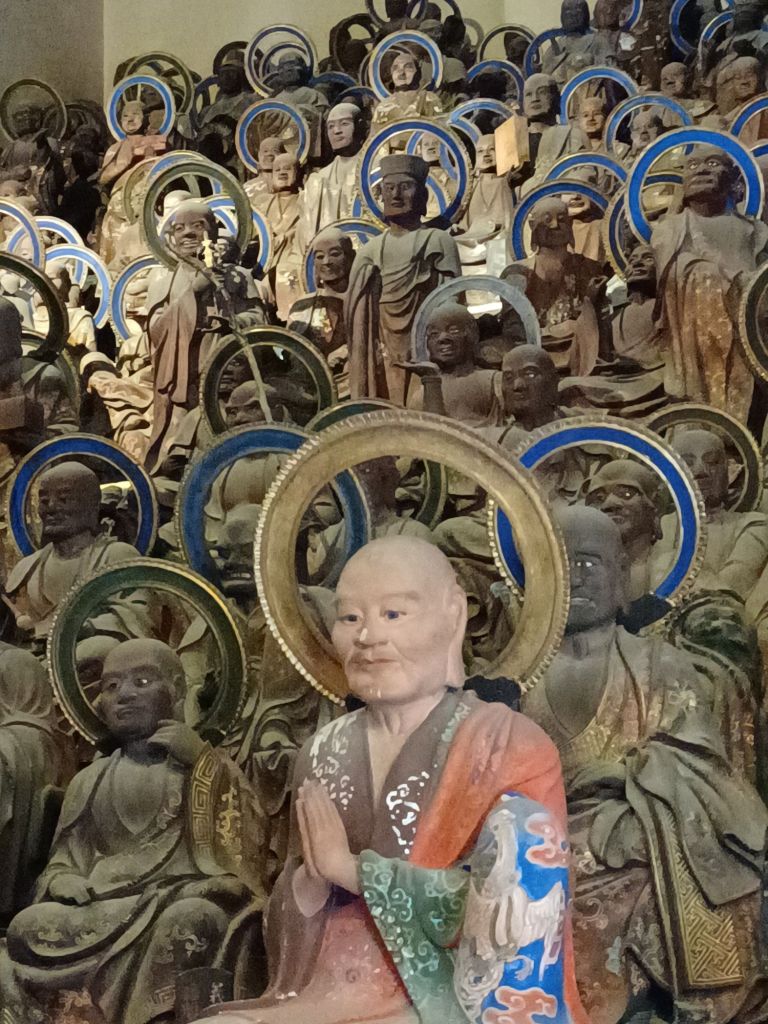
The room was too dark to capture all five hundred in a photo, and they were a dusty lot in any case. I do like the nice gold and blue halos. As at the Morioka temple, this bunch seems mostly to be having a good time. Having a good time is not a foreign concept in the zen traditions. I have evidence to prove it.
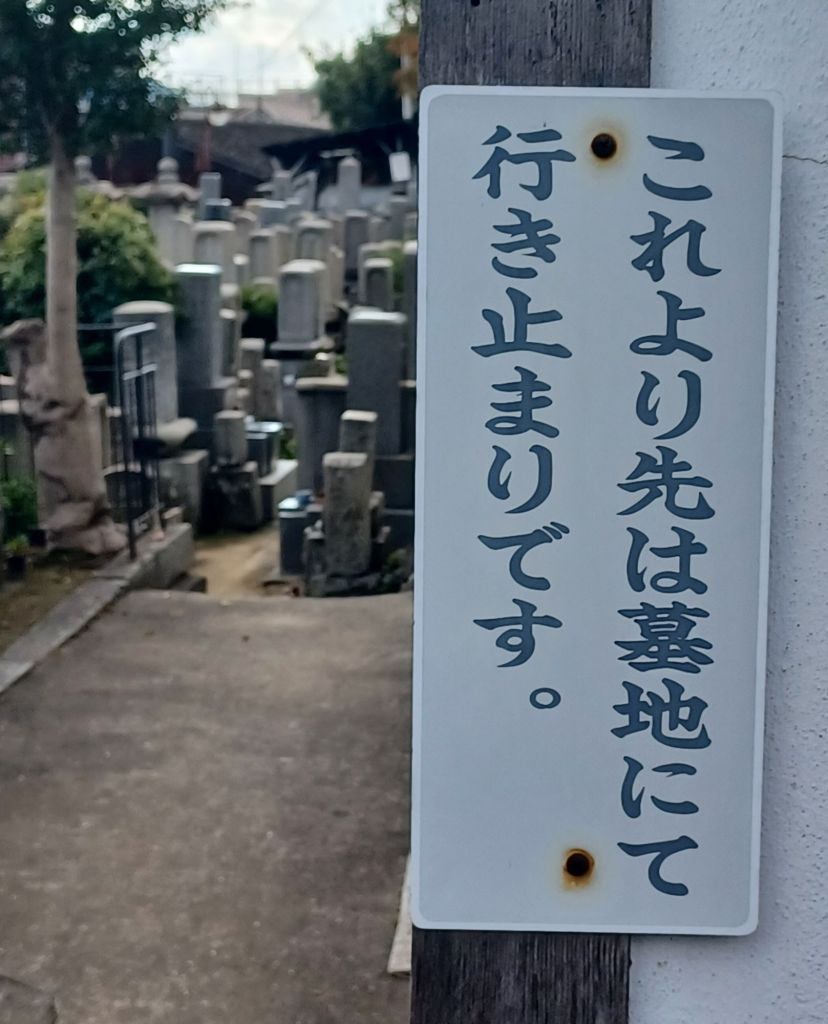
The sign says: “From here on, it’s a dead end at the cemetery.” Who says we don’t have a sense of humor?
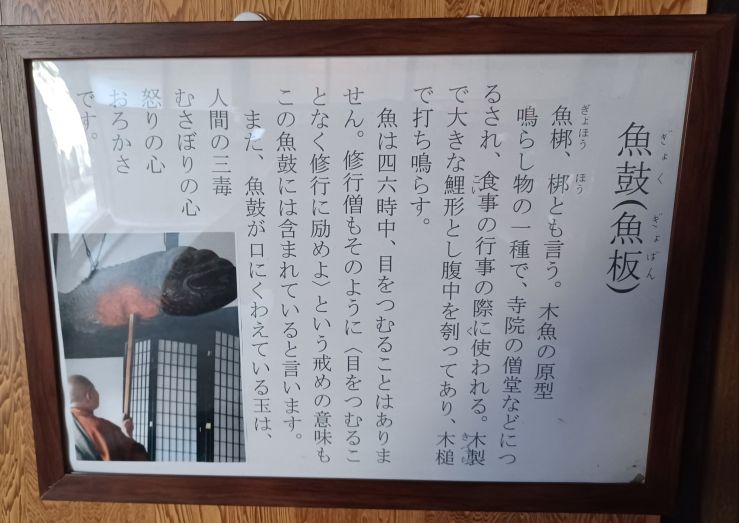
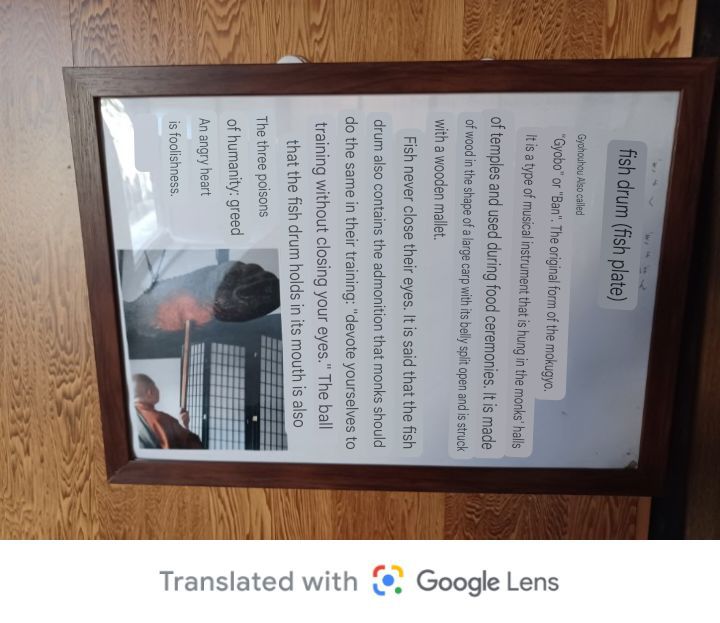
Then, there is the mokugyo or “fish drum”- the “original form.”
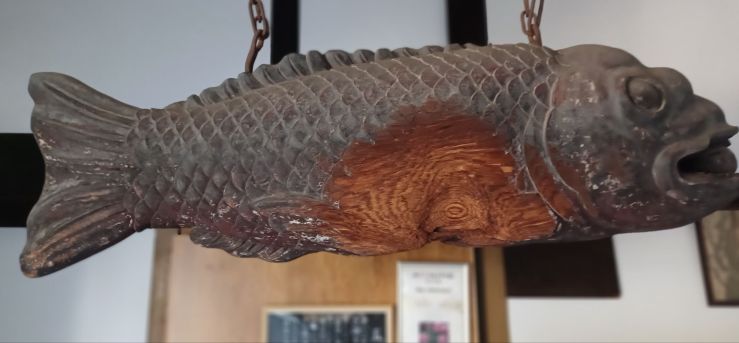
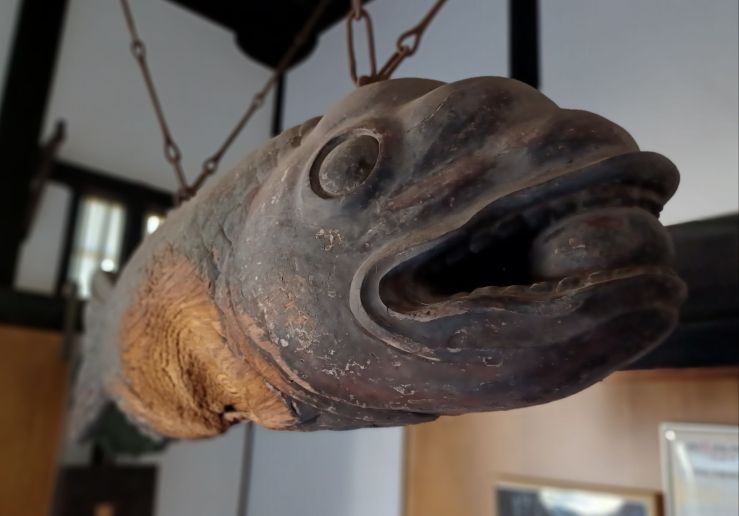
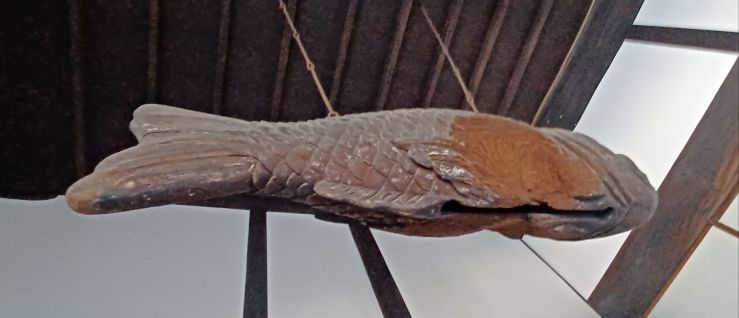
The Japanese text and translation:
Then, there was this:
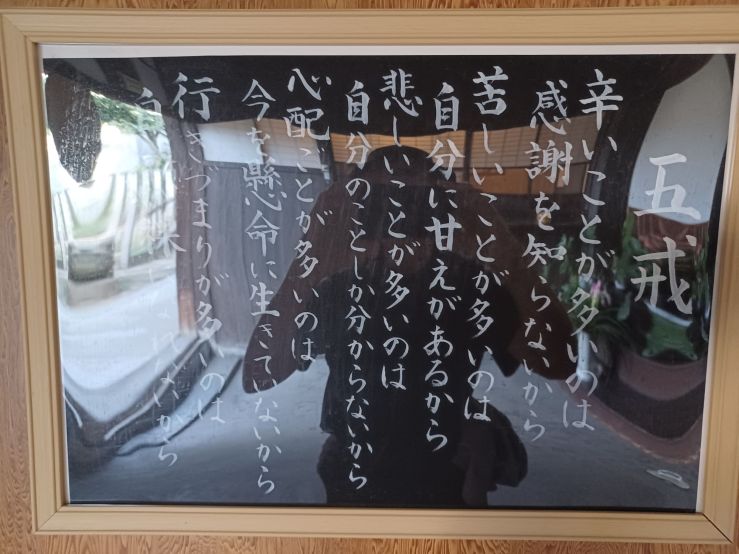
Five Precepts:
There are many hardships
Because we don’t know gratitude
There are many pains
Because we are self-indulgent
There are many sadnesses
Because we only know ourselves
There are many worries
Because we are not living in the present
There are many dead ends
Because we cannot be naked
 Autumn In Japan