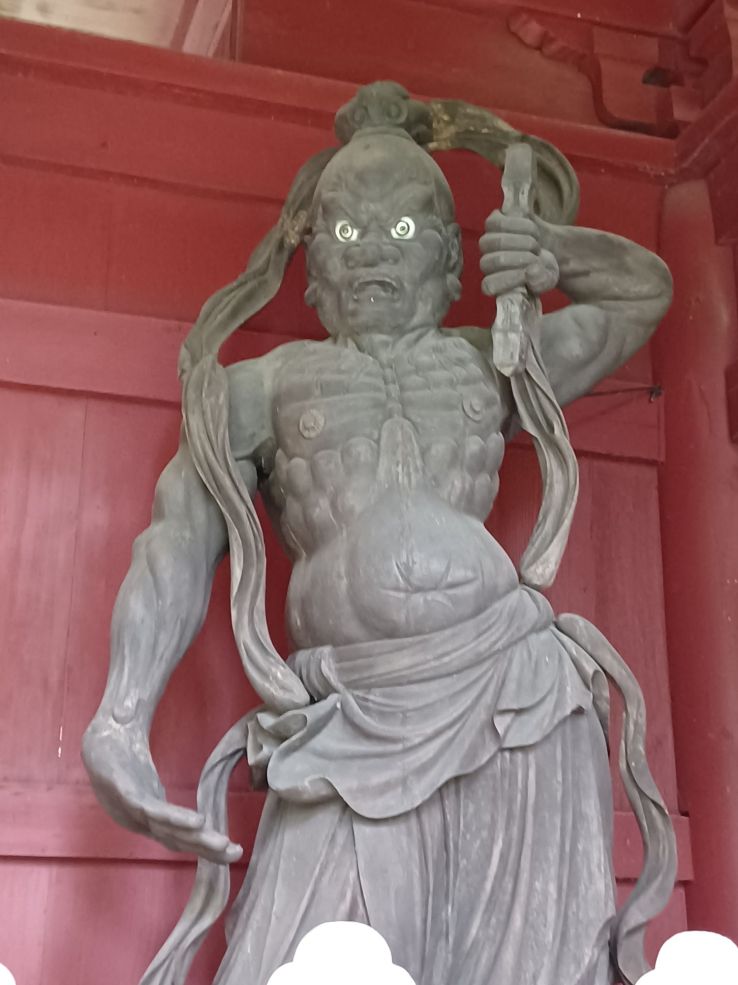
These fiersome temple or gate “guardians” at supposedly peaceful Zen temples seem out of place. Still, I’ve got to wonder at the wild-eyed presences of these dangerous warrior like figures who warn of the dangers involved in entering casually into a spiritually charged sacred place.
Spiritually charged or not, this over 800 year old Soto Zen Temple on the outer edge of Kanazawa was entirely silent and still. Not a creature was stirring, not even a mouse, except for one monk who surprised me by suddenly opening a door behind me. I vanished around a corner as quickly as he came into view. After that, the stillness returned.
Apparently, this is the most venerated of the Soto temples in Kanazawa. It is a Japanese National treasure. I know it is an active temple/monastery because their website says that they allow visitors to practice zazen at 4:30 am. I probably won’t be able to make it. Dang!
I was able to see a few artifacts of their old practice, which, while much older and generally much bigger, we still use in our scrappy storefront Sangha on 19th Avenue in Seattle.

This is a mokugyo, or “fish” (undusted for many years), beaten at a steady pace to keep the rhythm during chanting services.
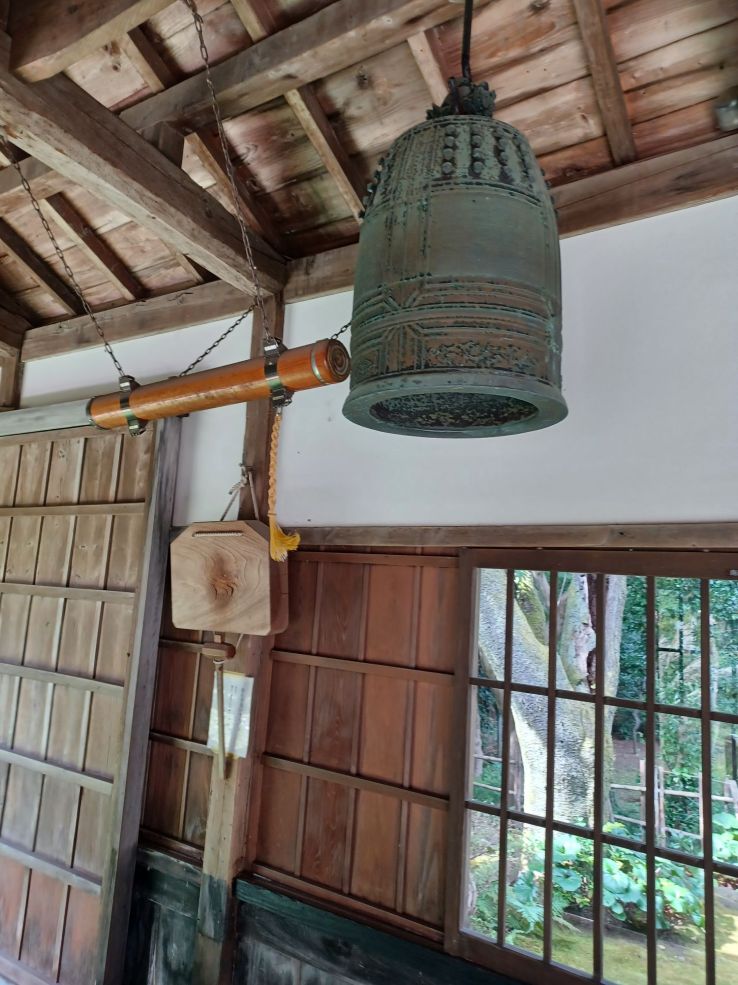
The wooden block, called a “han,” is whacked with the mallet to notify monks and wayward lay practitioners that it it getting to be time to sit for zazen. I loved the sign affixed to the post. It said, in Japanese, “Don’t do it!” I was tempted but showed restraint. It is, after all, a sacred object in the tradition.
We have both of these sacred objects in our zendo. While still a veritable novice, I’ve had the privilege of being the “timekeeper” for our sessions and somewhat enjoy the sense of drumming that evokes something old and deep.
We do not have a bell remotely like the one in the picture. The ones we use we pull out of boxes on Sunday mornings and ring at several times during our services.
Nevertheless, our services at Seattle Soto Zen are not unlike services held at Soto temples over the world and over many centuries. Thus, seeing these objects was not like seeing foreign tools of unaccountable origin or usefulness.
I walked miles through many back alleyways of Kanazawa to get to Daijo-ji. For me, it is the experience of getting in touch with a long and venerated spiritual tradition that is slowly becoming my own.
I’ll conclude this post with another practice of ours, passed down through many centuries since even before Shakyamuni Buddha. Gassho:

 Autumn In Japan
“drumming that evokes something old and deep.” Maybe as a past life regression…….
LikeLike