Ritsurin Garden

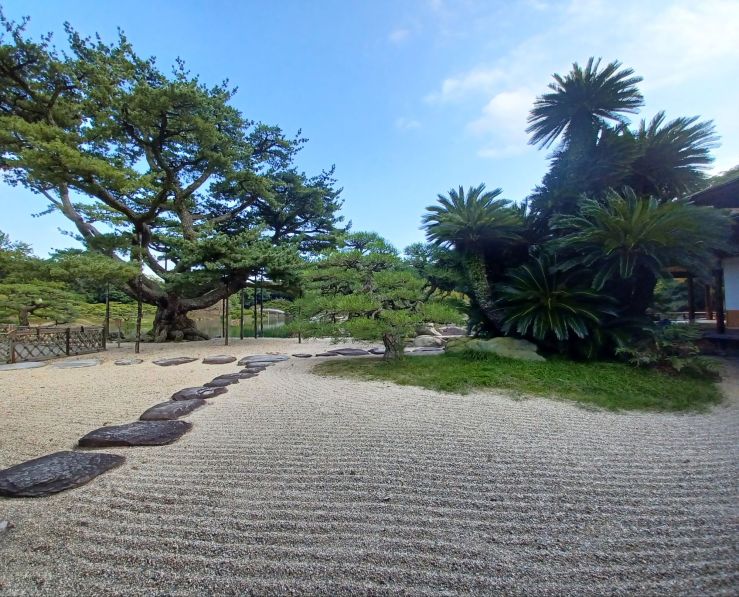
Ritsurin Garden is a lovely place to visit in Takamatsu, Japan. I walked it today and found it to be a beautiful example of Japanese horticulture that has roots (hah!) going back hundreds of years. The craft of pruning to a look of elegance and grace is on full display here, with old Japanese pines sculpted beautifully. I understand that, for some, the look is drastic or not natural. For me, it is a form that has long enamored. I don’t mean the badly sheared hedges forming animal shapes or other such grotesqueries! True, the look is not perfectly “natural,” but to see it is to feel as if the pruning created another form of beauty out of a form already beautiful by nature.

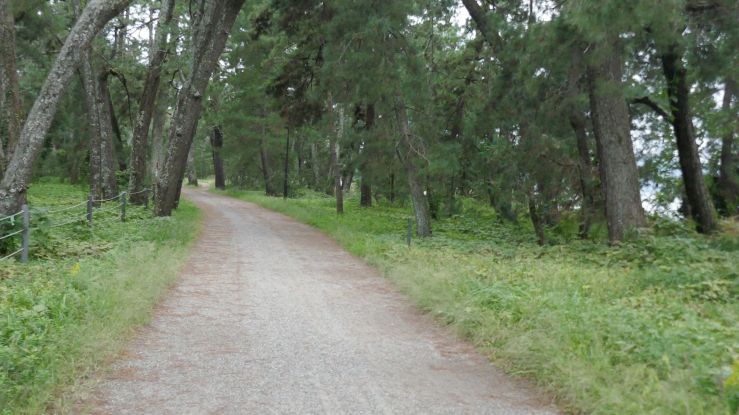
In the photo above, the garden butts directly up to the surrounding forrested hillside. The blending is lovely. Add to it the graceful arching bridges, the architectural forms of the tea houses, the rivers and ponds, and one can find a place of peace, where contemplation may come naturally.

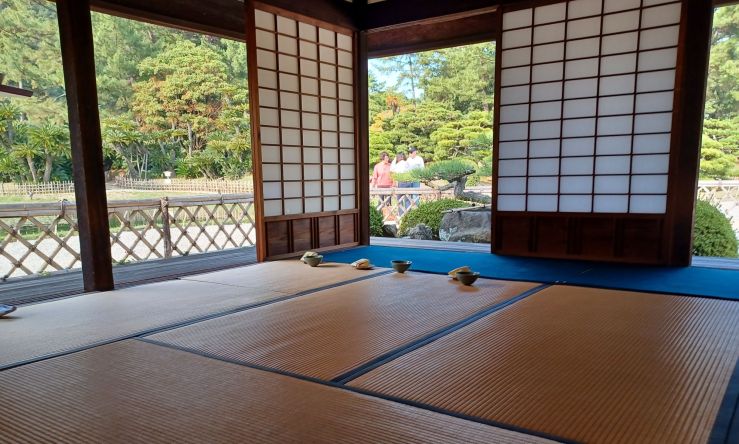
The gardens were one of the aspects of Japan that have long drawn me to wish to visit. But, interestingly, my most enjoyable moment was to be able to sit on the floor in the tea house sipping matcha tea. Then, as I think of it, the Japanese garden in its very large form, such as Ritsurin, or in it’s very reduced form, as in the courtyard of a Japanese home, are meant to be enjoyed in their serenity through strolling or sitting, in this case, while drinking tea. Thus, I enjoyed this afternoon in Takamatsu.

Naoshima

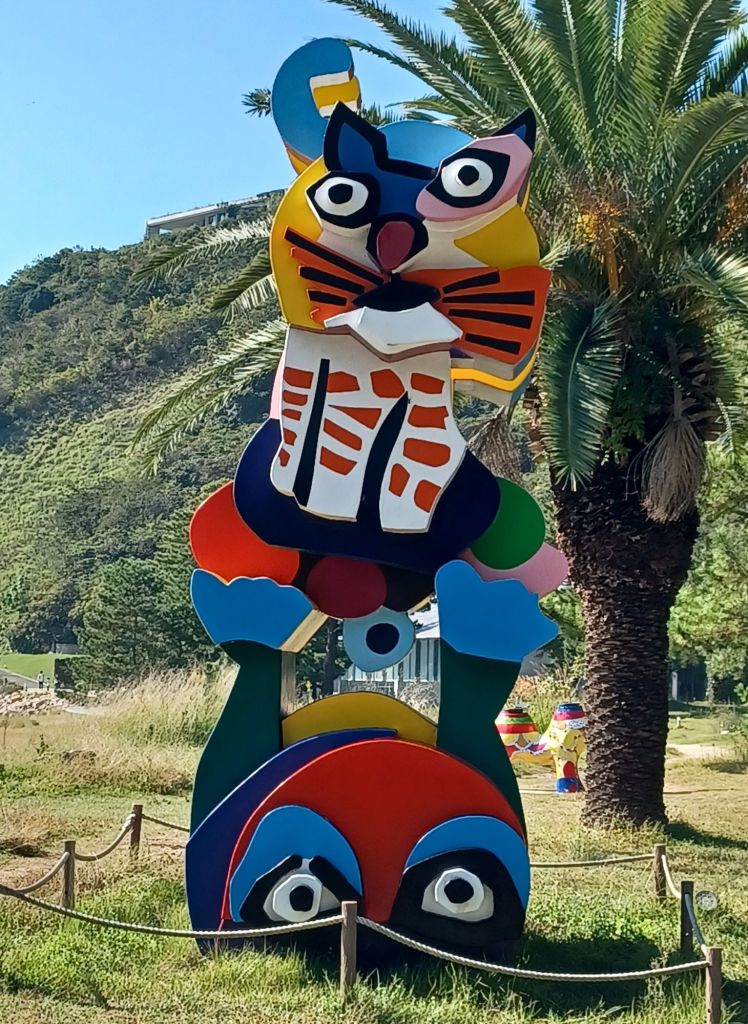
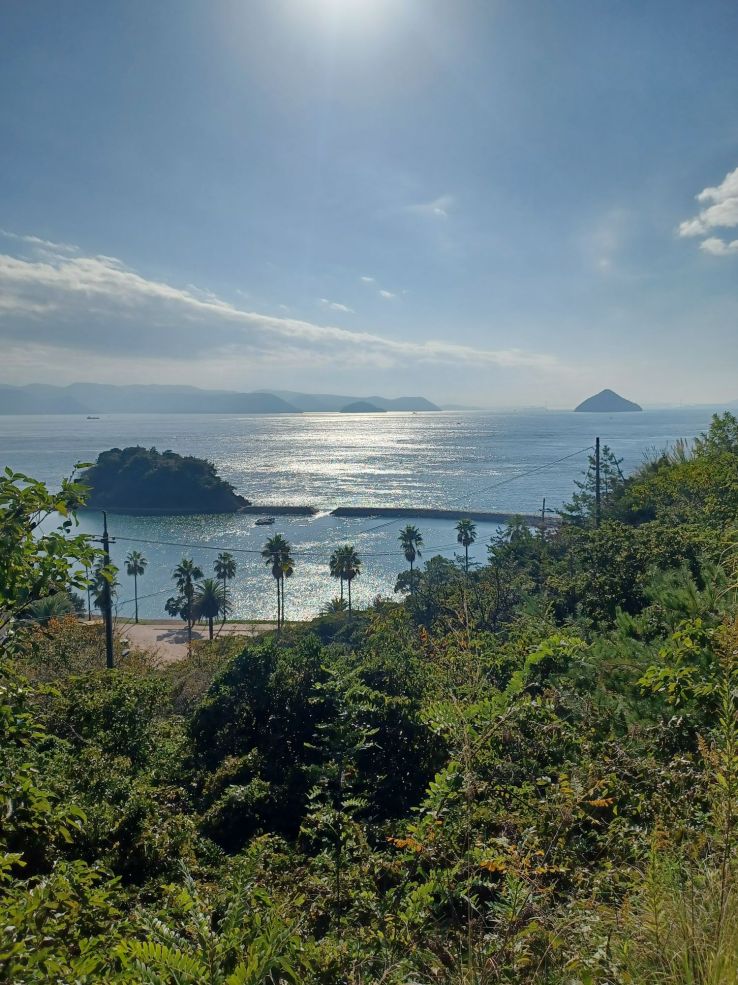
Naoshima is a small island in the Seto inland sea, an hour’s ferry ride from Takamatsu, where I am staying for a few days. It is known for its displays of modern art, in its museums, and many displayed outside, permanently, such as this cat and turtle piece. (Karen Appel, Dutch painter and sculptor.) While not a big fan of modern art, I did enjoy many of the displays. Plus, it was a lovely and warm day to stroll around the island.

A few photos may be helpful.

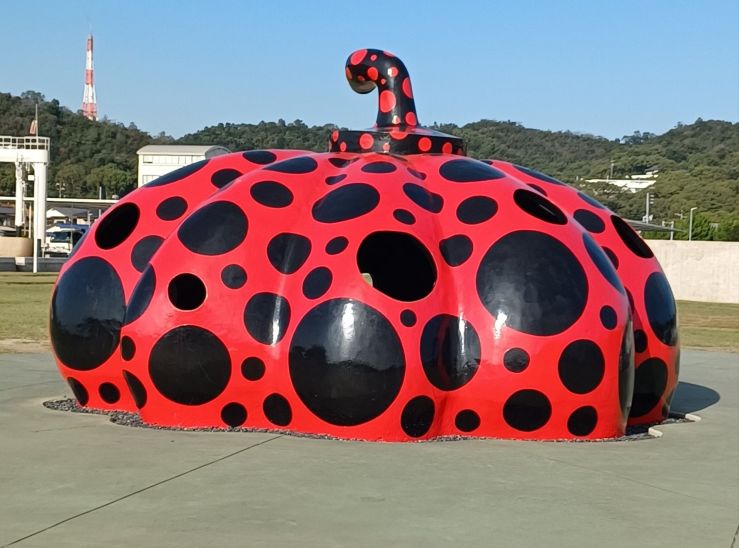
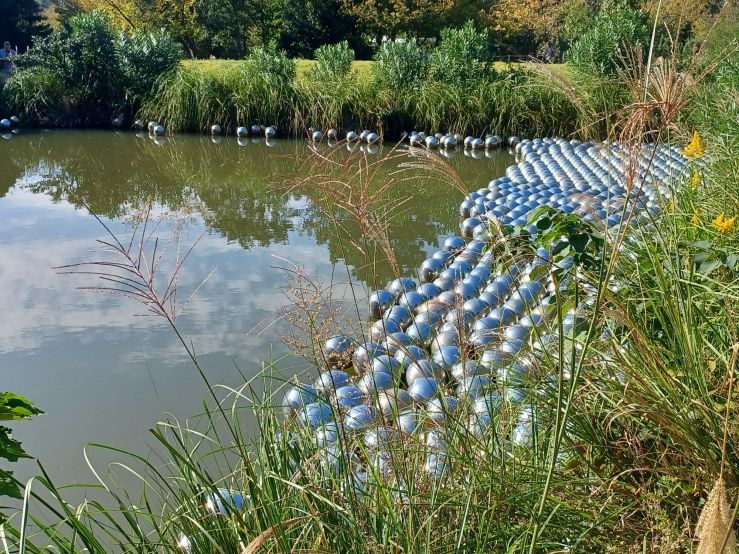
A giant red pumpkin and hundreds of stainless steel balls floating around in a pond.

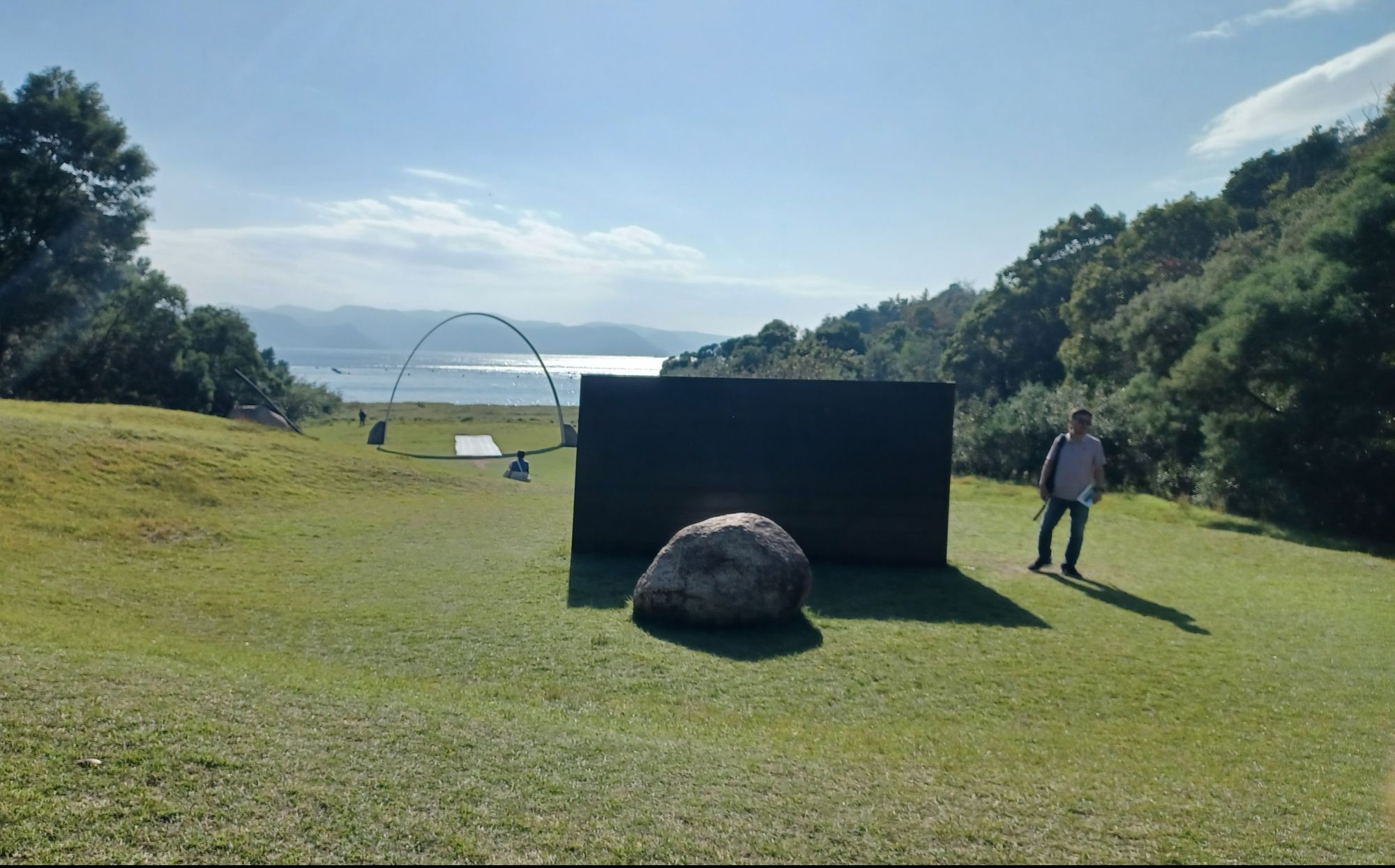
This is entitled, “Tourist standing next to art.”

This is an oculus – an eye to the sky. From one angle, it looks like the moon.

I enjoyed sitting on the ferry deck as we traveled on the water. So many reminders of jumping on ferries in Seattle to head over to the Olympic peninsula. Below is the Takamatsu skyline from at sea.

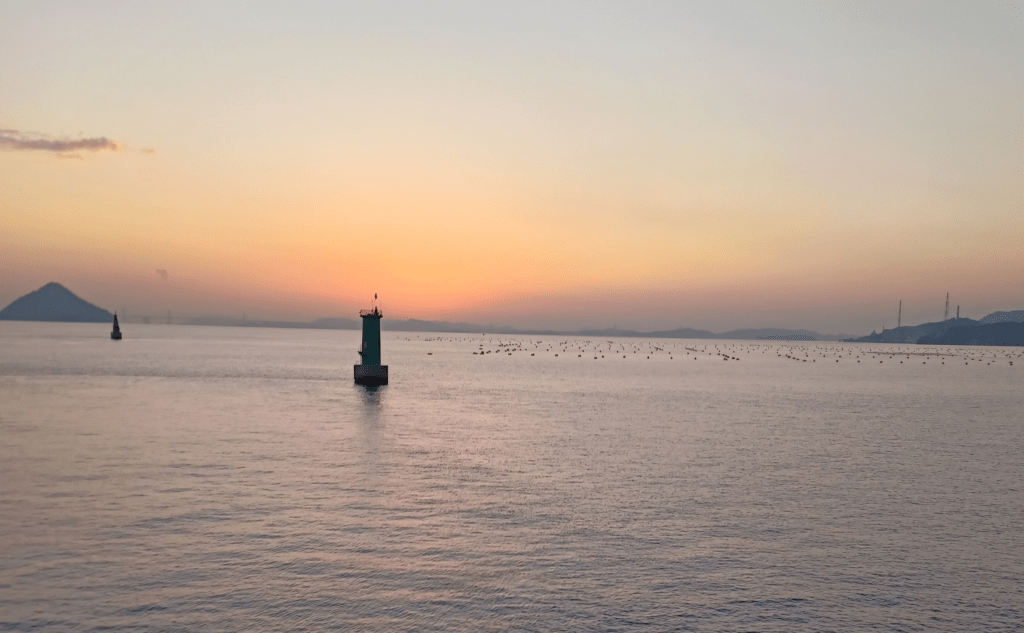
And then, there’s the return in the lovely evening sunset.

Fear and Courage

I’m listening to an audiobook by Pádraig Ó Tuama, called, “In the Shelter: Finding a Home in the World.” In it, he writes of fear and courage, that they come from the same place, the same place, “in the body,” which has it’s voice to listen to, to hear.

Before I started this trip, I said to more than one person, “I’m a little afraid.” I was thinking of every bad or really difficult thing that could happen. One or two said to me, “It is a courageous thing to do.” I didn’t take it seriously. They are just being kind and encouraging, I thought. A month in now and I’m beginning to think about this in terms of the meaning of this trip for me. I was afraid to do it; I’ve cancelled plans to do it before, out of fear or lack of courage. Is there a difference?

In this sense, then, I guess this trip is a courageous act for me. I’m doing it when I had some fear to do it. There are still bad things that can happen or really difficult things. I remain fully aware of those possibilities.

Still, there must be reasons for a person to begin to dig into their well of courage. For me, why now? Why now when, before, I had Carol’s loving support? Why now, two years after she died?

Perhaps it is because I’ve been looking for an answer to my even bigger question: “Who am I, now that she is gone?

This is where the subtitle of Pádraig Ó Tuama’s book drew me in: “Finding a Home in the World.” What a beautiful title for an adventurous journey! I am here because I’m trying to find a home in the world. I’m sure that sounds like a strange thing. After all, I have a nice actual home, I live in a community of good and generous people, I have all of my material needs met, and more. I have the support of good friends and family. And, it’s not like I’m a young man setting out on life’s journey with all the years of trying and failing still ahead. Some might ask, as I do of myself, isn’t it all good enough and more? Yes. Yes, it is. Yet, “good enough” hardly ever satisfies, to the depths.

It is important for me to reflect on this because I’m not one to travel simply for travels sake. If travel has no meaning other than just to see places then, at least for me, travel is just more accumulation of places done and seen. Therefore, I hope this long trip to Japan answers some deeper need in me that will help me to find a home in the world.

In my spiritual imagination, this adventure has aspects of pilgrimage. I am travelling to places that my imagination has held sacred for a very long time. I’ve written before that I can’t say I know why this is so. And, my relatively new practice in the Japanese Zen spiritual tradition has only concurred with my long held sense. This tradition is beginning to shape my sense of me in the world.

Pilgrimage is a deeply important concept for me as it was for me and Carol when we did most of our larger travels into the wider world. For instance, our last trip together was to England and Scotland at a time when cancer was very much a part of our lives. We went to Norwich, England, the home of Julian of Norwich, a woman, a mystic, and a spiritual healer and counselor. She was one of the great women in a church that has rarely recognized women as spiritual leaders.

We went to Iona, a small island just off the western coast of Scotland where a community of lay persons have created spiritual practices outside the confining restrictions of any formal church. On our first night there, we went to their evening service which happened to be a service of prayer for the sick. Carol did not hesitate to go down to receive the healing touch of the Iona community.

I can’t say how this trip of mine, this pilgrimage, will help me find my home in the world. That is too much to ask of any trip, person, or thing. It will not tell me who I am. It is, however, giving me time and space in sacred and beautiful places to brush up against parts of myself I’ve either tried to ignore or to find those things in me, such as courage, that will help me find the way.
Amanohashidate

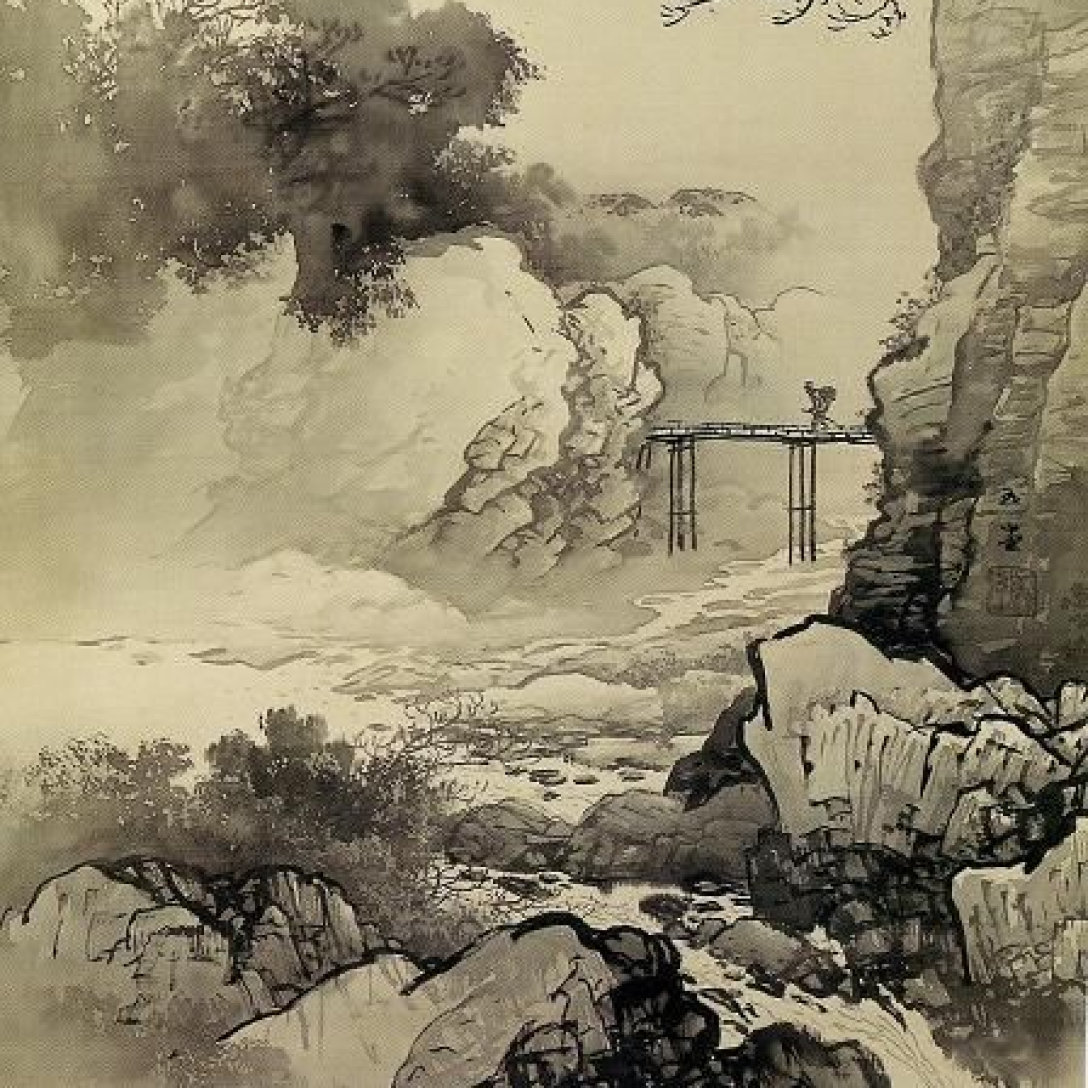
Amanohashidate is known as one of the three most scenic sights in Japan. I came here to see this strand that certainly is a lovely bit of creation. From some viewpoints, and bending down to view it from between your legs, it is said to resemble a dragon flying up to heaven. I didn’t try this pose but I certainly like the thought, the dragon part, that is. The next best thing is to turn this photo upside down and you can kind of get the idea. Cool, eh?

I rented a bike and rode to the far end and then walked the strand round-trip fashion, about five kilometers in all. While I haven’t seen enough of Japan to know whether this ranks in the top three, I did like the ride and the walk and the view from up where a little chair lift took us.

Walking the beach itself, what struck me was how very familiar it seemed. Except for the hilly terrain surrounding this large bay in the Sea of Japan, the beaches were not so dissimilar to Tawas Point and its gorgeous beaches in Michigan where I played as a child – the water lapping calmly on the shore, the varied shapes and colors of the stones on the beach. It was all I could do not to go into stone collecting mode. It is a habit of mine. And, I certaily don’t need any more weight to carry around.

Sogen-ji and Takayama

I came to Takayama because it was the closest place to Shirkawa-go where I could find a room. I’m glad to say that was a worthy destination in itself. Many small shops, streets of historic homes, beautiful setting. I was also able to find dinners that I could safely eat, albeit of the carnivorous type. Here is an example:

Obviously, this is one of those grill your own meal and meat places. Actually, a fun kind of experience. There seem to be many of these types of places in Takayama.

Disclosure – I am fully invested in pursuing a predominantly vegetarian diet in the future. However, with my dietary restriction, Japan is not proving to be a good place to be faithful to this future investment of mine.

Now, more disclosure, I “dined” tonight at a joint called “Evil Tex.” I had a Hida beef burger and fries. I’m not proud of myself for this but I did enjoy it.

Then, one of my favorites, at least for coffee:

With pictures on the wall to prove it, it was clear that the place had changed little since 1951. Gotta love the menu, written out completely in pencil. Was it also written in 1951? Plus, excellent coffee from servers who knew what they were doing and may also have been there since 1951. I thanked them as I left, saying, “Tom. Since 1953.”

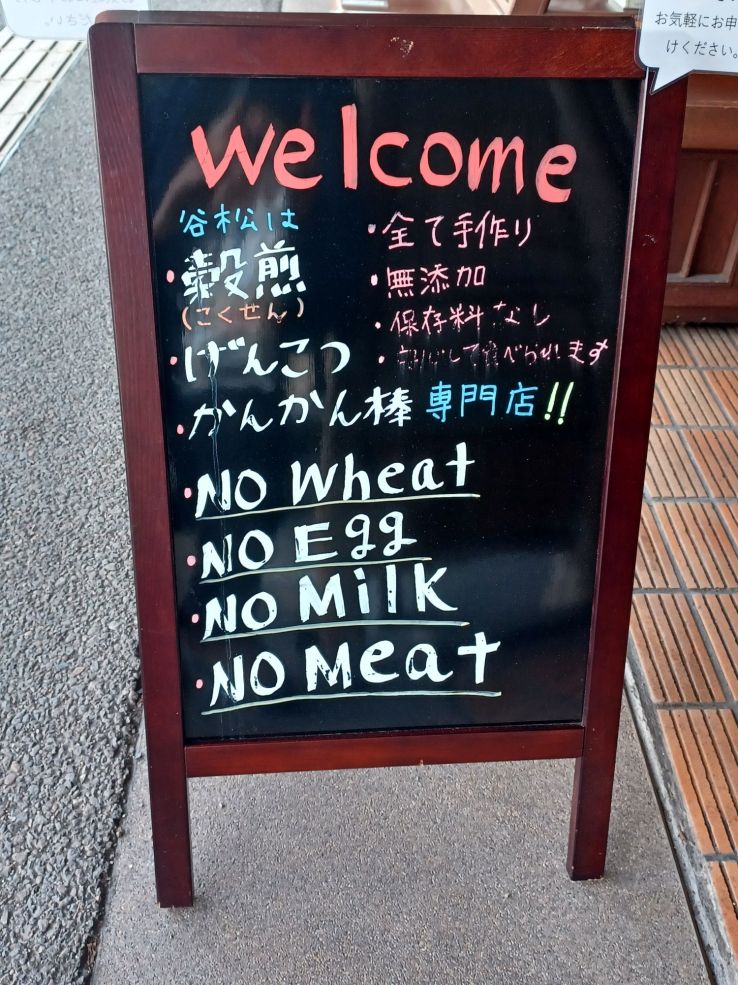
Then there was this little miracle of a place in a land where my nemesis, wheat, is pervasive:

I had to buy something just to be supportive.

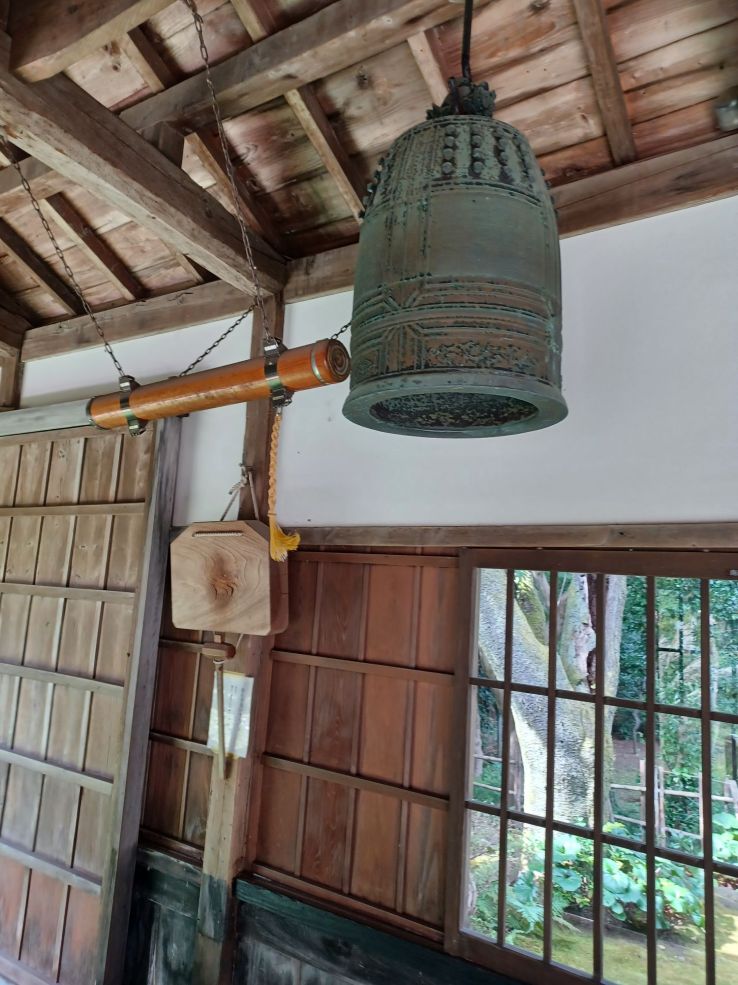
I’ve not forgotten Sogen-ji. It is their large bell, or Bonshō, heading up this post. I went to Sogen-ji in my ongoing desire to see at least some of the Soto zen temples in the places I visit. This was not a very distinguished temple. Not that that is important, at all. It seemed a quiet place, devoid of any active monkish presence. However, I did finally hear a steady thumping sound that might have come from a mokugyo (see my post on Daijo-ji.) I thought I must have been imagining it, when finally, through a tiny window, I was able to see a seated monk, chanting, a mokugyo at his side, with a few persons present to his right. It was, perhaps, a memorial service of some kind. This made me think there was some active presence in the monastery after all. If I was looking for some inspiration here, I did not find it.

I was, however, given warning, such as one might be expected to receive at sacred places where what is Holy is present:

I’ll be more careful when next I enter temple grounds!

Finally, a last picture from Takayama, looking at the lively rush of the Miyagawa River.

Shirakawa-go

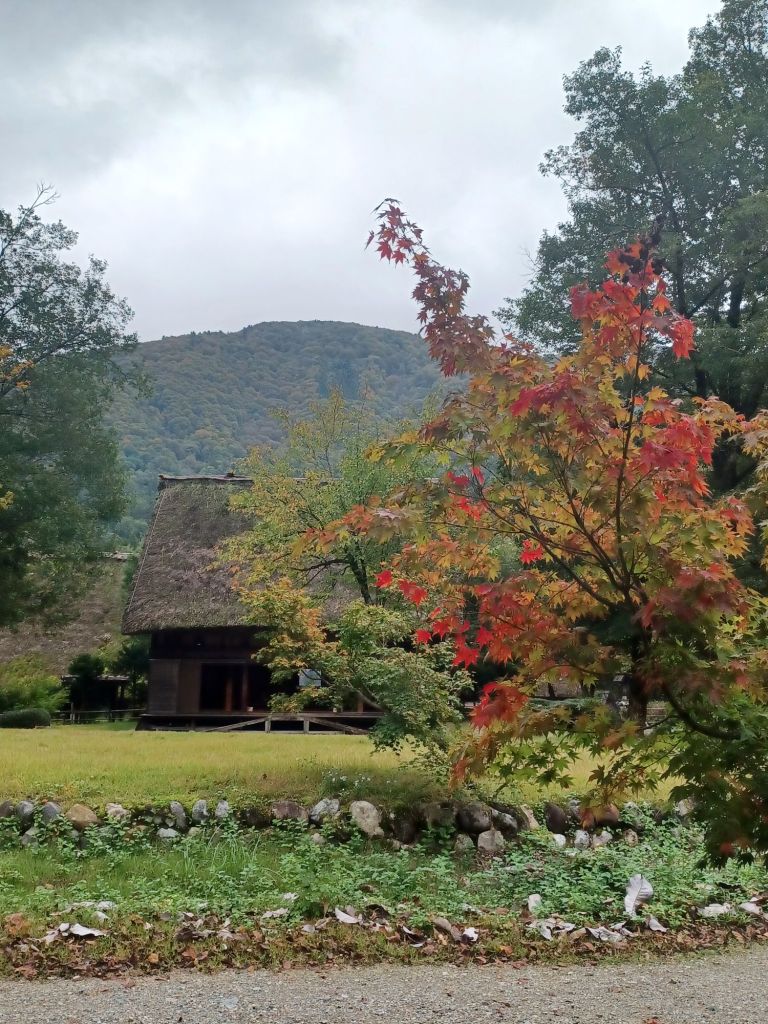
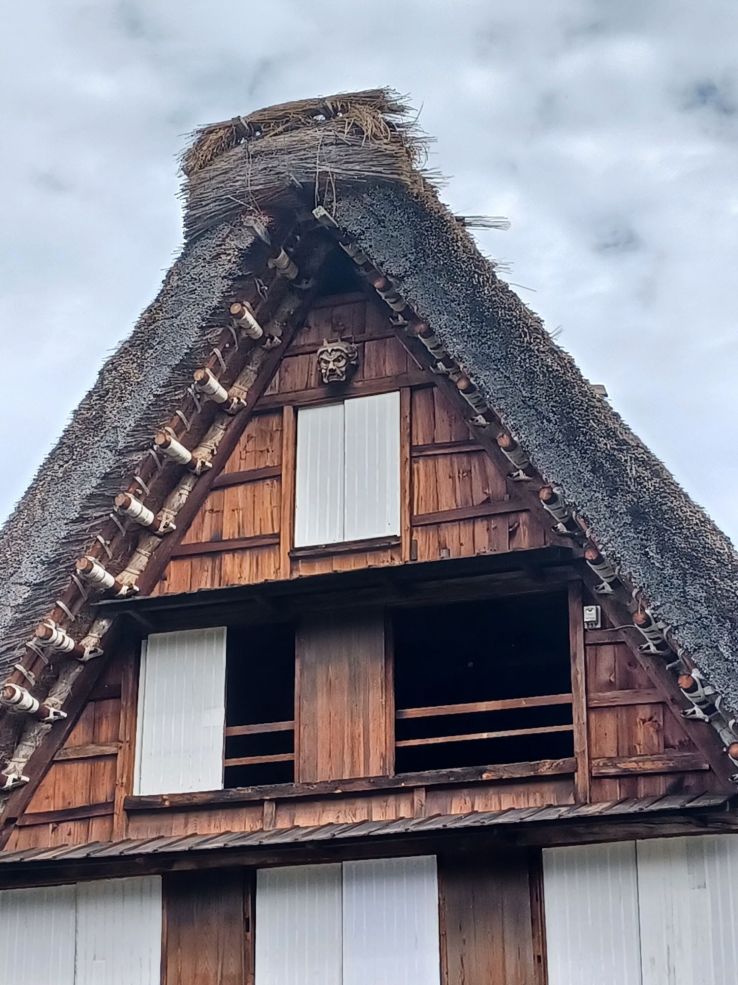
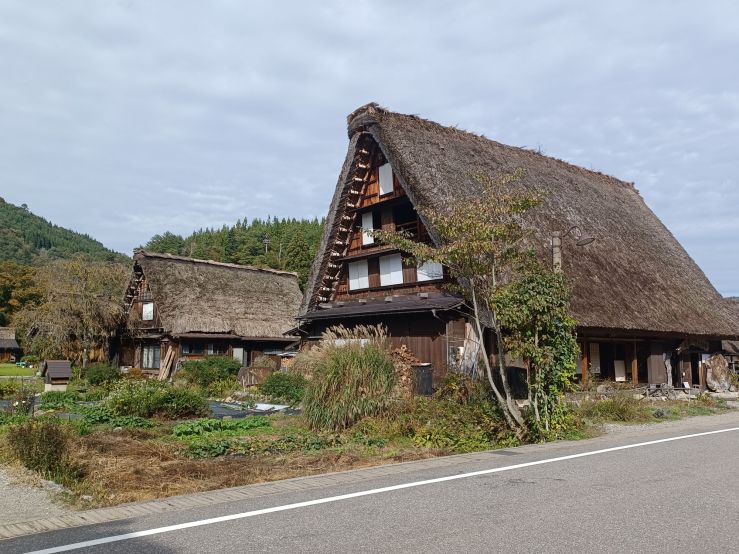
An hour’s bus ride from Takayama, where I am staying, is Shirakawa-go, a world heritage site in the mountainous area of central Japan. While it used to be a village where people worked and children played, it was abandoned years ago due to construction of dams (sound familiar?) It began a long comeback and is now home to many of the unique “gassho” style homes welcoming hoardes of visitors. Still, it is a lovely rural setting and the homes and other buildings are quite stunning.

I was fortunate to have a day there without the predicted rain. The autumn leaves have begun to turn up in the higher country in spite of the unseasonable warmth of this October. Autumn color is taking its sweet and glorious time. Nevertheless, today was cool enough for warm clothes, which I brought plenty of but haven’t had much need to wear. For this reason, lovely homes and setting notwithstanding, my best moment came while sitting around a wood fire set in traditional manner in the middle of one of the homes. Several of us sat around the fire and enjoyed proffered cups of green tea.

To get some of the feeling but without the actual warmth or the wood smell and smoke flowing all around, here’s a little video.

Finally, scenes from the village itself.

Archery in Takayama

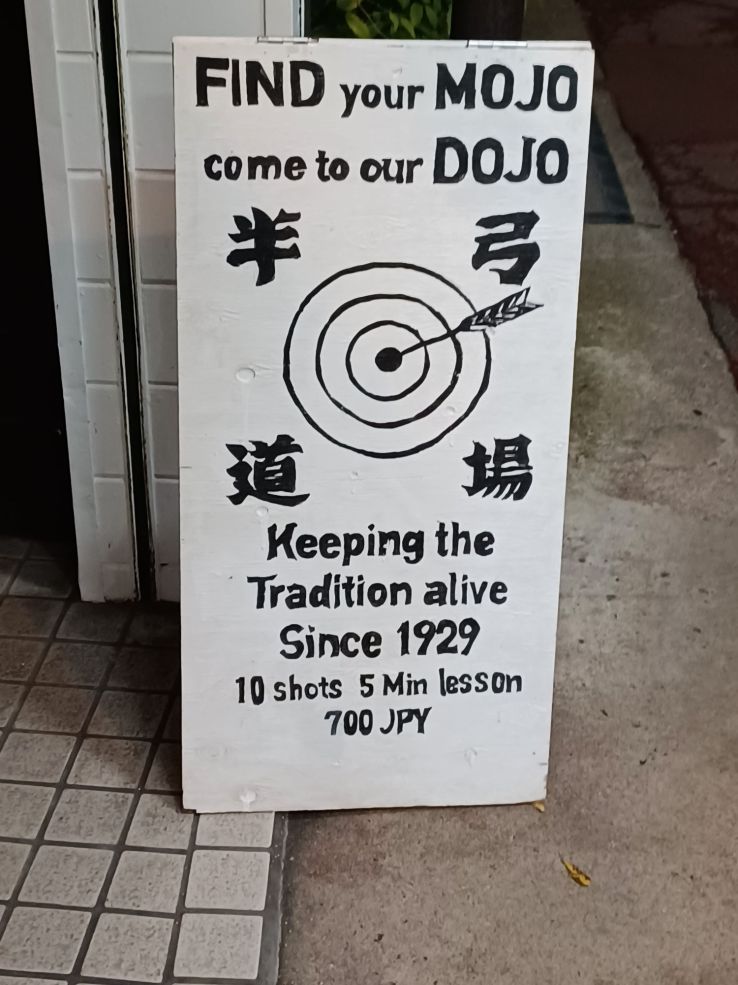
This is one I couldn’t resist. Strolling around Takayama on my first night, I happened on this small storefront place. Apparently, testing ones archery skills was popular in Japan years ago.

I have a history, passed down from my father. He was a skilled archer. For a time, in our small town in Michigan, he and his friend, Charles, had their own archery company. They ran it out of Charles’ garage. They made arrows, painted them, glued on the fletching, and affixed the field tips for shooting at targets or deadly sharp points for hunting. They mailed boxes of these around the country. Sadly, it did not last.

Their more lasting archery legacy was to host the National Field Archery Tournament in the early 1950’s in the woods near our town. People came from as far away as California to participate.

I was a big disappointment as an archer, unlike my older brother. Nevertheless, I gave it a try. I went “hunting” one sunny day. I had no patience. I was tromping around through the woods, making a racket that every deer for miles could have heard. Still, I looked up and what did I see but a herd of deer standing in front of me, within range, and seemingly oblivious to my lack of hunting prowess. I notched the arrow on the string of my bow and raised it to shoot.
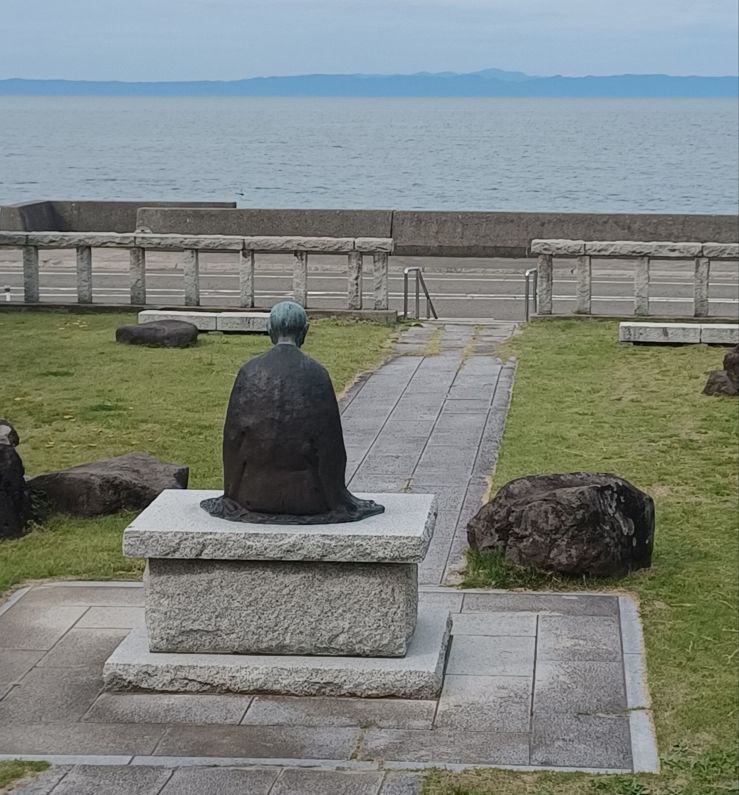
I let the arrow fly! It flew – far above the heads of the herd! I lowered the bow and knew, in the same moment, that I didn’t have it in me to kill such a wonderful creature. I walked down the road and back home. I never tried hunting again.

I still have the bow I used as well as the quiver and arrows I had with me that day. The bow had been a graduation gift to me from Charles and my father. They are of my most cherished possessions.

So that is my archery legacy. I believe that this night in Takayama was the first since my “hunt” that I drew back the string and let fly.

I had as little succss tonight. Of the ten arrows I released, only two hit the target. Still, it was thrilling for me! What a gift from another small town far away from Tawas, the little town in Michigan where I grew up.

Daijo-ji

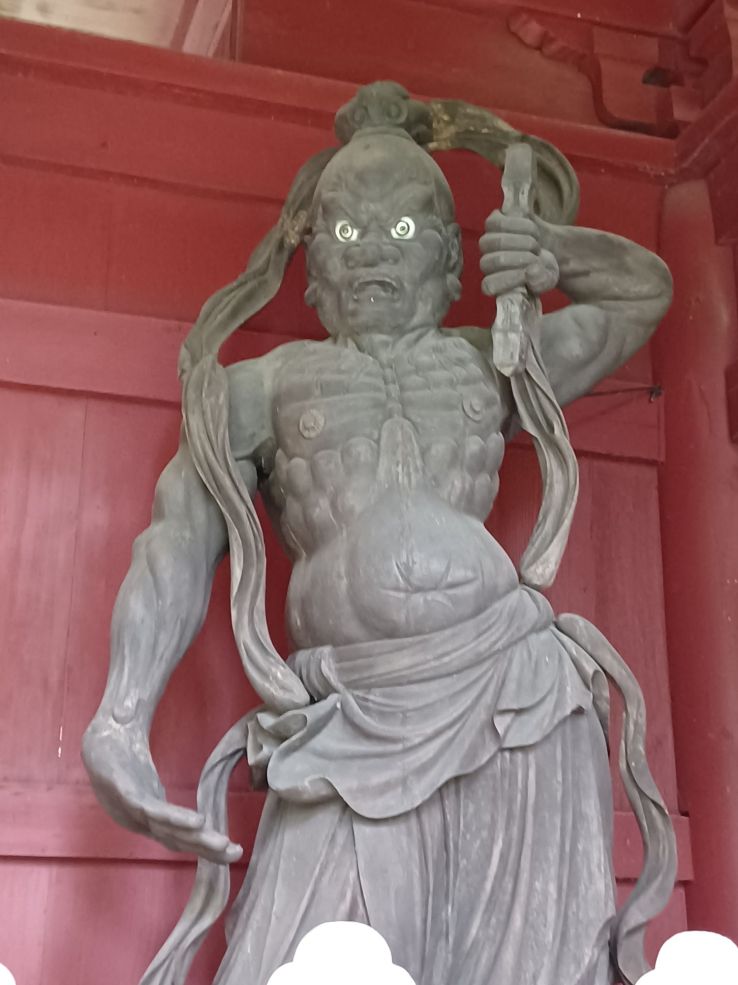
These fiersome temple or gate “guardians” at supposedly peaceful Zen temples seem out of place. Still, I’ve got to wonder at the wild-eyed presences of these dangerous warrior like figures who warn of the dangers involved in entering casually into a spiritually charged sacred place.

Spiritually charged or not, this over 800 year old Soto Zen Temple on the outer edge of Kanazawa was entirely silent and still. Not a creature was stirring, not even a mouse, except for one monk who surprised me by suddenly opening a door behind me. I vanished around a corner as quickly as he came into view. After that, the stillness returned.

Apparently, this is the most venerated of the Soto temples in Kanazawa. It is a Japanese National treasure. I know it is an active temple/monastery because their website says that they allow visitors to practice zazen at 4:30 am. I probably won’t be able to make it. Dang!

I was able to see a few artifacts of their old practice, which, while much older and generally much bigger, we still use in our scrappy storefront Sangha on 19th Avenue in Seattle.

This is a mokugyo, or “fish” (undusted for many years), beaten at a steady pace to keep the rhythm during chanting services.

The wooden block, called a “han,” is whacked with the mallet to notify monks and wayward lay practitioners that it it getting to be time to sit for zazen. I loved the sign affixed to the post. It said, in Japanese, “Don’t do it!” I was tempted but showed restraint. It is, after all, a sacred object in the tradition.

We have both of these sacred objects in our zendo. While still a veritable novice, I’ve had the privilege of being the “timekeeper” for our sessions and somewhat enjoy the sense of drumming that evokes something old and deep.

We do not have a bell remotely like the one in the picture. The ones we use we pull out of boxes on Sunday mornings and ring at several times during our services.

Nevertheless, our services at Seattle Soto Zen are not unlike services held at Soto temples over the world and over many centuries. Thus, seeing these objects was not like seeing foreign tools of unaccountable origin or usefulness.

I walked miles through many back alleyways of Kanazawa to get to Daijo-ji. For me, it is the experience of getting in touch with a long and venerated spiritual tradition that is slowly becoming my own.

I’ll conclude this post with another practice of ours, passed down through many centuries since even before Shakyamuni Buddha. Gassho:

Judging

I recently posted about Ryōkan, the Zen priest and poet. One line stands out above others, coming to me regularly; religiously here in Japan. Earlier this year, I turned seventy-one years. He wrote:

Reflecting on seventy years
I am tired of judging right from wrong
Faint traces of a path trodden in deep night snow 
A stick of incense under the rickety window.

(Kazuaki Tanahashi translation)

The differences between the States and Japan are too obvious to ignore. I don’t think I could begin the list them and will not do so, except as they rank themselves up and down in my overly stimulated brain. It would be neither fair nor helpful, to me or anyone else.

Like Master Ryōkan, I am tired of my persistent and self-defeating judgment making. Better to sit and look out over the sea, be it the Sea of Japan or, from the Washington or Oregon coasts, out over the North Pacific. From these places I can see little but the waves and the wide and calm waters lit by the lights from the heavens.

The waters are the deep night snow, the rolling surf the incense curling up and up.

Geisha Evening in Kanazawa

As a tourist, I cannot be privileged to spend an evening in what might be called an “authentic” experience of Geisha entertainment. So, the next best thing is buy a ticket for an abbreviated performance of geisha arts.

This performance, under the direction of “Lady Baba,” (not kidding!) was held in an over 200 year old teahouse in Kanazawa. Lady Baba is on the left in the picture. The other two were definitely talented in the arts of drums, the shamisen, and vocals.

The 30 or 40 of us in the audience enjoyed the time of music and learning something of Geisha art and dress.

As I understand it, and for several reasons, the art may be in serious decline. Traditionally, it is an art form for males performed by women. Still, the art itself is genuine – the instrumentals, the vocals, the art of entertainment in general, is valid now as ever.

For this reason, I enjoyed seeing and hearing the music as offered by someone who, in her way, is attempting to bring the art form to a mostly western public. Perhaps it will continue to evolve as, with so many other things in our world, it attempts to salve the common wounds of humanity. I hope so. There is beauty here and happiness no matter the difficult cultural accretions and, we may hope, a dying, albeit far too slowly, male chauvinism that has done so much damage to the world.