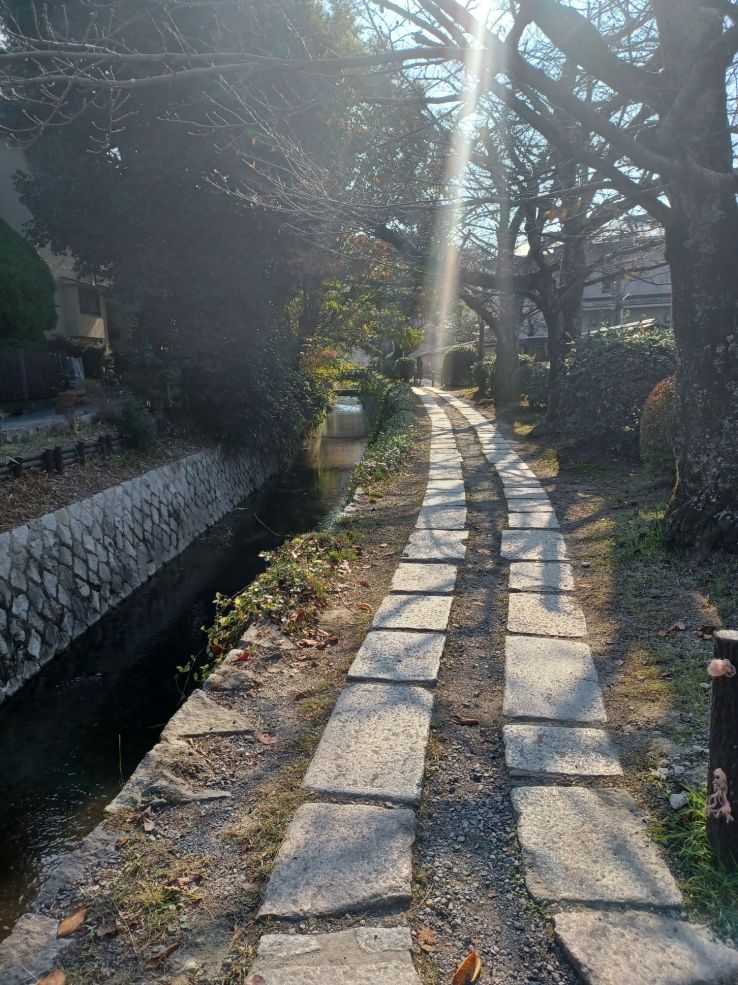
Nice shaft of sunlight on the Philosopher’s Walk, a meditative stroll in Kyoto. This is named for a prominent philosopher from Kyoto University, near here, who used to walk this each day, in a meditative way. Any person who thinks him or herself a philosopher, had also better be one who makes time for meditation. Otherwise, well, just a mere academic.
The Philosopher’s Walk is a nice, leisurely stoll along the Lake Biwa canal, which brings water from Lake Biwa into Kyoto. Lake Biwa is the largest lake in Japan, lying just northeast of the city.
Another short walk from here is Nanzen-ji, a Rinzai zen temple. I describe the Rinzai lineage as being a close cousin of the Soto lineage, my practice tradition. There are differences that are significant but not important. What I have discovered, being in Kyoto, is that this is a Rinzai town. Almost all the significant zen temples are affiliated with the Rinzai tradition, including Kennin-ji, whose gardens are wonderful and included in another of my posts.
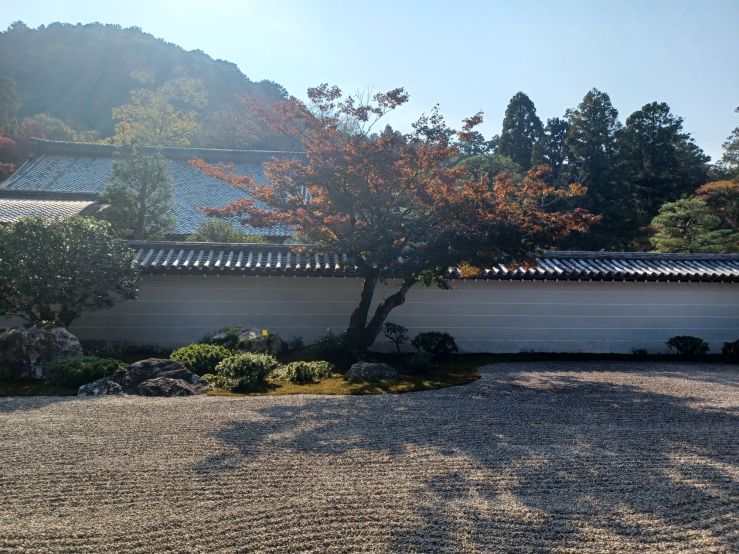
Nanzen-ji also has beautiful dry gardens.
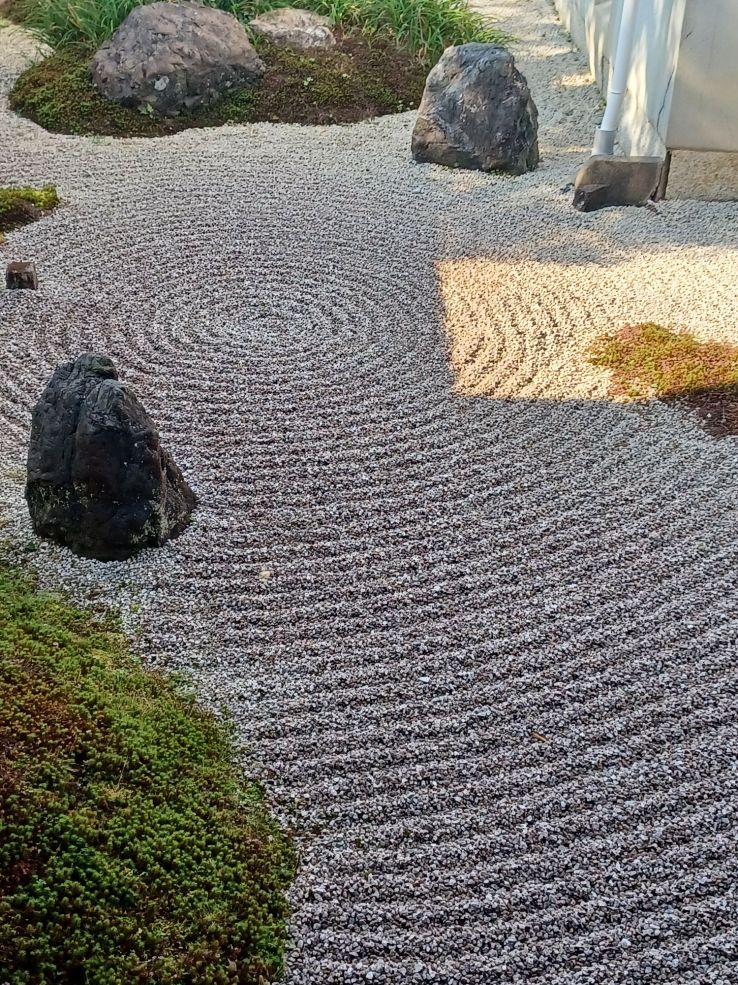
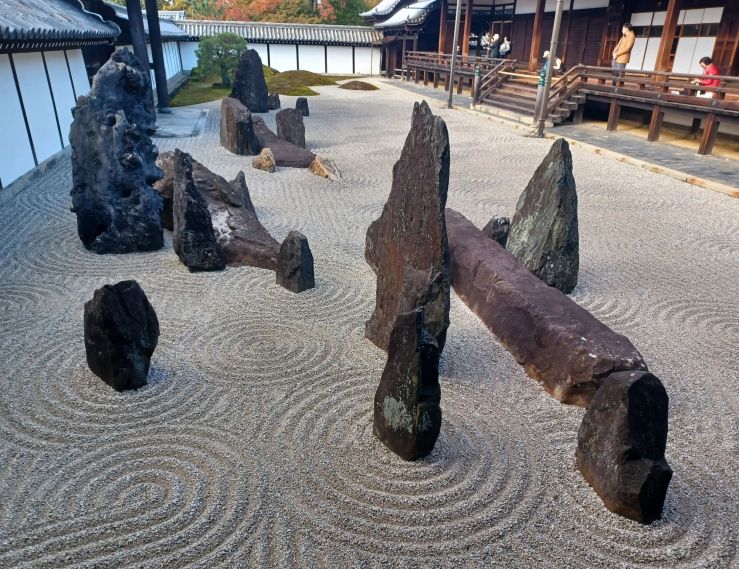
This one is lovely, like a pebble dropped into still water, ripples spreading in perfect circles.
The combined effect of raked gravel, leaning Japanese maple, low wall, and shadow have an evocative effect. I almost didn’t see this when first, I “saw it.”
Yes. I have come to the place where I am getting tired. All the decision making, the walking, the crowds. Oh, I have no regrets and I continue to do well. I feel good and I’ve got another good week in me but, and maybe for the first time, it is dawning on me that I am looking forward to going home, to my own bed, my own language, my own people, my own food, and my own very boring routines.
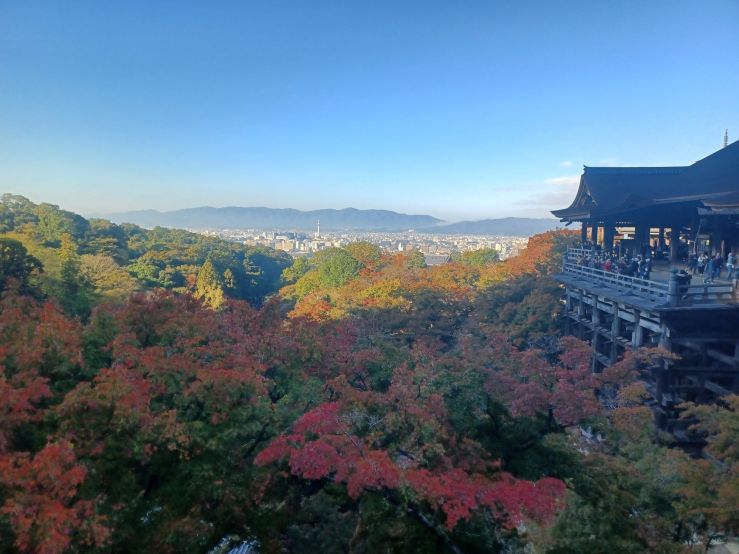
It is finally cold in Japan and the autumn leaves are beginning to notice. Yesterday, I walked up to Kiyomizu-dera, the big overlook place here in Kyoto. Next to me was a couple, taking in the scenery and the city spread out below us. I overheard one say to the other, “It’s almost the end of November. I can’t believe we’re here TOO EARLY!” I knew exactly what she meant. Every tourist in Japan knows what she meant. This late in the season and only now the leaves are beginning to turn their beautiful autumn colors. The big show seems waiting for us all to leave.
Still, I am seeing the beginnings and I have almost another week left in Kyoto. I will go slowly from now on. I will move with the pace of Autumn in Japan.
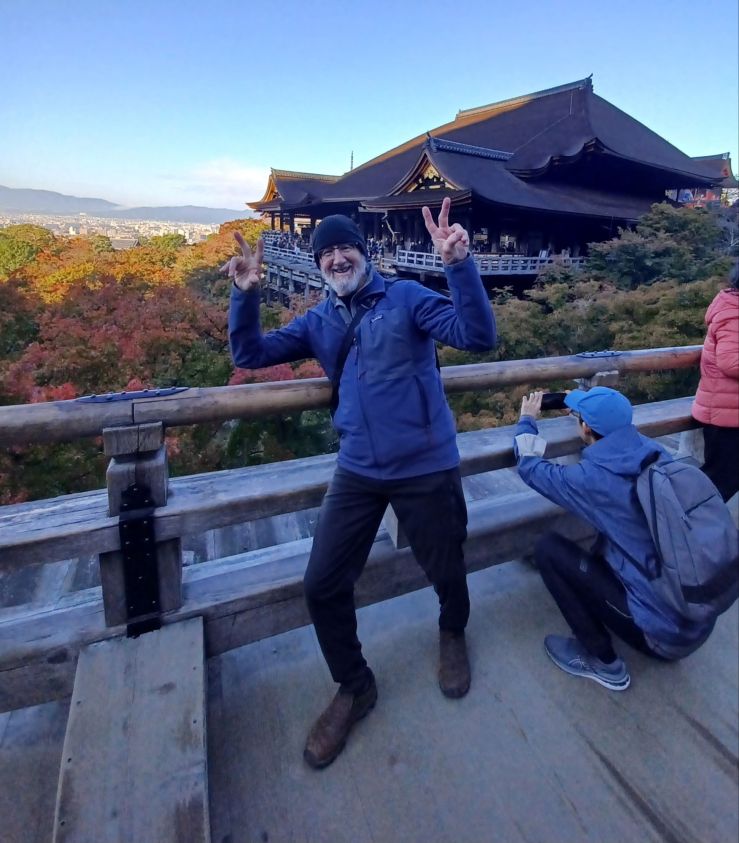
1st photo; When in Japan, do as they do. It seems the Japanese – young, old, men, women – are pros at posing for selfies. I’ve seen thousands of these poses, although not this bad. The guy who took this for me told me I had to change-up my poses, so I did what they invariably do. I really don’t like this, though.
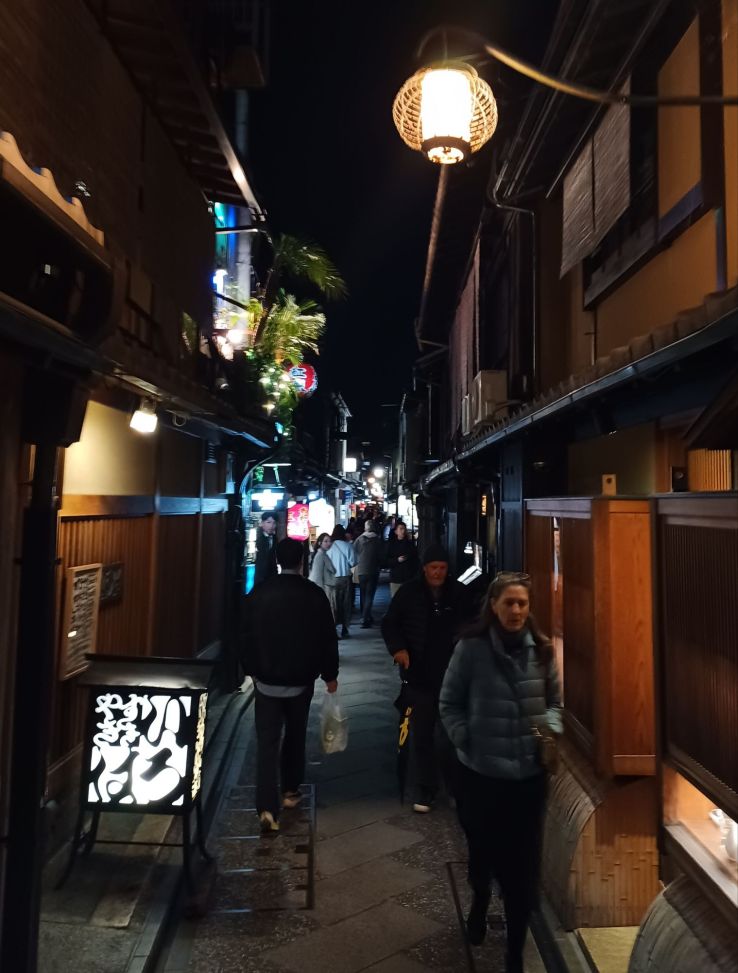
2nd photo: The Pontocho. Famous pedestrian only walk along the Kamo River.
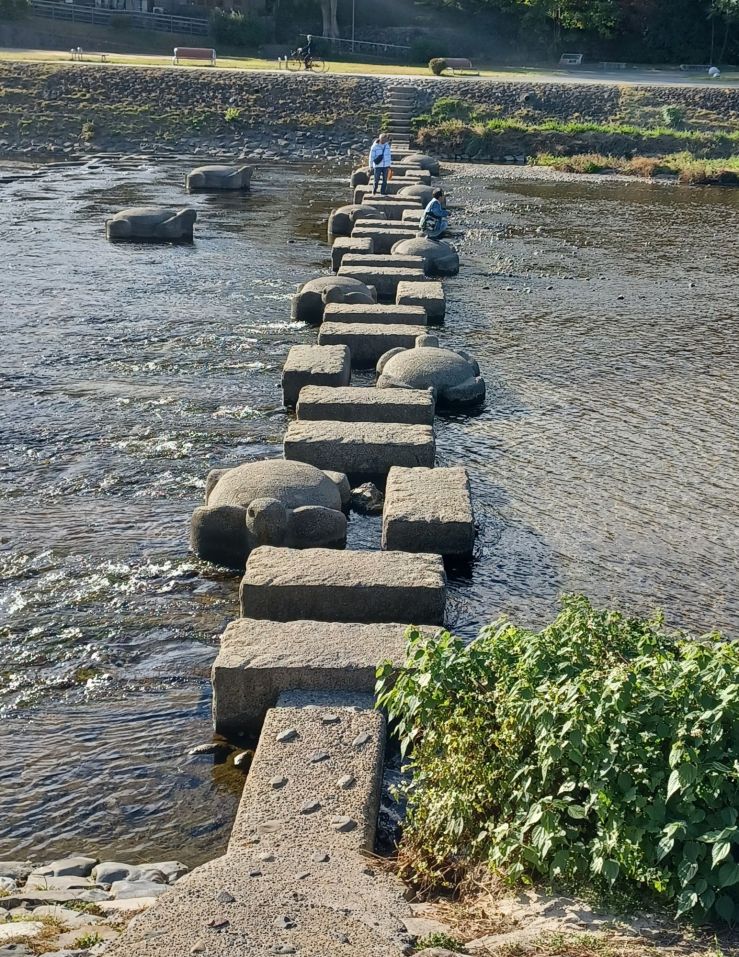
Turtles on the Kamo! I totally walked across the Kamo River in Kyoto on the backs of turtles!
I had to add the video version.
The Pontocho, at night.
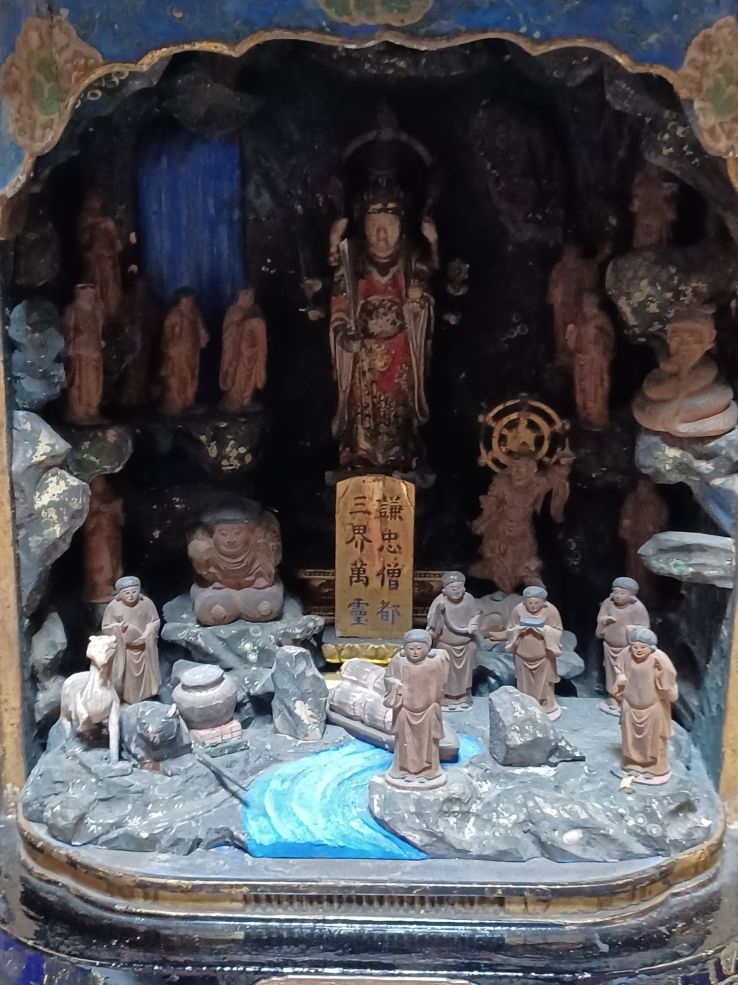
This little figurine set at Kosho-ji Zen temple reminded me of a Christmas nativity set. My favorite piece is the head of a bearded guy on a snake’s coiled length. I don’t really know what this is meant to portray, though.
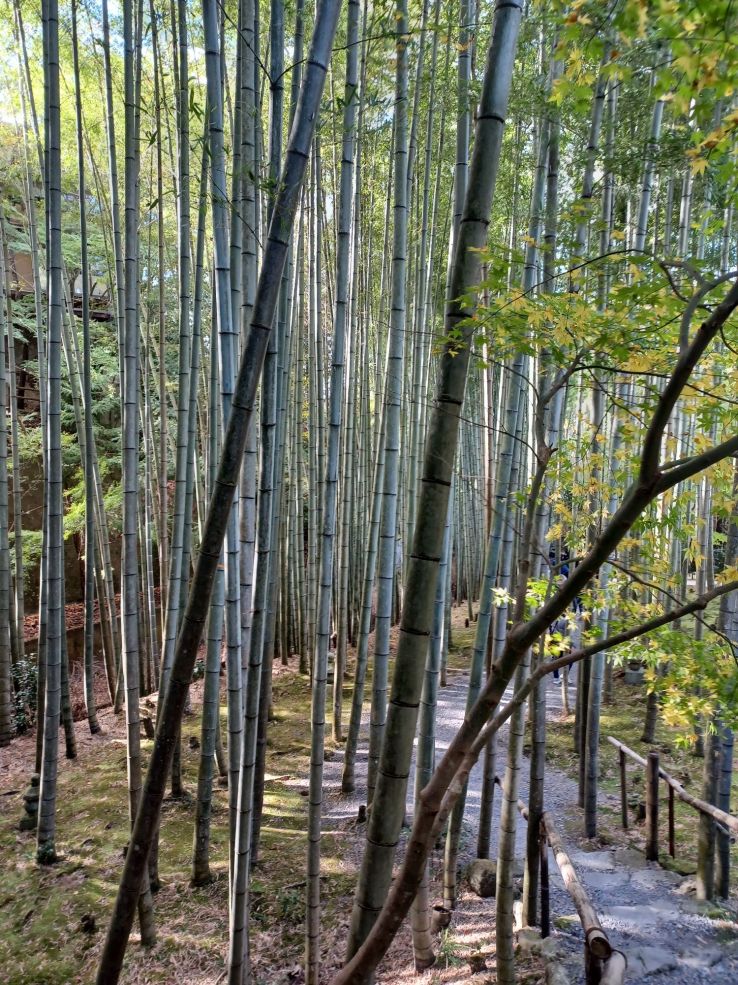
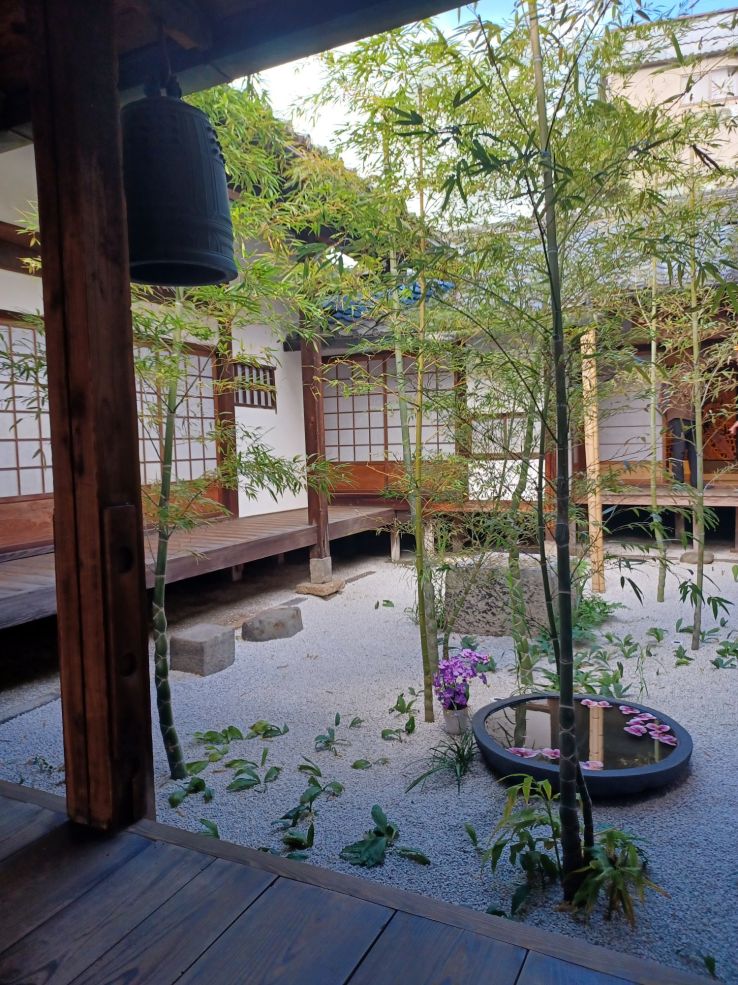
A small bamboo forest at the poet’s hermitage.
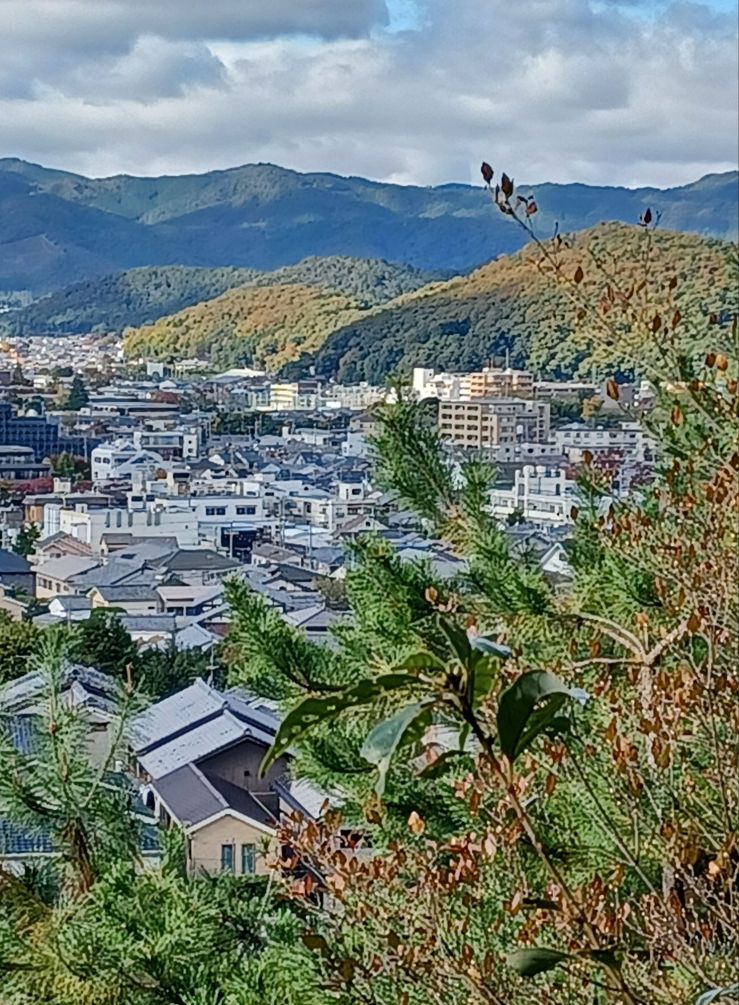
The north of Kyoto and the northernmost part of the city I visited.
Kotofu-ji Rinzai zen dry garden.
Not all my walking has been in the city. This is rural countryside in the north of Kyoto.
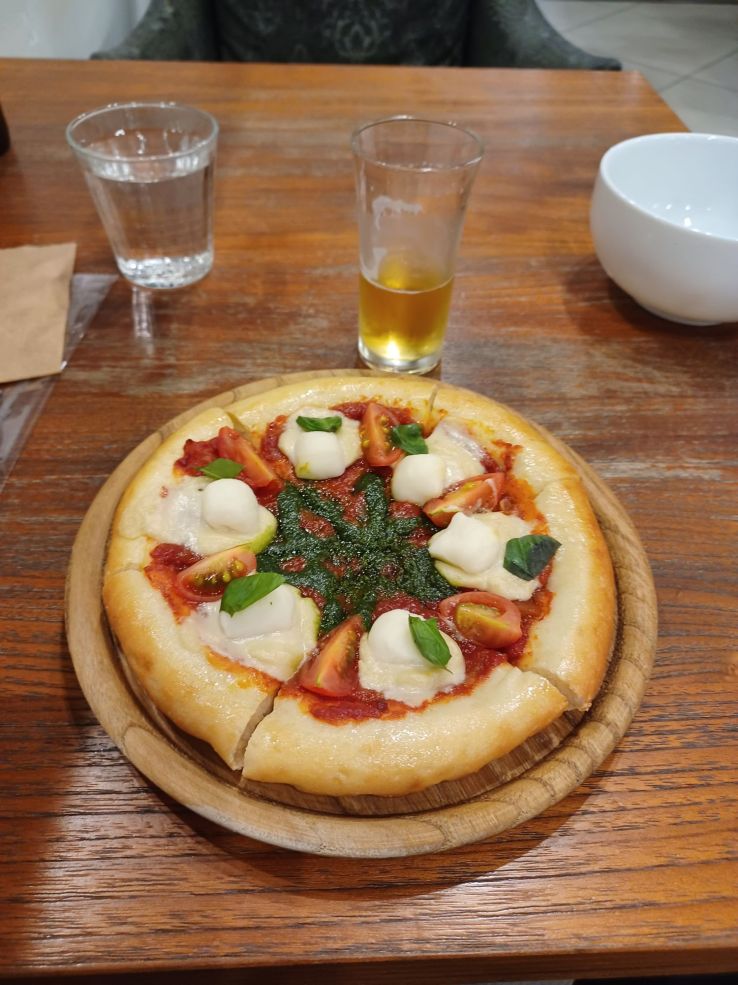
I found a dedicated GF restaurant in Kyoto. Their little personal pizzas are excellent!
Small temples are scattered everywhere around Kyoto. Having a coffee at a little place I spotted just the small triangle of roof above a row of garages. My map confirmed that it was a Buddhist temple.
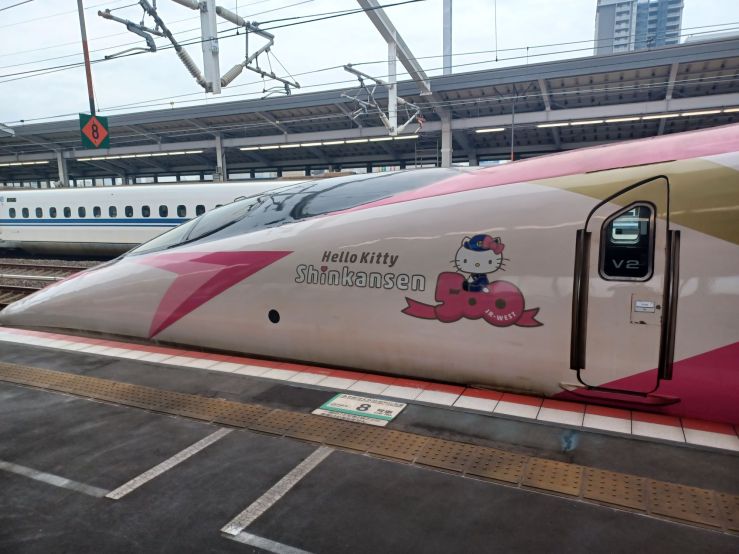
If we had trains like this in America you could call them whatever you want and paint them every horrid color you want, for all I care!
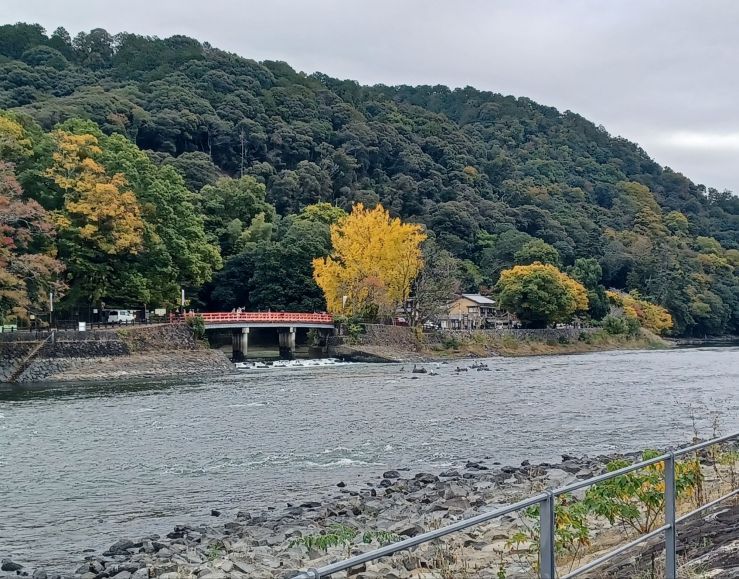
The Uji river.
I had to lay down on the tatami floor at Kennin-ji temple to get this full length ceiling painting of a dragon and the moon. I’m adding it just for the effort I put in to get it even if it isn’t very clear what it is. Also, I’m really into dragons and moons these days.
This is a representation of Avalokitishvara at Kosho-ji. He (she?) figures in what I specifically went to Kosho-ji to do.
First, Kosho-ji. The original, in Kyoto, was a significant Soto zen temple because it’s founder was Master Dogen, in 1233. It is the first zen monastery he established after coming back from China where he was greatly influenced by his Chinese zen (chan) teacher. While this Kosho-ji is not at the original site where it was founded by Dogen, it bears his imprint and legacy. It is located in Uji, built long after Lady Murisaki’s great work. It is interesting that in those last chapters of “the Gengi” a small Buddhist monastery has a role to play. Enough of that. They are absolutely not related, in any way whatsoever.
Kosho-ji was the most important reason for my Uji visit. I wanted to visit this place that recalls Dogen’s earlier monastery establishment. It is a Soto lineage zen temple. Dogen was never here, but monks who practice in the manner that he prescribed live here, practice here, and work here.
I met one of those monks this morning. He was working at the reception desk when I arrived, at opening time. I asked if I would be able to copy a sutra, specifically, the “Heart Sutra.” This is a thing they offer guests to do, on their website. There, they indicate that it is best to contact them in advance to reserve a time to do this. I contacted them many weeks ago. Nothing. I texted them several days ago. Nothing. I tried calling. No answer. So, I just showed up this morning. I told this good monk that I wished to copy the sutra. He managed to let me know that I could not do this “at this time.” OK. I expected something like this. So I asked, through Google Translate, whether I could do it later or even on another day? Our verbal, or Google translation skills, were not working. I sensed some frustration on his part, betraying his very human qualities, such as I have, though I try my best to hide them behind a mask of calm control. Foolish that I am.
He stepped up from behind the partition separating us, and came out to where I stood. He motioned for me to follow him. I did.
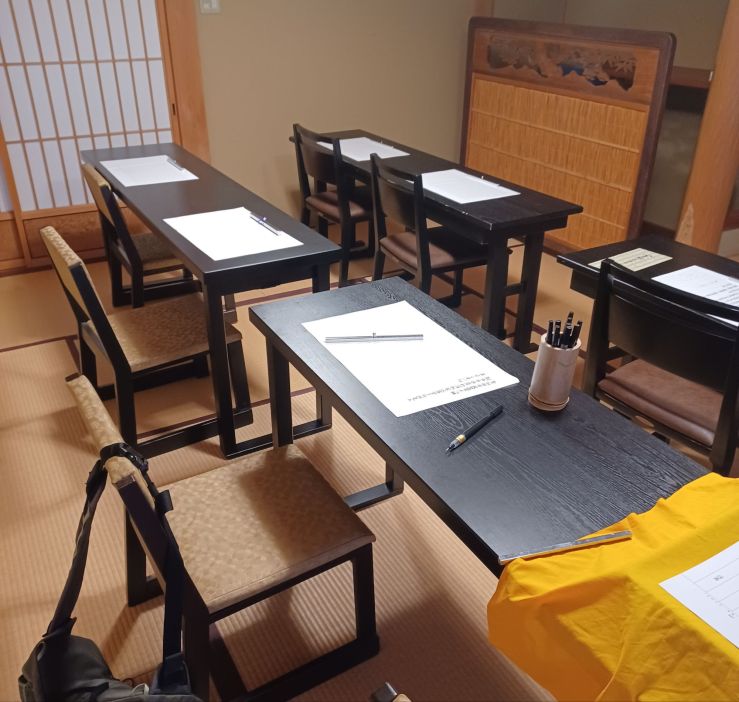
We walked down a few corridors in our slippers. He slid open a shoji screen to reveal the small room where surtra copying took place. He pointed to a place to sit and left me to figure out how to copy a sutra.
At first I sat, trying to copy. In a sense, this is easy because the Chinese/Japanese characters are beneath the thin sheet of paper on which the copying is done. It is basically just tracing. Still, these characters are not so simple as these letters.
I stood to be able to hold the “pen” upright to better trace the characters. My tracing, I thought, only barely mimicked the characters beneath my thin sheet of paper. I kept at it in the cold room, just me, a piece of paper, a jar of pens, and silence. More than an hour went by. No one came by to see how I was doing.
I finished. I was certain that no one who knew how to read these characters would be able to find any sense in my ink blots.
No one came and I was beginning to get very cold. I wasn’t sure whether it was appropriate for me to go outside the room and try to find my way back to the reception desk. I heard voices outside but no one came to my rescue. Finally, I stepped out just as another monk happened by. I held my ink stained paper before him and managed to make him know that I needed to know what to do next. So good he was! He pointed me the way back to the reception desk and we bowed together, me thanking him for his smile and hospitality.
The original monk was at the desk, greeted me warmly enough, folded my mangled sutra, put it in an envelope, and I paid the donation for my trouble. I have to say that I was thrilled to have been able to complete this task.
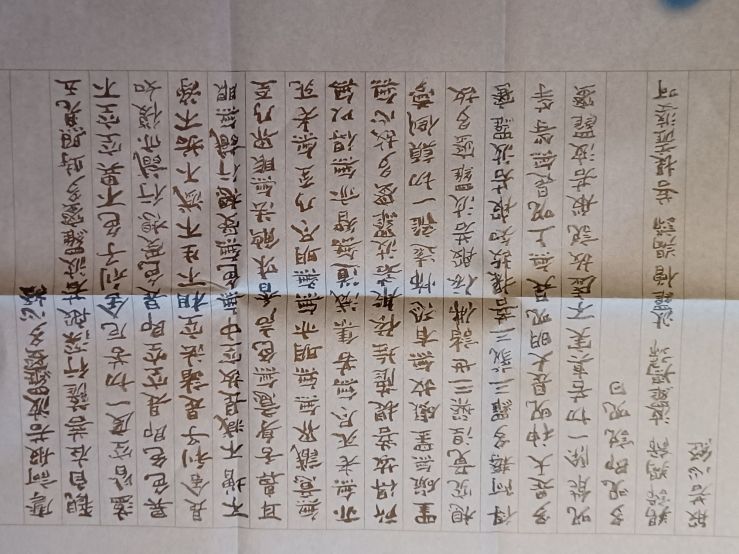
This is my copy. I scanned it with the Google Translate function and it seemed to be able to read it. While it does not read quite as we recite it in our Seattle sangha, the gist of it comes through.
The Heart Sutra is like a brief summation of Buddhism. I can’t explain it because I am only at the faintest beginnings of understanding what it means. It is, however, one of those things where, while you can’t explain it and do not understand it, you sense it is true.
Now, back to Avalokiteshvara. In the Heart sutra, Avalokitishvara is one of the characters, along with Shariputra. How Avalokitishvara received his knowledge to pass on to Shariputra, and to us, is not known. At least that is what I got from Red Pine, a translator of Chinese texts. Somewhere in my copied version of the Heart Sutra, I hope to find the names of both Avalokiteshvara and Shariputra.
Other monasteries offer copying to guests. I am grateful that I was able to complete this at Kosho-ji.
I had never heard of Uji until I finally managed to make it to the last chapters of Murisaki Shikibu’s, “Tale of Gengi.” Worry not, I won’t give away the ending for any who are just about to crack open this masterpiece, considered by many to be the first novel, beating out Cervante’s sad hero by several hundred years, and, it’s even longer than the many chapters of that masterpiece. I’ll give Cervantes credit due. His novel was far more humorous than Murisaki’s.
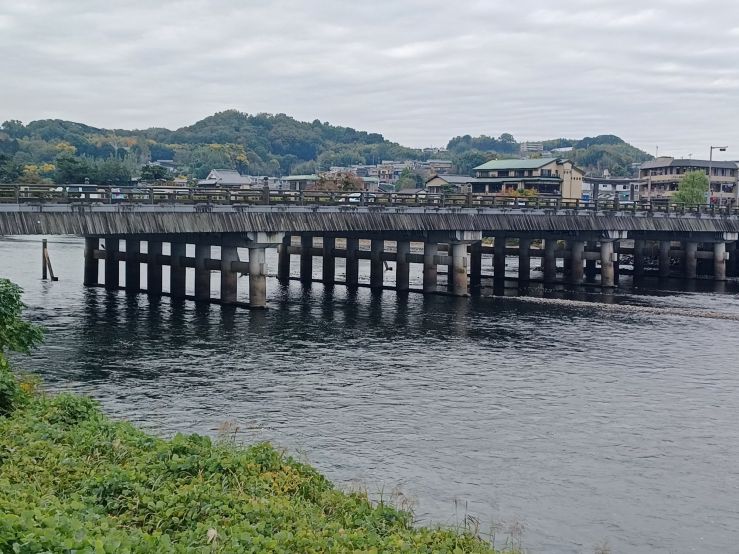
Uji, specifically, the Uji river, pictured above, plays a very big part in these last chapters. So big a part that they had an evocative influence on me. I knew that if I ever made it to Japan, I needed to cross the Uji river bridge. On this cold day, I did that.
While not the one in the novel, this bridge is apparently based on that original that Lady Murisaki was most certainly familiar with.
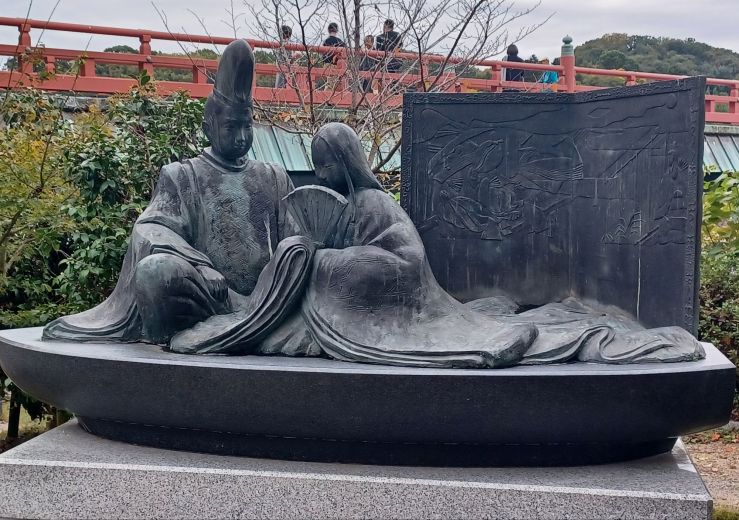
I went to the Tale of Gengi museum, which was a big disappointment. I did get a photo of a statue that stands beside the river. It depicts the significant characters in those last chapters. They are setting out in a small boat on the river. There is something sad about it, which is appropriate.
Uji is a train ride south from Kyoto. Only about an hour.
This was a portion of my day in Uji. I will write another post for the other portion since there is no very good way to link them. The “Tale of Gengi” is fiction. The next is part of my very real life and is not made up.
My choice for visiting today combined my love of Japanese poetry, zen gardens, and the recent addition of Soto zen buddhism to my spiritual life. It was wonderfully cold and clear, the first truly cold day since I’ve been in Japan. Before today, most days I’ve walked around in a t-shirt, soaked, since the humidity is very high. My coat, gloves and hat, that I’ve been lugging all over Japan, finally got a workout!
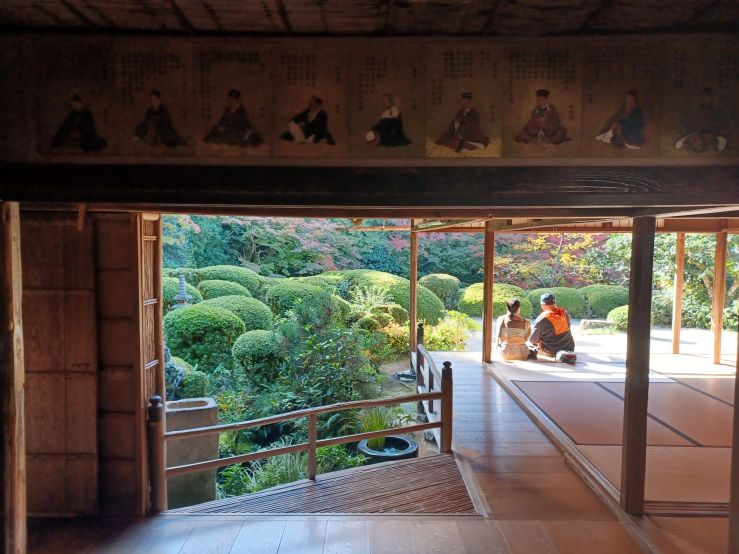
This is Shizen-do, founded in 1641, situated in northeast Kyoto. It began life as a retreat home for a former warrior and landscape architect. It gradually made it’s way into the ownership of a Soto zen monk (not sure how that worked!?) and finally into the official keeping of the Soto lineage of Japanese zen buddhism. While a very small temple, it is a beautiful place!
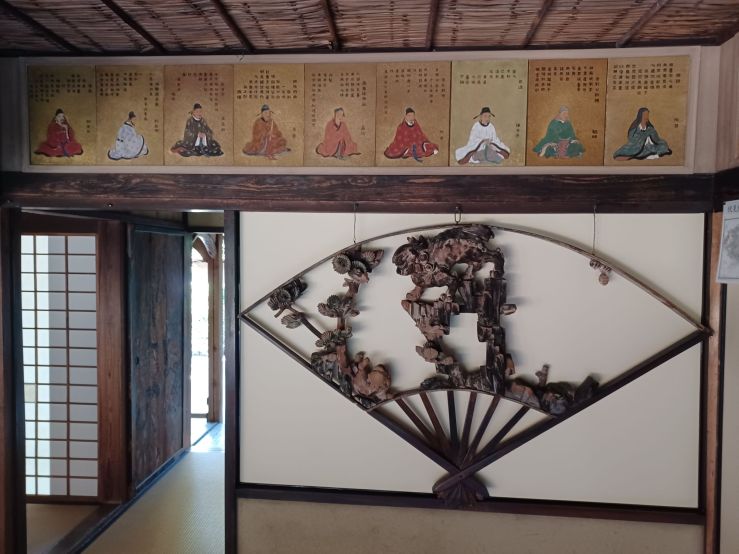
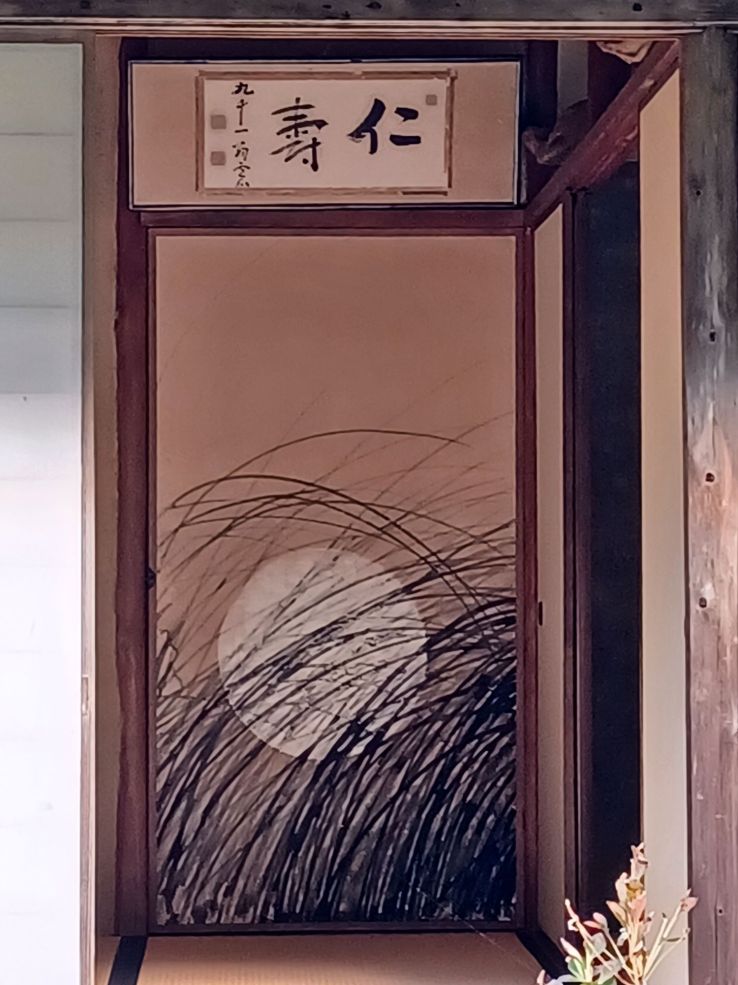
The nine seated images are said to represent poets of China, those who greatly influenced Japanese poetry and writing. There are thirty-six such images on the four walls of this, the poet’s room. The founder, Ishikawa Jozen, wrote his own poems on each of the images. For near four-hundred years they have been in their places.
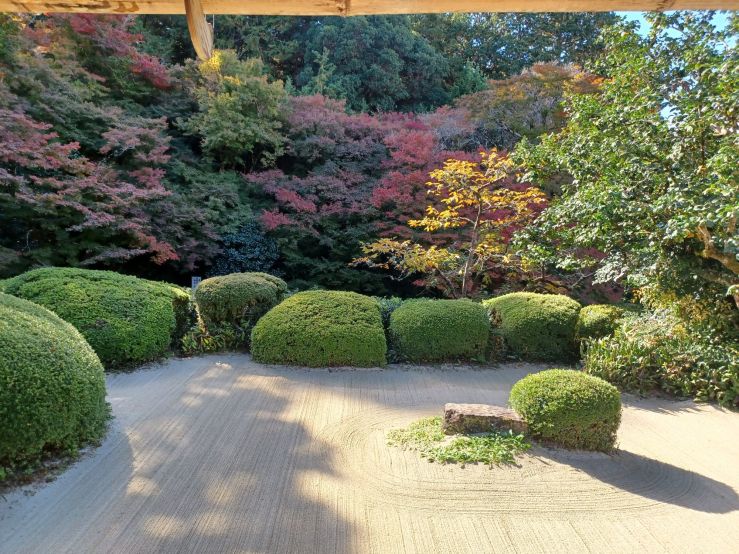
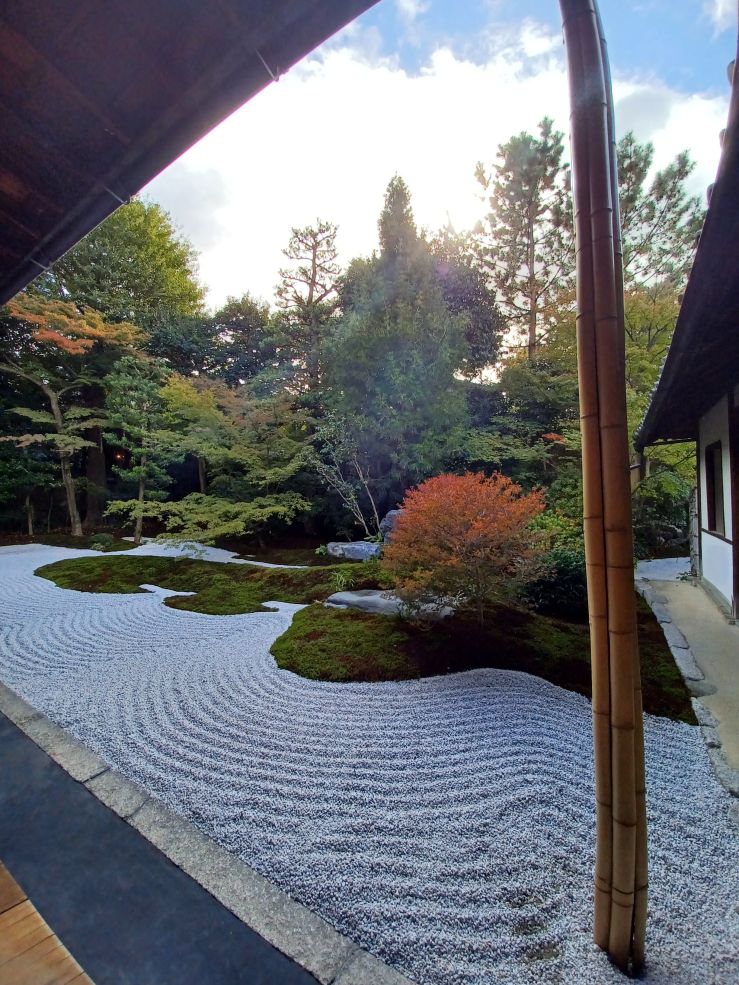
The zen garden at Shizen-do is a lovely example of the form.
The moon image is, to my minds eye, lovely. There is also a “moon viewing room” at Shizen-do. Great idea! My moon viewing “room” is my small south facing balcony which I am very grateful to have to watch the segments of the moon pass during the year.
There is a feature of the garden that is enjoyable and everyone should have one to ward off boars, bears, and those rascally deer. It is called a “shishi odoshi,” a bamboo see-saw device which gradually fills with water at one end and makes a sharp sound on the other end as it empties itself.
Turn audio on and, as they say, wait for it! Walking around the grounds and from inside the house, this “clacking” sound can be heard and is a sort of reassuring timepiece for the passing of the hours.
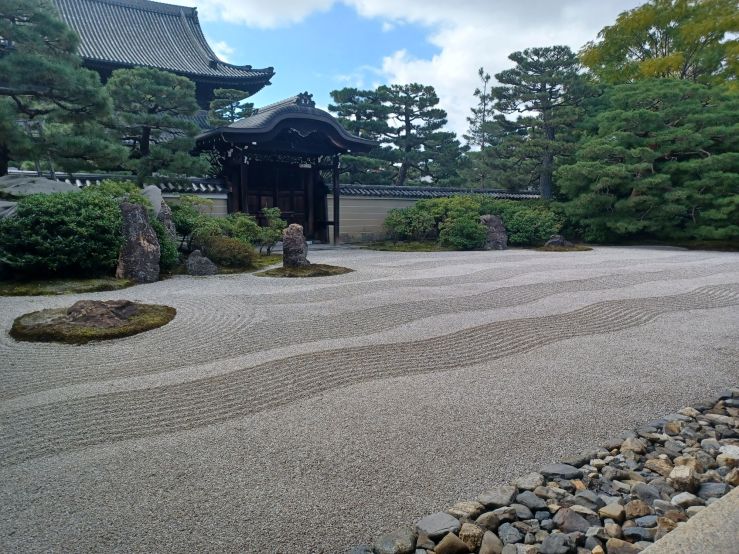
I’ve long been moved by the aesthetic of the zen “dry” garden, an artwork composed of natural plantings, rocks, sand, and the concepts of ideal forms, such as the perfect circle, above. This is Kennin-ji monastery in Kyoto. It is just part of one of several zen gardens at Kennin-ji.
They are “zen” in the sense that, for the most part, they are found at zen monasteries throughout Japan. They create a setting conducive to meditation although they are in no way necessary to that practice. In fact, in the sitting practice of zazen, facing a wall is more conducive to the meditative practice than would be facing into a lovely garden. Can beauty itself be a distraction?
I have seen two of the so-called “most beautiful gardens” in Japan, notably, Ritsurin in Takamatsu, and Kenroku-en in Kanazawa. I enjoyed the beauty of these gardens. No doubt. Yet, the dry zen gardens capture my interest, though much smaller, so much the more peaceful and personally engaging.
Nature herself can create beauty on a grand scale without the sculpting hand of human persons. Those hands can be better employed on a very much smaller scale. This is the scale of the home, the backyard, the flower bed, the parking strip.
Still, the beholder carries within her or himself an ideal of “the beautiful.” For some, the zen “dry” garden may appear to be just that – dry, sterile, or barren. For me, it is lovely, timeless, and on a very human scale. The Grand Canyon I could never create or imagine. Such a garden as this I can imagine putting together in my yard.
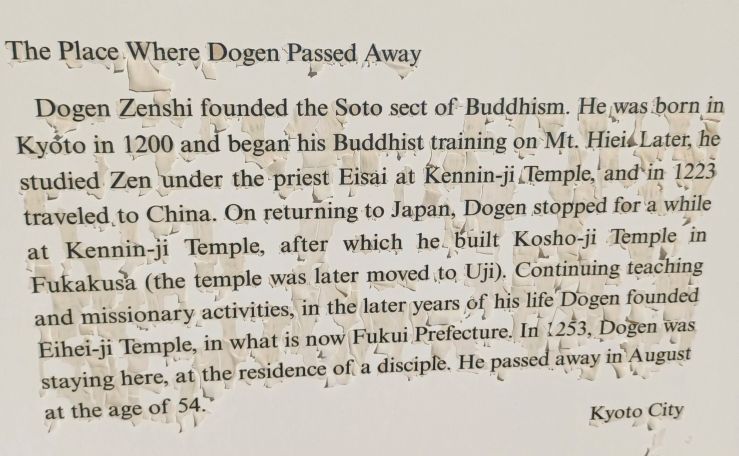
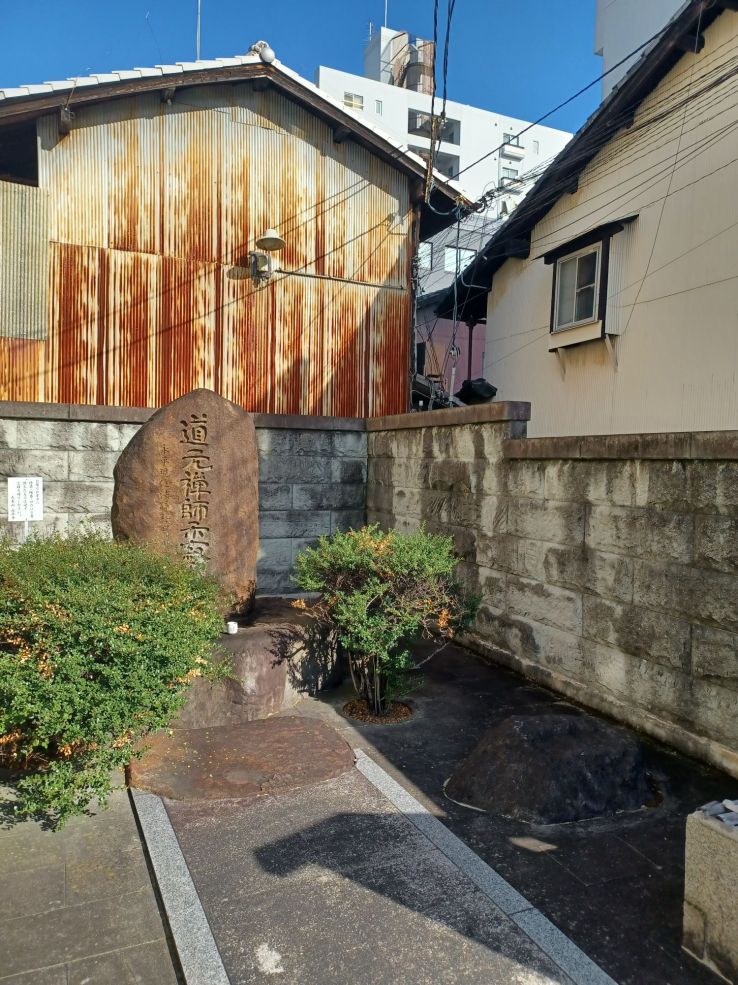
I did not know this was here and didn’t go looking for it. While searching for something else on Google Maps, I saw these words, in red: “The place where Dogen passed away.” I went to pay my respects.
That is my Snickers bar. A couple was here before me and, as they were leaving, they picked up the offerings they had made. I saw a sign that said to take away any offerings brought. While I’d not made an “offering” at any other shrine, I thought it fitting to do so here. A small Snickers bar was all I had. I set it there, bowed, picked it up and left. I intended no humor. I’ve seen all sorts of things left at shrines in Japan – beer cans, plastic flowers, sticks of gum.
I was also drawn to the site due to its surroundings. It was not a street that would have any other tourist draw; no temples, no cafés, no pastry shops. Had I walked by it without knowing what it was I would not have paid it any mind. There are so darn many of these shrines and markers all over that one simply cannot stop to examine them all. The place had all the looks of a deteriorating streetscape. The sign itself is peeling away. Notably, the Kyoto City sign indicates his death at age 54. This does not coincide with other versions saying he was 53. Perhaps they use a different dating system. If not, how could they get this simple fact wrong, especially on a monument to his life and death? It’s not a big deal. Just curious.
I suppose it is a fitting enough tribute to one of Japan’s most prominent historical spiritual figures. He likely would not have wanted this much. Of his enlightenment experience he said, “I have dropped off body and mind.” In any event, his lasting legacy is the Eihei-ji monastery and, more importantly, his writings, which can be as brilliant as they are often obscure, at least to a novice like myself.
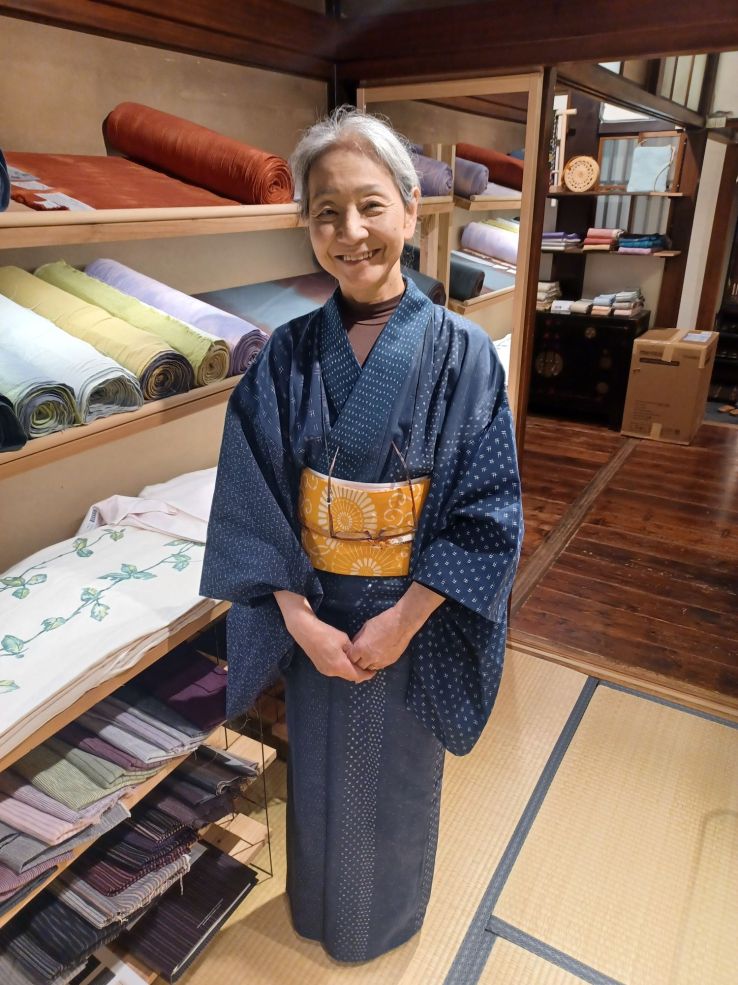
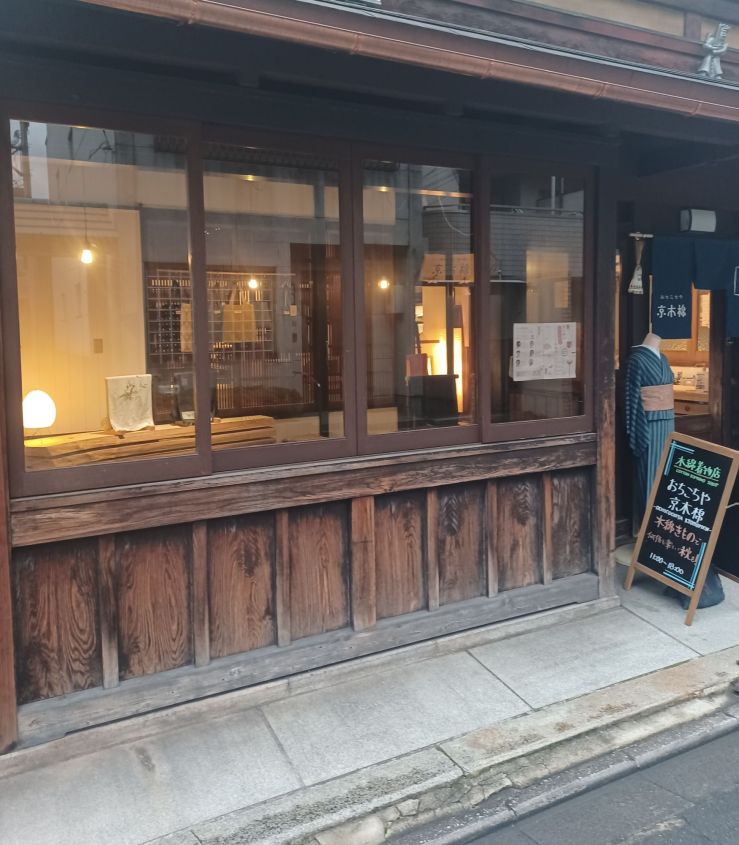
This is Kyoko. Her shop specializes in kimono. She custom makes kimono, tailored to fit each of her clients using materials and designs of their choosing.
As nice as Kyoko proved to be, I believe she looked askance at me when I walked into her shop. I suspect that the great majority of her clients are both female and Japanese, with the rather bedraggled looking older American male being the rare exception.
I explained as best I could that I was interested in a yukata, not a more formal men’s kimono. A yukata is an informal outer type of bathrobe, used after bathing or for seasonal wear around the home. I first became acquainted with yukata when in Fukui at what was a spa type accomodation. People wore them everywhere, including in the dining area and outside. The accomodation provided them for all their guests. I tried mine and liked it very much! I knew immediately that to have one would be one of the “souvenirs” I’d like to bring back with me.
I waited on trying to find one until I got to Kyoto because I didn’t want to lug souvenirs all over Japan with me. So, day one in Kyoto, I looked up where to find one that was other than a department store variety. Kyoko’s shop, Ochicochiya, popped up and it wasn’t far from where I was doing my search.
Kyoko quickly enough began to understand that I was serious about this and began talking about materials and colors. I made my decisions. I wanted the three seasons material that, while it came in a variety of patterns, came only in shades of indigo. While not a “blue” person, I chose a deep indigo cloth. The indigo dye is a Japanese dye, and, as I wished to have an “authentic” Japanese yukata, this was the right choice for me.
Next began the measuring process. Length of arms, around the hips, centerline from mid-back. This was my first “bespoke” process and most certainly my last. Then, I chose a waist band. These are made from leftover material, such as a rag rug would be. Kyoko assured me that this, too, was traditionally Japanese, coming out of the Edo period.
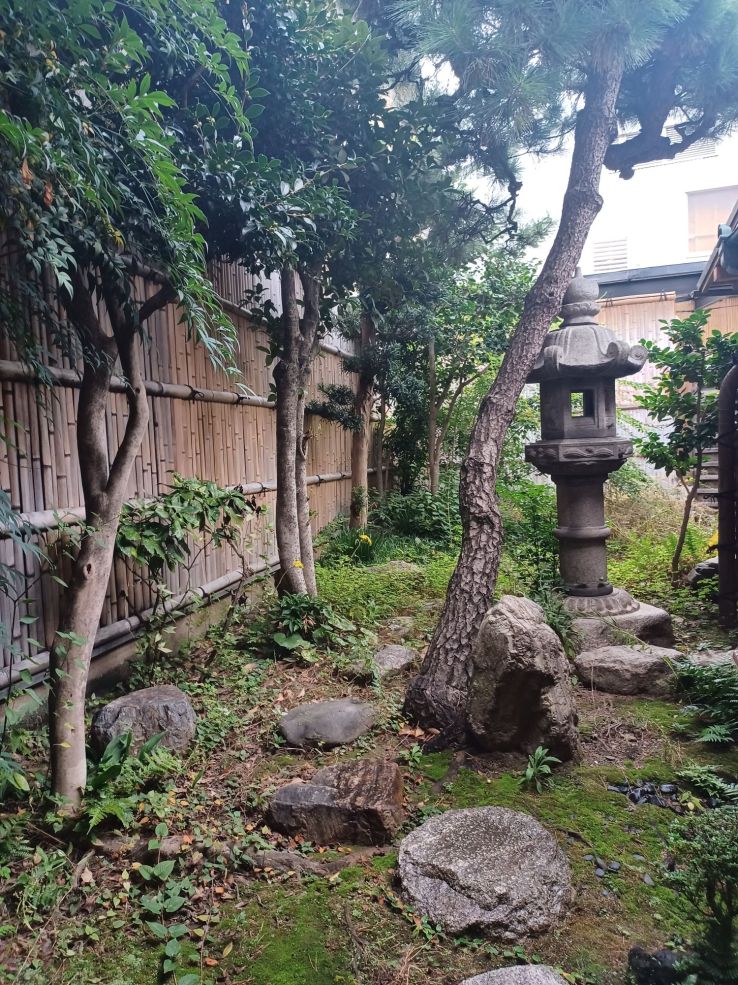
Following this, it came time to pay up. This was a more complicated process than I was able to understand. Kyoko called in two associates to figure it out. I enjoyed watching as they weighed the cloth materials on a small scale, carefully balancing them. While they were at it I went out to sit in their beautiful Japanese garden.
In two months, I will receive, in Seattle, my “souvenir” from Japan. This was an extravagant purchase, indeed, but this whole trip has been an extravagance, so why stop now?
Kyoko’s shop, Ochicochiya, in Kyoto. I am very glad to have made her acquaintance! The authenticity of the place, the materials, and the person of Kyoko, was a delightful experience for me!
My first day in Kyoto was overcast, with rain, and more tiny little viscious mosquitos than I had planned on!
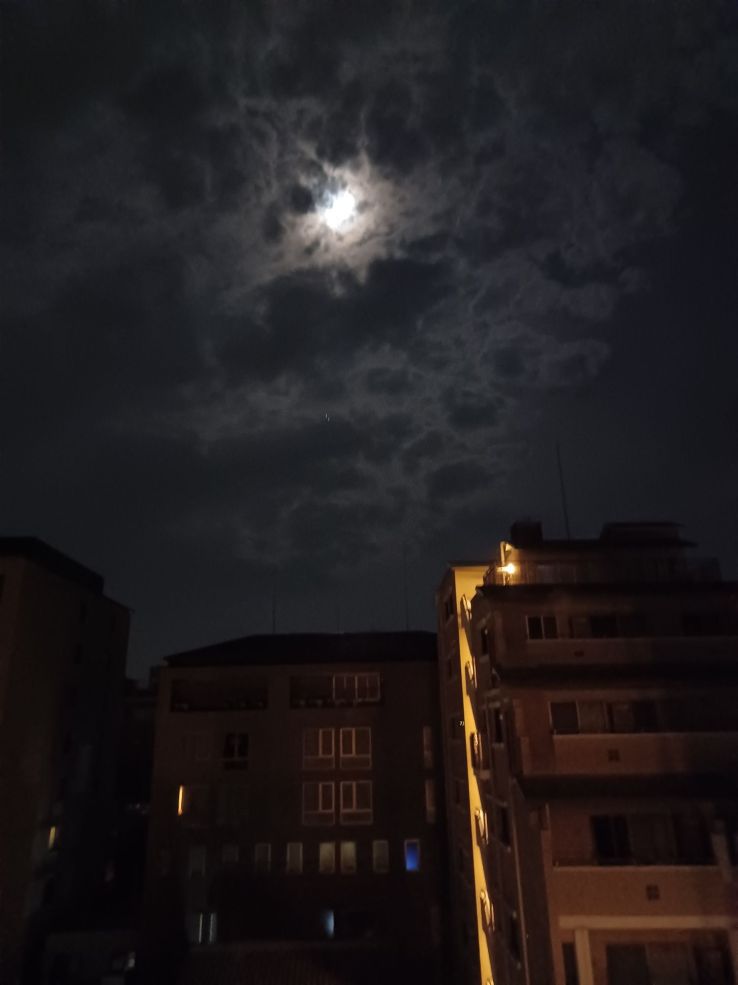
I knew it was the full moon out there, behind the cloudcover. I thought I would not see it until the waning in the days to come. I like it either way, but I had known that I would be in Kyoto for the November full moon and I was anxious to see it. Of course, this is not an important thing. It’s just one of my quirks. My desires often come in strange guises.
I woke, as is normal for me these days, at 3:00 a.m. A soft light came through the paper window screens. After taking a glass of water, I began slowly walking the floor, the tatami in this case. It is a relaxing habit. After a time I began, “soto voce,” to speak the names of persons who are important to me; same people in the same order so that I won’t forget anyone. The names change over time. Some I will always speak
I remembered the moon and slid open the screen. There she was, coming and going through the thin cloud layer. “Hello, moon. So good to see you!”





 Autumn In Japan