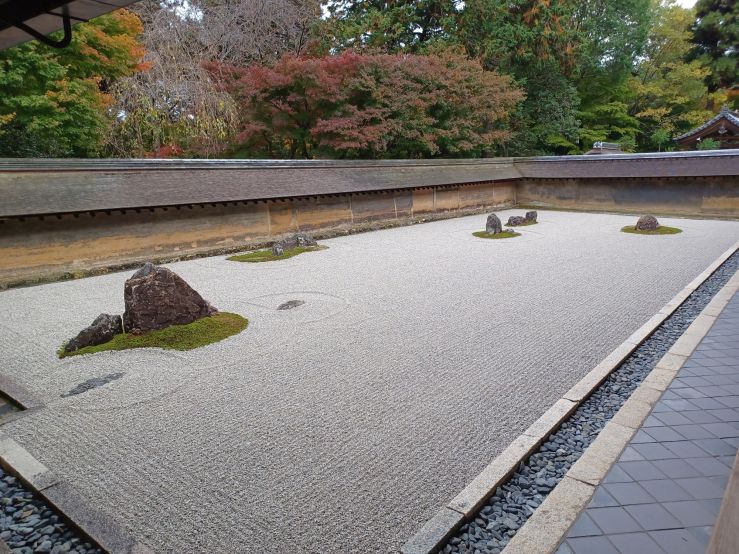
I was talking to a fellow traveler at breakfast two days ago. I told her that I would be going to see the “dry garden” at Ryoan-ji zen buddhist temple in northwest Kyoto. She knew nothing about it. I was shocked! I figured if you come to Kyoto you come, at the very least, to see this most iconic of dry gardens in the world. I guess not. Of course, there are a good many more sights to see in this great city.
I saw her again this morning and she said she visited Ryoan-ji yesterday. She was not terribly impressed with this famous garden. How could it be?
It dawned on me (duh!) that there are many so-called “famous” sights in the world that I would have no knowledge of or even interest to see. We all have our tastes, our desires, our adventures.
I made my way, at long last, to Ryoan-ji. I saw this beautiful artistic example of simplicity, the zen ideal, in the form of raked gravel, rocks placed “just so,” a bit of moss backed by a low wall, and a forest of Japanese maples and conifers overlooking it all. In it’s elements, it has not changed for hundreds of years.
I had a good and long look. All that I wanted.
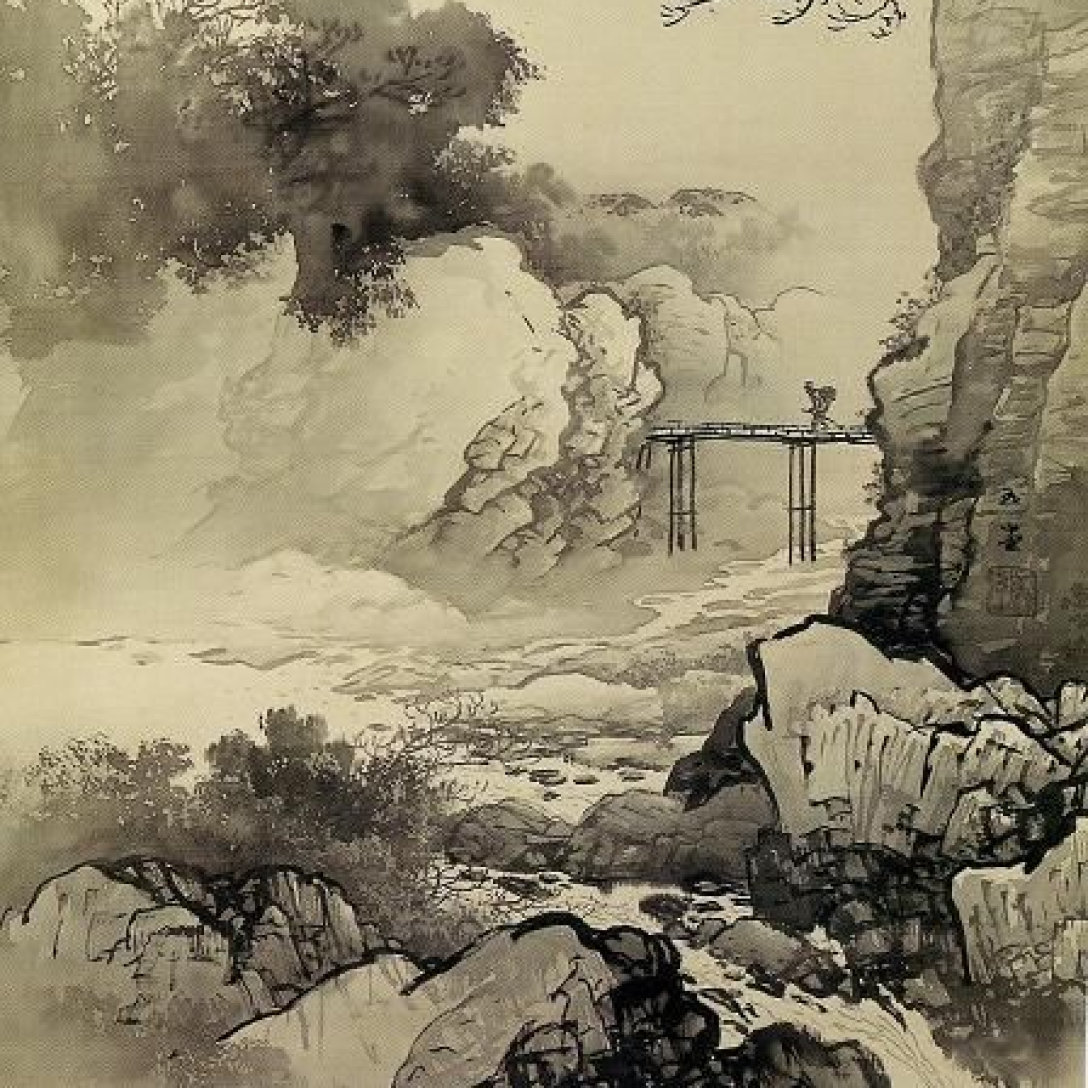
I stood to see other sights that Ryoan-ji had to offer. There were dragons! And such ferocious, frightening, and cool dragons as one could wish for!
Dragons show up in one artistic form or another in buddhist temples. They are seen as protector guardians, specifically protectors of the dharma, the teachings. They are also seen as embodiments of enlightenment. This aspect is not clear to me. Protector, I can understand. But, when you see a dragon, as depicted at Ryoan-ji, you have to wonder how enlightenment fits the picture. I had to do some research. A site named “Traditional Kyoto,” says this:
The dragon is “a symbol of Imperial Power, Guardian of the Eastern Direction, Deity of Rain and of Heaven, Protector of the Buddha and Buddhist Law. Often depicted with a pearl or ball under its chin, which symbolizes thunder.” And, almost as an aside, “Turtles are the messengers of the Dragon.”
I’m not sure how authoritative this site is, because my research capabilities are limited. However, this sounds about right except it doesn’t answer the enlightenment question. But, not important for now. More important is the idea that “turtles are messengers of the dragon.” That may help explain the turtles on the Kamo River. They aid one in “crossing over to the other side.” Just love the idea of turtles and dragons conspiring together to bring enlightenment to all beings!
It also explains a strange coincidence in my own home. I have two small toylike creatures that sit, face to face, on my bookshelf. When I put them together like that, it seemed right. The one on the left is a soapstone turtle, given to me by a friend many years ago. The one on the right is a toy metal dragon, the English variety, with wings. I found this, several months ago, half buried in the dirt on our community property. I brought it back to my place, cleaned it up, and sent out word that I had found it should a child in the community be missing it. Apparently not. So there on my bookshelf sit a turtle and a dragon, communicating messages of dire importance for the future of the world. How we need their wisdom in these dark days!
 Autumn In Japan