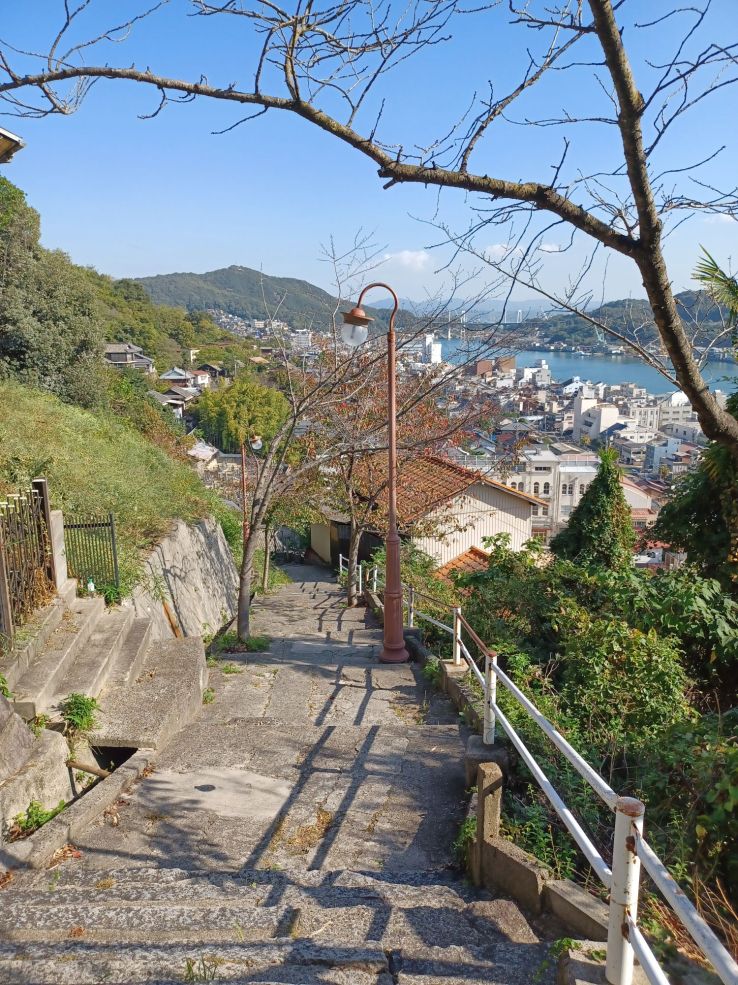
While the town along the waterfront is nicely level, to see Onomichi it is necessary to walk a lot of steps – regular, irregular, different heights, zigzagging in every direction. It’s a maze out there, but a delightful one.
The “temple route” is the common pedestrian path. On my map, I counted twenty-five Buddhist temples situated close to each other. So close that it can be difficult to tell one from another, especially when they often sit side by side or one seemingly on top of another in this vertical town. It is an up and down zigzag labyrinth. I don’t even make the attempt to see all the temples. After a time, they can begin to look alike to my untrained eye.
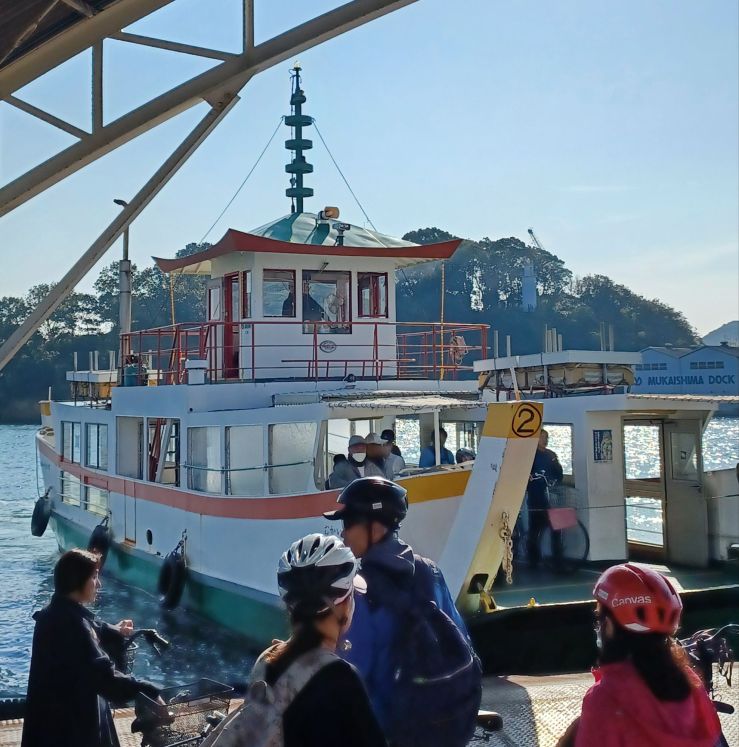
Onomichi is a working port town, along with Mukaishima, across the very narrow straight. What surprises me is there is no “local” bridge between Onomichi and Mukaishima. Bikers, cars, and pedestrians take the small ferries across the water. I like the ones with the “pagoda” top.
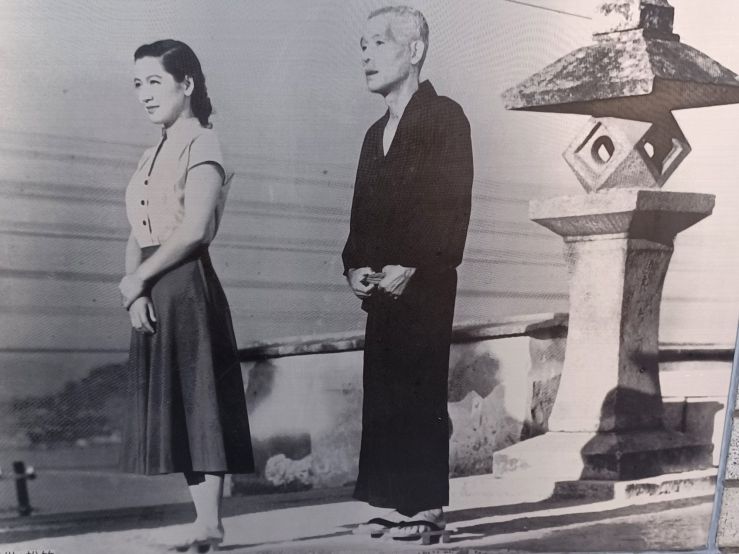
The Shimanami Kaido was my principal reason for coming here, but not the only one. The other was a movie in which Onomichi played a part, called “Tokyo Story,” the 1953 masterpiece of Yasujirō Ozu. The movie has been credited, by those who know, as one of the finest films ever made. I’ve seen it twice and not for the last time. I’m no expert but here is a review from one who was: https://www.rogerebert.com/reviews/great-movie-tokyo-story-1953
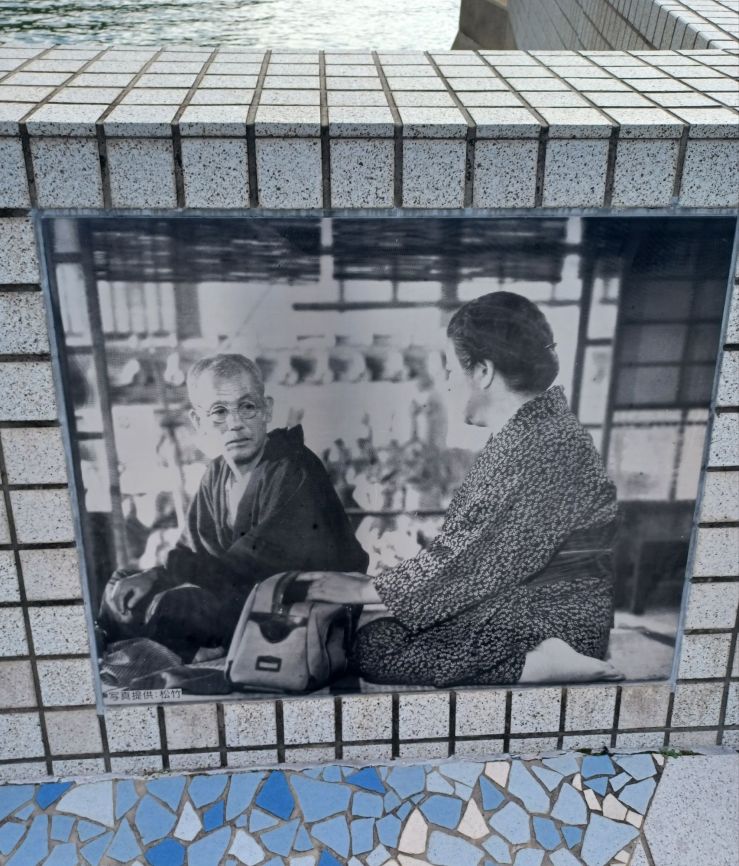
Onomichians are justly proud of their place in the pantheon of great movies. They honored the stars of the movie with tributes on the boardwalk.
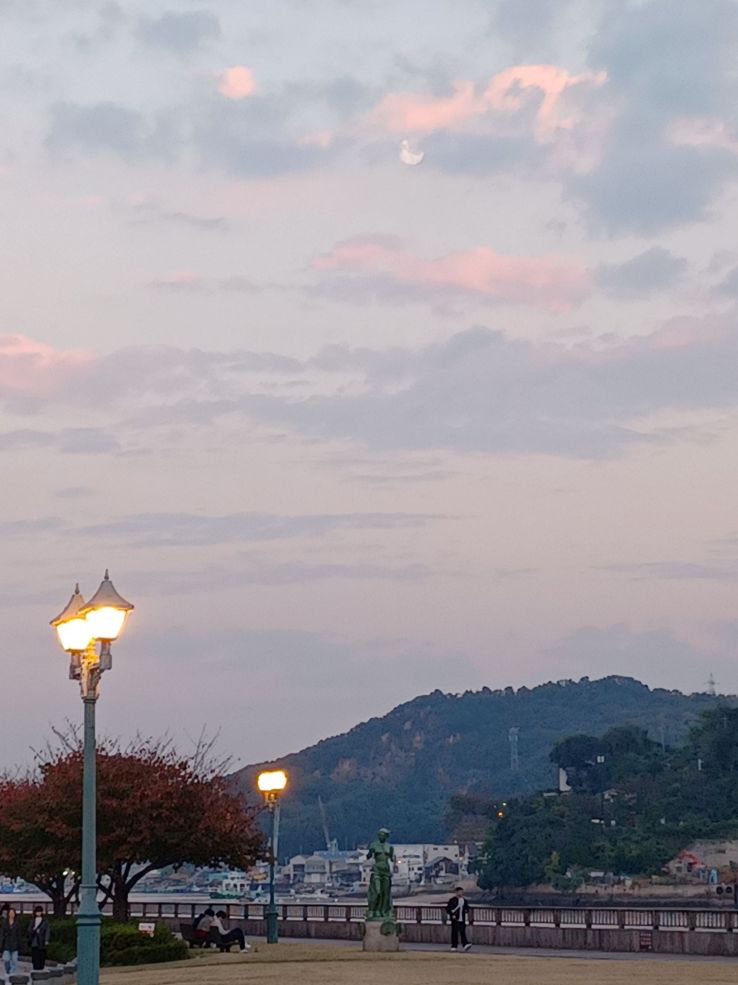
On my last night in Onomichi, I “caught” the very-close-to-being-full-moon over the straight, marking the end of my time on the beautiful Seto Inland Sea.
 Autumn In Japan