I have long enjoyed the sound of the koto, an instrument with a very long history in both Chinese and Japanese cultures. I think I first heard the koto played when I purchased the vinyl album, “Music for Zen Meditation,” in 1983. Tony Scott, an American jazz clarinetist, teamed up with koto player, Shinichi Yuize, and shakuhachi flute player, Hozan Uamamoto. This improvisational work has been with me ever since, first on vinyl, then on cassette tape, then on CD, and now on Spotify. I listen to it regularly.
I think Tony Scott was part of that pack of searchers in the ’50s and early ’60s who were drawn to Zen Buddhism. Think of Alan Watts, Gary Snyder, Alan Ginsberg, and others.
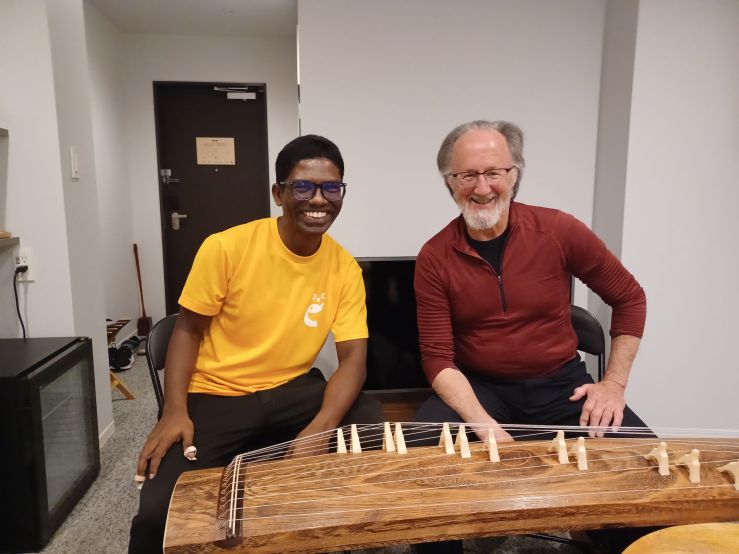
When I found out that I could get a lesson on a koto, I jumped at the chance, especially since it was given at my accomodation in Hiroshima. It was only an hour lesson but at the end, the teacher let me play “Sakura, Sakura” on his full sized koto.
Sakura is the cherry blossom, the flower of Japan. I had already known the simple melody, and that helped a bit. Needless to say, I need many more lessons, as you will hear.
The koto has thirteen strings. The strings of the smaller version I practiced on had been numbered so I could quickly tell between the five string and the seven, for example. When I played the full sized version for the finale, there was no numbering. It is this that I blame for my less than steller rendition of the beloved, Sakura, Sakura.
I very much enjoyed getting the chance to play a koto, even if only for a short time.
Here is teacher and student.
 Autumn In Japan